
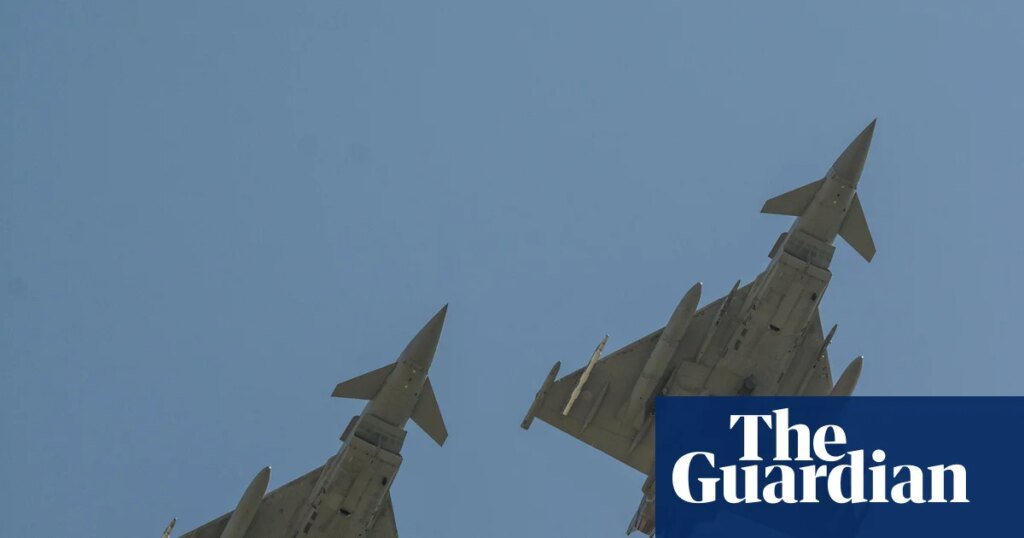
RAF Typhoons Engage Russian Drones Near NATO Airspace
In a notable display of readiness, two RAF Typhoon jets were dispatched from a Romanian air base to address a potential drone threat posed by Russian forces near NATO airspace. While the fighter jets successfully established radar contact with the drones, they did not engage or down any of the aerial units, according to British defense officials. This incident highlights the ongoing tensions in the region without escalating the situation further.
The Response to Threats
Reports indicate that the Typhoons were launched at 2 AM on Saturday following the detection of the Russian drones. Nonetheless, officials clarified that the jets operated strictly within Romanian airspace, sufficing to counter claims that Russian drones were shot down within Ukraine, a scenario that would mark a significant shift in the conflict between the West and Moscow.
Mission Parameters
According to the Romanian authorities, the Typhoons had been authorized to engage the drones if they encroached upon Romanian airspace. However, this did not occur, allowing the mission to focus on surveillance and deterrence rather than direct confrontation.
The Importance of the Mission
Engaging Russian drones inside Ukraine would carry substantial implications, as Ukraine is not a NATO member. The alliance has traditionally refrained from policing Ukrainian airspace to avoid provoking further hostilities with Russia. The Typhoons stationed in Romania are part of NATO’s rotating air presence, aimed at guaranteeing the security of Eastern European countries against potential incursions stemming from the ongoing conflict in Ukraine.
Operational Details
A spokesperson from the Romanian defense ministry detailed that ground-based radar systems had tracked several aerial targets approaching the vicinity near Reni, Ukraine, where explosions were subsequently reported. However, contact with the drones was lost shortly after this detection.
Approximately half an hour later, residents in Galați, Romania, reported an unfamiliar object falling on the outskirts of the town, further emphasizing the heightened situation in the region.
Throughout these operations, NATO allied aircraft maintained a defensive stance, enhancing situational awareness and safeguarding NATO airspace effectively.
Conclusion
This recent deployment of RAF Typhoons illustrates the ongoing concern related to Russian drone activities near NATO airspace. While the operation culminated in surveillance rather than engagement, it underscores the complexities and delicacies involved in maintaining security in Eastern Europe.
Key Takeaways
- RAF Typhoons were scrambled to address a drone threat near NATO airspace without engaging any targets.
- The mission remained confined to Romanian airspace, adhering to NATO protocols.
- No Russian drones were reported shot down, maintaining the current state of affairs with Ukraine.
- The operation was primarily focused on surveillance and deterrence amidst rising tensions.