
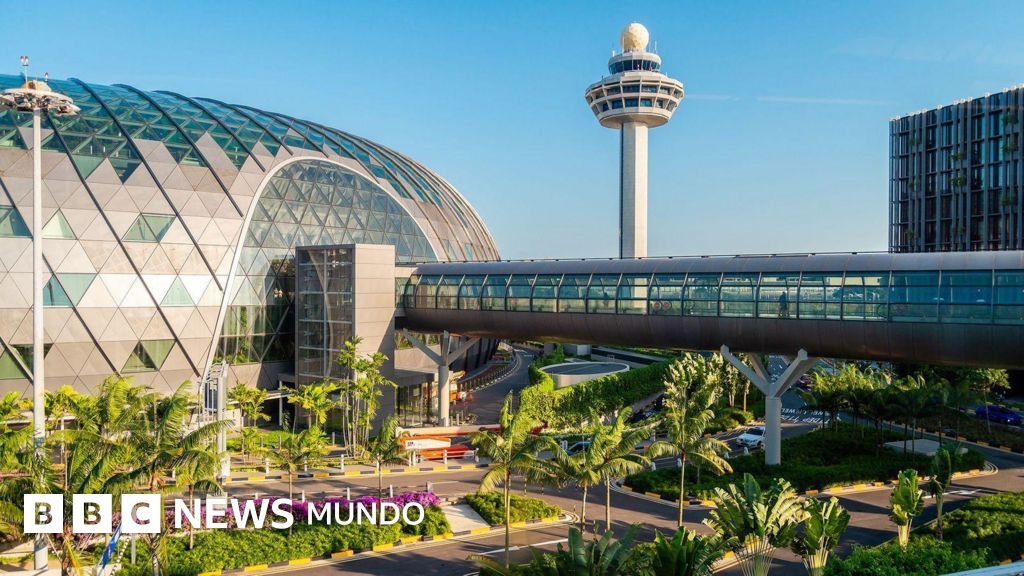
The Magic of Changi Airport: A Traveler’s Haven
Imagine just stepping off a grueling 18-hour flight, bleary-eyed and yawning. You brace yourself for the typically tedious airport experience: the endless trek to immigration, frustrating queues, and the anxious wait for your bags. Now, picture a different scenario. Instead of chaos, you are greeted by friendly, AI-powered cleaning robots meticulously maintaining spotless floors, and immigration lines that seem to whisk you through with almost uncanny efficiency. Within 15 minutes, you find yourself under the warm tropical sun, pondering why airport experiences elsewhere feel so convoluted.
Fast forward a few days to your return journey. After a swift check-in process, you await your flight in an airport lounge featuring a free 24-hour cinema, a butterfly garden, and even the tallest indoor waterfall in the world. With a stunning glass pond to stroll through, complete with a digital ceiling displaying the outdoor weather, it’s easy to forget that you’re in an airport and not in a perfectly organized futuristic town.
Welcome to Singapore’s Changi Airport, recently honored with the Skytrax award for Best Airport in the World for the second consecutive year and an impressive 14 times overall. While many major airports face issues like rodent infestations and staff strikes, Changi seems to exist in a realm of tranquility. The gap between an average airport and a world-class one has never felt wider. So, what makes modern air travel at Changi run so smoothly, and how has Singapore managed to stay ahead of its competition?
Prioritizing Efficiency
According to Max Hirsh, CEO of Airport City Academy, Changi’s triumph is about mastering the fundamentals of daily operations—from speed and safety to connectivity. It’s about having the adaptability to adjust when surprises arise. “In aviation, surprises happen quite frequently,” says Hirsh. “The challenge isn’t achieving that balance once; it’s about maintaining it over decades amidst changing demands, technologies, and interruptions. Changi succeeds because it views that balance as an ongoing project rather than a one-time design feat.”
If you’ve ever traveled through Singapore, you might have sensed the calming atmosphere of the airport. However, you may not realize the extensive efforts that contribute to this feeling of serenity. Behind the scenes lies a meticulously coordinated operation employing automation, biometrics, and predictive analytics to eliminate bottlenecks before they become noticeable. A workforce of 60,000 manages baggage handling, cleaning, energy consumption, and passenger flow seamlessly. As Hirsh puts it, Changi often feels like it’s a step ahead.
Thoughtful Design
The same principle extends to less glamorous details. Infrastructure considerations—such as intuitive signage, clear navigation, and crowd management—help prevent fatigued passengers from feeling overwhelmed as they make their way to boarding gates. Additionally, the terminals boast 500 restrooms, each equipped with touch-screen technology that allows travelers to evaluate their cleanliness. If ratings dip, a cleaning team responds immediately. “The hierarchy is simple,” Hirsh explains. “First, efficiency; second, ambiance; third, spectacle.”
A World of Attractions
Changi Airport offers such a multitude of amenities that it could take several visits to fully appreciate its range. The most famous feature is undoubtedly the Jewel Rain Vortex, the indoor waterfall located in the adjacent shopping complex, which has become an iconic image of Singapore.
Travelers can also encounter Toni, the airport’s robot bartender, who concocts various cocktails in terminals 2 and 3. The butterfly garden imports new chrysalises every few weeks, ensuring a vibrant display of butterflies. If you’re not particularly fond of flying insects, there’s also a rooftop cactus garden and a sunflower garden. A new exercise and fun zone, launching in early 2025, will offer activities for everyone, from punching bags to mini trampolines.
For those with long layovers (and no visa requirements), the airport even provides complimentary city tours. These constantly evolving attractions not only enhance a long wait but also serve a functional purpose: by encouraging visitors to explore different terminal sections, they help mitigate overcrowding that plagues other airports.
Innovative Practices
Changi’s efficiency stems from a mix of pragmatism and ambition. The workforce limitations in Singapore have driven the airport towards automation—ranging from immigration checks to cleaning and passenger services. “Immigration services typically require a lot of manpower, and not every Singaporean is willing to take on those roles,” explains Ivan Tan, Senior Vice President of Corporate Communications and Marketing at Changi Airport Group. “So part of our drive is necessity.”
In 2024, Changi became the first airport to fully implement passport-free immigration, utilizing facial and iris recognition technology to streamline one of the most frustrating aspects of international travel. Singapore residents can use this system upon entry and exit, while international travelers can also utilize it when leaving Singapore.
Changi’s practical mindset is one reason it has never stagnated. Airports are complex mini-cities with tight schedules, making them highly susceptible to volatility. This is why Changi recently introduced Terminal X, an innovation lab designed to tackle climate volatility, staffing challenges, capacity pressures, and evolving customer expectations. “For us, the innovation hub is crucial,” says Kris Mok, Communications Manager at the lab. The ever-changing matrix of challenges means they will need to double efforts in the coming years. The team encourages trial-and-error testing of unconventional ideas, an unusual approach in the typically cautious work culture of Singapore.
A Calculated Risk
The quest for efficiency at Changi isn’t a new phenomenon. It dates back to the 1970s when Singapore’s founding father and first Prime Minister, Lee Kuan Yew, recognized that this small trade-dependent nation needed a symbol of welcome efficiency to grow. It was a bold gamble, but it paid off. Lee famously stated that Changi was “the best 1.5 billion Singapore dollar (approximately $1.2 billion) investment we ever made.”
Decades later, the investment continues to bear fruit. “[Changi] mirrors Singapore in miniature: efficient, clean, organized, and you can trust everything works as expected,” shares Alisha Rodrigo, a resident and frequent traveler through Changi. Following the shutdowns of American airports that led to security and check-in waits exceeding four hours, she adds, “Sometimes, predictability is a good thing.”
That’s the crux of Changi’s ongoing success. While the waterfall may capture travelers’ memories, the true achievement is getting them there seamlessly and smoothly.
Key Takeaways
- Changi Airport is celebrated for its efficiency and outstanding passenger experience.
- Innovation and automation play crucial roles in its operations, enhancing convenience.
- The airport features diverse attractions, promoting exploration and easing congestion.
- A commitment to continuous improvement ensures Changi remains ahead of evolving travel needs.