
The Historic Wildlife Rescue of Itaipú
In a remarkable chapter of environmental conservation, one of the largest wildlife rescue operations in Latin America took place during the construction of the Itaipú Dam in Paraguay. Led by agronomist Darío Pérez Chena, the mission aimed to save thousands of animals from the flooding caused by the dam’s creation, setting a precedent for biodiversity protection in the region.
A Pioneering Effort
When Darío Pérez Chena embarked on this significant undertaking in 1982, he was just 43 years old. Having graduated in Paraguay and completing postgraduate studies in Germany, he returned to Asunción as the director of the National Forestry Service. This crucial background prepared him to oversee the wildlife and flora management for the dam project, which involved extensive engineering work along the Paraná River.
During the nine-year construction period, the Itaipú Dam became the largest hydropower facility in the world, stretching over 7 kilometers. However, before the dam began holding back water, it was essential to safeguard the rich biodiversity in the area. The flooding threatened the Atlantic Forest ecosystem of Alto Paraná, home to approximately 20,000 plant species and 2,000 animal species, including elusive jaguars and pumas.
Preparing for the Rescue
The rescue operation, named Mymba Kuéra—a Guaraní term meaning “the animals”—required meticulous planning and collaboration between Paraguayan and Brazilian teams. Experts in botany, zoology, and forestry joined forces to inventory the affected wildlife and habitats, a vital step in the rescue process.
“We contributed significantly to the knowledge of the wildlife in that area,” said Pérez Chena. “Our work also provided invaluable learning opportunities for biology and veterinary students.”
Building the Team
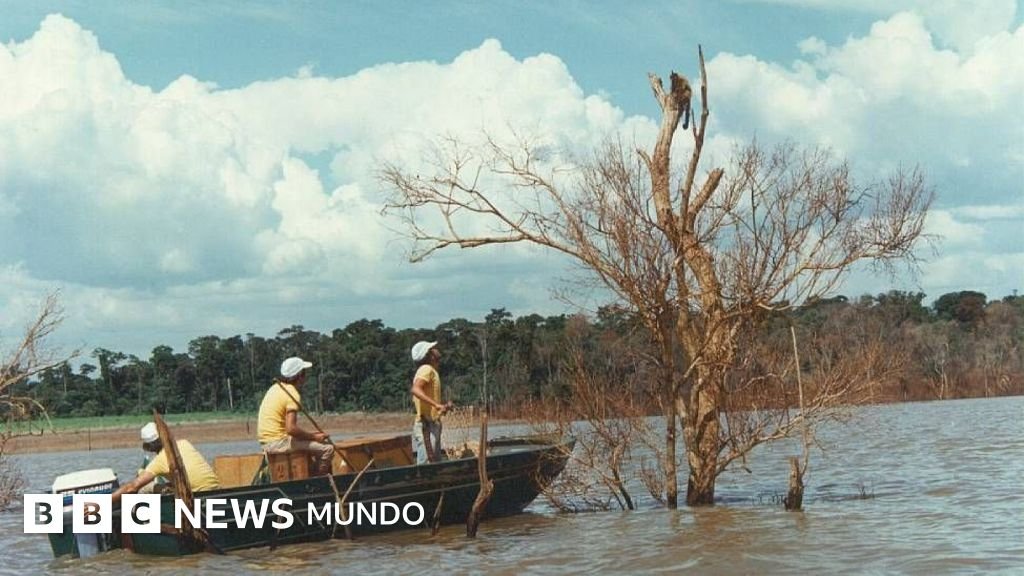
Assembling a team of 189 dedicated individuals, prioritized youth and physical fitness. Each member was carefully selected for their ability to swim and their keen observational skills. They relied on old communication technology and made use of boats to ensure efficient operation under challenging conditions.
A Race Against Time
On October 13, 1982, the dam’s diversion channel was closed, and the flooding began. Quickly, the team sprang into action, rescuing whatever they could. Initially, the numbers were small, but as the urgency increased, the team managed to save over 600 animals in just one day.
Pérez Chena highlighted the dilemma they faced: “We saved only those animals that couldn’t swim. Jaguars, for instance, are excellent swimmers so they weren’t rescued.” They also saved primates, some of whom had young clinging to them, a sight that was especially heart-wrenching.
Handling Dangerous Situations
The team was trained to deal with various threats, including poisonous snakes and aggressive wildlife. Every boat was equipped with emergency antidote kits for snake bites, ensuring that rescuer safety was paramount.
The Outcome of the Operation
By the end of the rescue mission on January 10, 1983, they had successfully saved 27,150 animals, comprising nearly 45% snakes, half of which were venomous. In contrast, Brazil’s side of the dam yielded about 11,000 rescued animals due to its different habitat.
Many of these animals found homes in protected reserves within the same ecosystem, while hundreds of snakes were sent to a leading biological research center in São Paulo. The effort not only aimed to save individual animals but also sparked a broader conversation about conservation ethics and responsibilities.
A Lasting Legacy
Decades later, the Itaipú Dam continues to supply significant portions of Paraguay’s and Brazil’s electricity. Despite being overshadowed in size by China’s massive Three Gorges Dam, Itaipú holds the record for cumulative energy production over its operational history.
“Working on the recovery of the animals was a source of pride for us. We left a lasting impact,” Pérez Chena reflected, now 87 and living in Asunción with his family.
Conclusion
The Mymba Kuéra operation not only saved countless animals but also laid the groundwork for ongoing biodiversity initiatives in the region. Its success serves as a powerful reminder of what can be achieved with commitment and collaboration in conservation efforts.
- Darío Pérez Chena led a historic wildlife rescue in 1982 during the Itaipú Dam’s construction.
- The operation successfully saved nearly 39,000 animals across Brazil and Paraguay.
- Training and meticulous planning were crucial to the mission’s success.
- The Mymba Kuéra project remains a significant example of biodiversity conservation.