
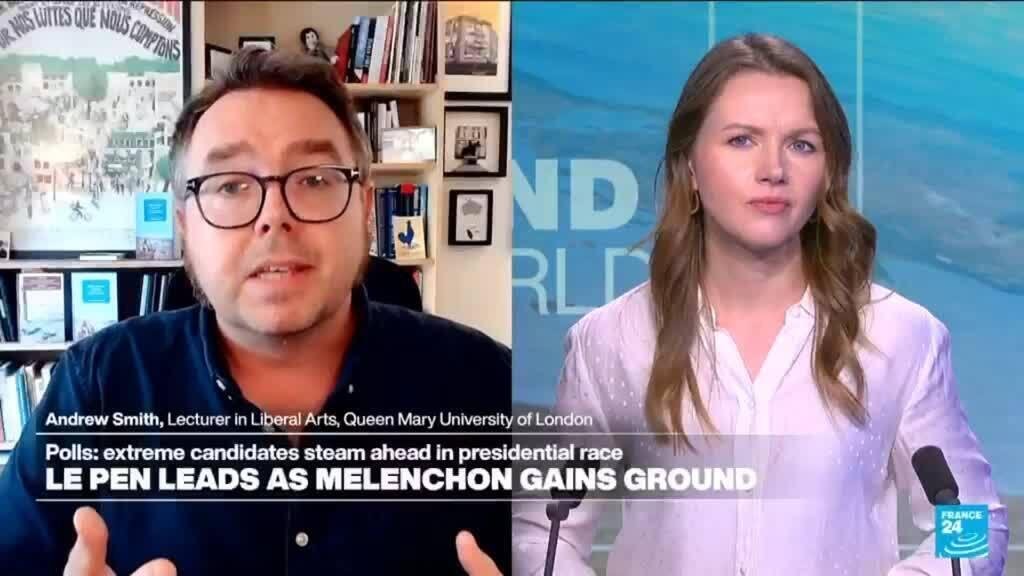
Understanding Fragmentation in French Politics: Insights from Dr. Andrew Smith
Carys Garland is excited to introduce Dr. Andrew Smith, a specialist in Modern French history and a lecturer in Liberal Arts at Queen Mary University of London. In this discussion, Dr. Smith shares his perspective on the current political landscape in France, particularly concerning Marine Le Pen and the National Rally’s strong presence in early presidential polling. He emphasizes that this should not simply be interpreted as an impending triumph for the far-right. Instead, he highlights how their success stems from factors like visibility, cohesion, and sharply focused messaging.
The Context of Current Polling
Dr. Smith delves deeper, offering a more nuanced understanding of the French electorate’s mindset. He interprets the polling data not as mere signs of increasing “polarization,” which is a common characterization, but rather through the lens of “fragmentation.” This term, according to Smith, captures the essence of a populace grappling with emotions such as anger and anxiety, alongside issues like economic instability and political fatigue.
Factors Influencing the Electorate
- Familiarity: The National Rally’s name and messaging have become well-known among voters.
- Unity: The party has managed to create a solid front, minimizing divisions within its ranks.
- Focused Messaging: Their communication strategies are sharply targeted, which resonates well with many voters.
Moving Beyond Polarization
Dr. Smith cautions against simply labeling the current climate as polarization. He argues that this view overlooks the complexities of voter sentiments and the deeper issues at play in French society. Fragmentation speaks to a broader disconnection and a variety of influences shaping public opinion today.
Conclusion
In wrapping up, Dr. Andrew Smith provides a thoughtful analysis of the nuances in the French political scene. His insights encourage us to reconsider how we interpret polling data and the underlying sentiments driving voter behavior.
Key Takeaways
- Dr. Smith emphasizes that the National Rally’s prominence in polling does not guarantee far-right success.
- Polling reflects deep-seated feelings of anger, anxiety, and political fatigue among voters.
- He advocates for understanding the electorate through the concept of “fragmentation” rather than straightforward polarization.
- Key factors contributing to the National Rally’s appeal include familiarity, unity, and focused messaging.