
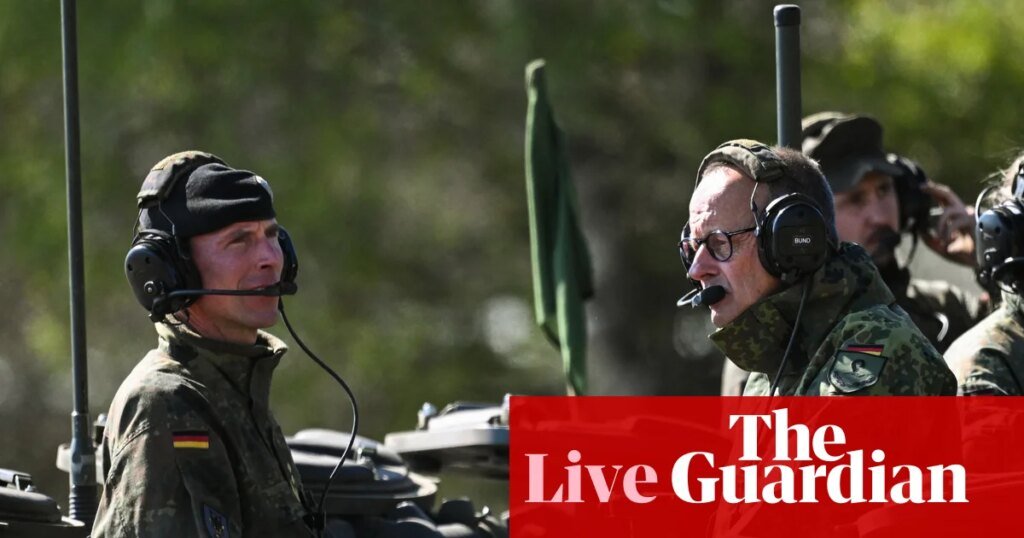
Merz Emphasizes Transatlantic Ties Amidst Iran Tensions
Friedrich Merz, the German chancellor, recently highlighted the significance of a robust transatlantic partnership during his visit to the German army in Munster. His comments came in the wake of President Trump’s recent criticisms, yet he avoided a direct confrontation with them. Instead, MERZ focused on reaffirming Germany’s alliances with the US and NATO, stressing the need for collective goals across the Atlantic.
The Importance of Defense Preparedness
During his address, Merz underscored the critical task of reforming the Bundeswehr, emphasizing the necessity for the German military to be ready to “fight tonight” and prepare for the challenges that lie ahead. He reiterated Germany’s commitment to a “strong, united NATO,” acknowledging the collaborative efforts with the US and other NATO allies. He even noted that a senior US military commander had visited Munster just a day prior.
Shifting Tone on Iran
Merz’s statements regarding Iran marked a distinct shift from his earlier remarks in the week. He placed the onus squarely on the Iranian regime, urging it to “come to the negotiating table” and cease holding the region and the world hostage to its ambitions. His assertion was clear: Germany is working closely with its allies, particularly the US, to address these concerns.
“We engage in this together for our collective transatlantic interest, ensuring mutual respect and equitable burden sharing,” he stated, reinforcing Germany’s alignment with a strong NATO and a dependable transatlantic partnership, something he personally values deeply.
Responses to Regional Tensions
As the conversation about security in Europe continues to unfold, Merz’s stance illustrates his commitment to navigating complex international dilemmas, including those fueled by discussions surrounding military presence in Europe. Acknowledging US troops in Europe as crucial for both European security and America’s global strategy, he asserts that the US remains a vital partner in these efforts.
Conclusion
Friedrich Merz’s remarks signify a pivotal moment in Germany’s approach to international relations, particularly in light of tensions with Iran. His emphasis on transatlantic partnerships serves as a reminder of the interconnectedness of global security and defense strategies.