
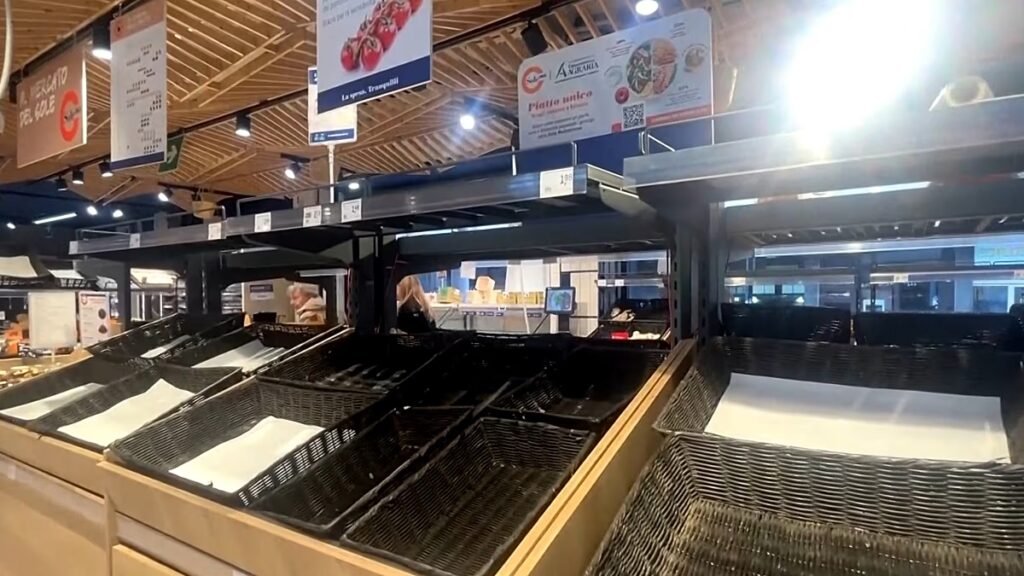
Supply Chain Disruptions: Protests Hit Southern Italy’s Supermarkets
Parts of southern Italy are facing significant shortages on supermarket shelves as truck drivers protest against escalating fuel prices. These protests are causing interruptions in the delivery of essential goods, including food, across the region.
Protests Create Delivery Challenges
In Naples, truckers parked their vehicles near the port on Monday, effectively blocking the loading and unloading process at key distribution centers. This has resulted in a halt to deliveries, especially affecting fresh produce. As a consequence, residents are experiencing noticeable shortages in various items.
Widespread Shortages Reported
Sicily has reported significant gaps on supermarket shelves, with fresh pasta, cheeses, meats, and a variety of fruits and vegetables becoming increasingly scarce. This shortage has led to panic buying among shoppers, further straining the already limited supplies. Similar scenes have emerged in Calabria and Puglia, where shelves are also showing signs of being partially empty.
The Impact of Rising Fuel Costs
The ongoing disruptions stem from transport operators advocating for assistance in managing the rising costs of diesel fuel, which are impacting their operational expenses. These protests not only spotlight the challenges faced by the transport industry but also raise concerns about the availability of essential goods for consumers.
Conclusion
The protests by truck drivers in southern Italy are causing significant disruptions in the supply chain, particularly affecting the availability of crucial food items. With rising fuel prices placing additional strain on transport operators, the situation remains critical for both businesses and consumers alike.
- Truck driver protests are causing food delivery interruptions in southern Italy.
- Shoppers are experiencing shortages of fresh produce and other essential goods.
- Fuel price hikes are driving the operational costs for transport operators.
- Panic buying among consumers is exacerbating the supply issues in the region.