
Tunisia Eases Repressive Cybercrime Law Affecting Journalists and Activists
Tunisia has recently amended a controversial cybercrime law, previously criticized for its harsh penalties against journalists and activists, allowing first-time offenders to pay fines instead of serving prison time. This change marks a significant shift in the enforcement of Decree 54, which had created a chilling effect on free speech and freedom of the press in the country.
What Has Changed?
The revised Decree 54 came into effect recently, replacing the potential five-year prison sentences for first-time offenders accused of spreading “false news” with fines that range from 10,000 to 20,000 Tunisian dinars (approximately $3,370 to $6,740). However, those who reoffend could still face imprisonment.
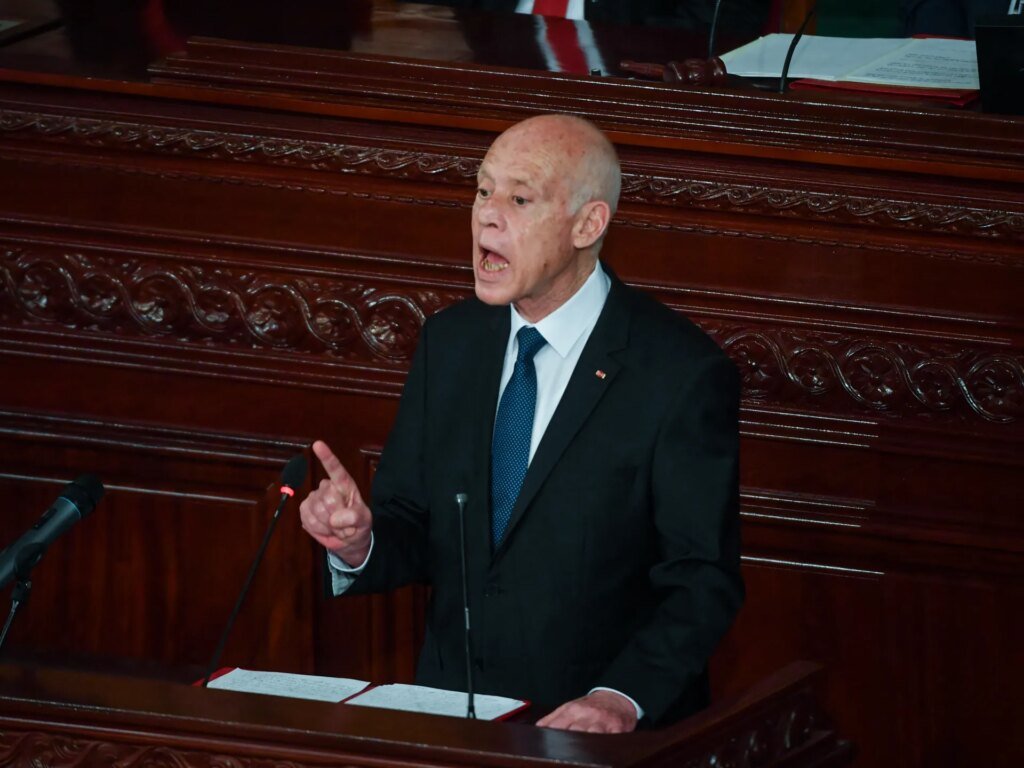
This legislation, introduced by President Kais Saied in September 2022, prohibits disseminating false information via electronic channels and has been criticized for being utilized as a tool against dissent, limiting freedom of expression in Tunisia. Critics argue that the government’s justification for the law—protecting public order and combating disinformation—has often masked its repressive effects.
Decree 54 and Its Implications
Decree 54 strictly penalizes violations related to the spread of misinformation that threatens public security or infringes on individual rights. Prior to this amendment, offenders could face penalties that included fines and lengthy imprisonment, particularly if the falsehood targeted public officials. Those charged under this decree faced serious repercussions, including up to ten years behind bars and substantial fines for offenses deemed critical of government officials.
The law has been widely denounced by both national and international organizations advocating for press freedom. It has reportedly been employed to stifle dissenting voices and silence anyone critical of Saied’s administration. Prominent political figures even describe it as one of the most effective methods for curtailing freedom of expression in Tunisia.
How Has the Law Been Used?
Numerous individuals, including journalists and activists, have faced consequences under Decree 54. The National Syndicate of Tunisian Journalists (SNJT) has reported that hundreds have been prosecuted since the law’s inception, creating substantial fear among those who seek to voice dissent against the government.
For instance, lawyer Sonia Dahmani received a two-year sentence for her critiques regarding the conditions within Tunisian prisons. She has been charged multiple times under Decree 54 for her comments in various media outlets. In another severe case, citizen Saber Ben Chouchane was sentenced to a death penalty before eventually receiving a presidential pardon.
International organizations, including Amnesty International and Human Rights Watch, have called for the repeal of the decree, asserting that it severely undermines fundamental freedoms within Tunisia. Critics are concerned that this reflects a broader trend of democratic decline, as Saied’s government has increasingly exercised control over civil society since his presidency began.
The Context of the Amendment
Just hours before the amendment to Decree 54 went live, civil society groups, led by the largest labor union in Tunisia, organized a nationwide protest against what they viewed as oppressive restrictions on civil liberties. The country has been grappling with economic crises and rising costs of living, exacerbating public dissatisfaction with the government.
In light of growing public outcry, including demonstrators calling for press freedom and the release of detained critics, the amendment appears to be an effort to quell unrest without fundamentally changing the repressive nature of the law. Critics contend that real progress would involve a complete overhaul of existing laws that permit the harassment of dissenters.
Is the Amendment Enough?
While some view the reduced penalties as a positive step, many argue that superficial changes do not address the broader issues of freedom of speech and press in Tunisia. Activists assert that the amendment fails to resolve ongoing issues surrounding arbitrary detentions and continues to threaten the rights of journalists. The overarching sentiment is that the repressive atmosphere still looms over the country, making it crucial for civil society groups to continue advocating for comprehensive reforms.
Ultimately, many still demand the complete repeal of Decree 54, calling for journalists to operate under the more democratic framework established by the 2011 press freedom law. Until meaningful changes are enacted, the shadow of repression is likely to remain a key concern for both citizens and observers of Tunisia’s political landscape.
- Tunisia has amended its controversial cybercrime law, allowing fines for first-time offenders instead of prison sentences.
- The law has been criticized for stifling dissent and threatening freedom of expression since its inception in 2022.
- Public protests and increased civil society activism contributed to the recent changes in the law.
- Despite amendments, many believe that significant reforms are still necessary to truly protect press freedom in Tunisia.