
Exciting Investment Partnership Between Argentina and the U.S.
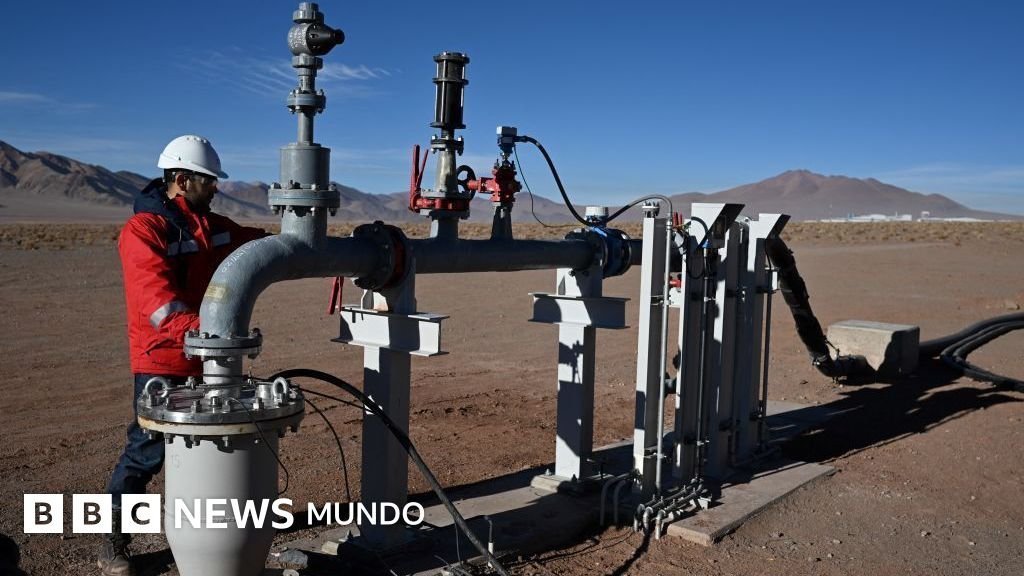
Amid the bustling events of the United Nations General Assembly last week, a pivotal announcement emerged from the partnership between Argentina and the United States: the signing of a substantial investment agreement nearing $7 billion. This initiative, known as the Andes-Atlantic Corridor, primarily aims to bolster the country’s transport, maritime, and railway infrastructure to enhance the export of key resources like minerals, oil, and gas.
Details of the Agreement
The agreement was officially introduced by Argentina’s Foreign Minister, Pablo Quirno, and U.S. Under Secretary of State, Christopher Landau, during a ceremony in Washington. The initiative aims to not only facilitate public and private investment in transportation, energy, and digital infrastructure but also to solidify the U.S. standing as a critical partner for infrastructure and investment within Argentina. This was highlighted in a joint statement following the signing of the accord.
According to analysts and experts, this announcement serves as a significant support for President Javier Milei, especially in an election year. It also indicates a strategic move to secure productive interests against Chinese investments. The joint statement emphasized that U.S. funding could enhance the exportation of minerals, oil, and gas through improved railways, waterways, ports, pipelines, and energy infrastructure, all constructed with reliable technology aimed at ensuring optimal efficiency and cybersecurity.
Funding Source and Allocation
Local media reports indicate that the financing will be managed by the U.S. Export-Import Bank (EXIM), earmarking resources primarily for the purchase of American goods and services starting in 2027. A significant initial focus will be on enhancing the road infrastructure that connects Argentina’s Vaca Muerta oil fields with commercial ports. Esteban Actis, an economic researcher at the National University of Rosario, explained that “the U.S. is seeking a safe route to secure the supply of these natural resources amid global instability.”
Moreover, analysts believe this partnership serves as a safety net for potential investors considering the past financial challenges faced by Argentina. Actis highlights that the agreement is designed not just for monetary investment, but to ensure a guarantee that the U.S. supports Argentina concerning energy and minerals.
Key Focus Areas: Gas and Oil
During the announcement of the Andes-Atlantic Corridor, both Quirno and Landau outlined pivotal objectives set to commence in 2027. The primary goal is to connect the Vaca Muerta site, located in the western regions of Mendoza and Neuquén and operated by the state-owned YPF, to international markets. There is currently a project known as Argentina LNG, which aims to facilitate the extraction of approximately 12 million tons of liquefied gas annually.
Previously, Italian and Emirati investments nearing $21 billion were focused on constructing infrastructure for gas extraction and liquefaction plants. With U.S. support, the aim is to access U.S. supplies to enhance product distribution to global markets. Quoting YPF’s president, Horacio Marín, Quirno stated that this project could generate up to $200 billion in exports over the next 20 years, with potential investments reaching $100 billion. “The main goal is to ensure that Vaca Muerta’s full potential is realized without the investment and financing issues that often hinder such projects,” Actis notes.
This aligns with several reports highlighting that, without adequate infrastructure investments, Argentina risks a “bottleneck” scenario, where abundant production struggles to reach international markets. A recent study from BBVA Research indicated that approximately $20 billion is needed to upgrade the necessary infrastructure for hydrocarbon exit from this region, including the development of pipelines and processing centers.
Focus on Critical Minerals
The joint statement also emphasizes investment directed toward critical minerals, particularly lithium and copper. “We aim to explore opportunities under the U.S.-Argentina Critical Minerals Framework Agreement to support mining and processing of critical minerals, securing supply chains and promoting diversification in global supply lines,” the statement elaborates.
Argentina ranks as the third country globally with the highest lithium reserves, a vital resource for electric vehicle batteries, among other uses. Currently, the nation maintains multiple contracts with Chinese firms for lithium extraction. When asked about any related clauses involving Chinese investors, Quirno responded, “No, there is no conditionality. The strategic alliance with Washington does not undermine Argentina’s trade relations with China.”
Nevertheless, analysts recognize the underlying intentions of the U.S. in the region. Actis remarked, “For months, we have heard responses from many U.S. partners when they’re asked to cease receiving funding and investments from China: ‘Okay, what does Washington offer?’ This agreement attempts to fill that gap, enabling the U.S. to compete with China on the same turf.”
Digital Improvements
Another notable aspect of the agreement pertains to “digital customs.” It underscores the support for reliable technology use and collaboration in customs inspection security. While intending to enhance mining exploitation projects to meet required standards, there’s also a push to improve electrical and technological support networks.
Technology expert Enrique Carrier highlights the objective to enhance the existing fiber-optic network in Argentina. “Although this initiative primarily benefits the U.S. by granting access to energy and mineral resources, Argentina also stands to gain, allowing it to partially address its chronic infrastructure deficit in this sector,” he explains. “It represents a win-win situation within the ‘2.0 carnal relations’ framework and should be maximized while the political climate remains favorable.”
Conclusion
The Andes-Atlantic Corridor between Argentina and the United States signifies a monumental step towards enhancing Argentina’s infrastructure and resource export capabilities. With substantial investments aimed at energy, minerals, and technological advancements, this partnership stands to reshape Argentina’s economic landscape favorably.
- Argentina and the U.S. have signed a $7 billion investment agreement known as the Andes-Atlantic Corridor.
- The focus is on boosting infrastructure for minerals, oil, gas, and critical minerals like lithium and copper.
- The agreement aims to enhance export capabilities while ensuring U.S. support for energy investments in Argentina.
- The initiative could significantly address Argentina’s infrastructure deficiencies and strengthen its economic resilience.