
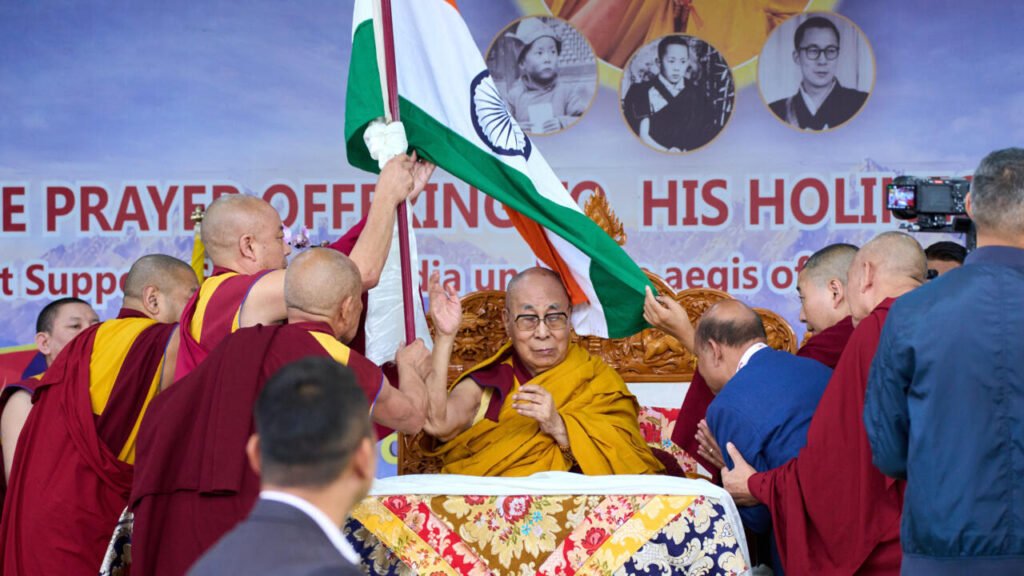
Tibetans in Exile Cast Votes as Future Without the Dalai Lama Looms
On Sunday, Tibetans residing outside Chinese jurisdiction participated in an important election for their government-in-exile, a moment that carries intensified meaning as they anticipate a future without their beloved spiritual leader, the Dalai Lama.
The Role of the Central Tibetan Administration
The Central Tibetan Administration (CTA), based in India, has been labeled a “separatist political group” by the Chinese government. It remains a vital institution for the Tibetan exile community, particularly following the Dalai Lama’s decision to relinquish political power back in 2011.
The Younger Generation Joins the Process
Among the voters is 19-year-old Tenzin Tsering, who expressed his enthusiasm as a first-time voter. He is eager for increased youth representation in the government. “Our votes matter,” he emphasized, while casting his ballot in Bylakuppe, located in Karnataka, India—home to one of the largest Tibetan communities outside the Himalayas. Tsering stated, “We need voices that reflect where our community is going, not just where it has been.”
A Global Voting Effort
This election takes place across 27 countries, although notably absent from this list is China itself. Approximately 91,000 registered voters are participating, which includes Buddhist monks residing in the high Himalayas, political exiles based in major South Asian cities, and Tibetan refugees living in Australia, Europe, and North America.
The Legacy of the Dalai Lama
The 90-year-old Dalai Lama, who has lived in India since 1959 after fleeing Lhasa following a Chinese military crackdown, reassures his supporters that he expects to live for many more years. Nevertheless, advocates for the Nobel Peace Prize winner are keenly aware that the Chinese government has announced it will play a role in approving his future successor.
The Dalai Lama maintains that only his office in India possesses the authority to determine who his successor will be.
A Spiritual Tradition
Tibetan Buddhists believe that he is the 14th incarnation of an important spiritual leader originally born in 1391. The exiled parliament, which convenes biannually, comprises 45 members, including representatives from three traditional provinces, five religious faiths, and the diaspora.
Leadership and Policy Directions
Headquartered in Dharamsala, Northern India, the CTA operates as a representative entity for around 150,000 Tibetans living in exile globally. The current leader, or ‘sikyong,’ Penpa Tsering, recently secured a second term on February 1 by winning 61% of the preliminary vote—a decisive enough margin to clinch the position outright.
Tsering, reflecting the government’s stance, does not advocate for full independence for Tibet; instead, he aligns with the Dalai Lama’s “Middle Way” policy, which seeks genuine autonomy within the framework of Chinese rule.
- Tibetans in exile voted for a government-in-exile amid concerns about a future without the Dalai Lama.
- The Central Tibetan Administration operates as a crucial institution for the exile community, especially after 2011.
- Over 91,000 registered voters participated in the election, spanning 27 countries, excluding China.
- The current leader, Penpa Tsering, supports autonomy rather than full independence for Tibet, in line with the Dalai Lama’s vision.