
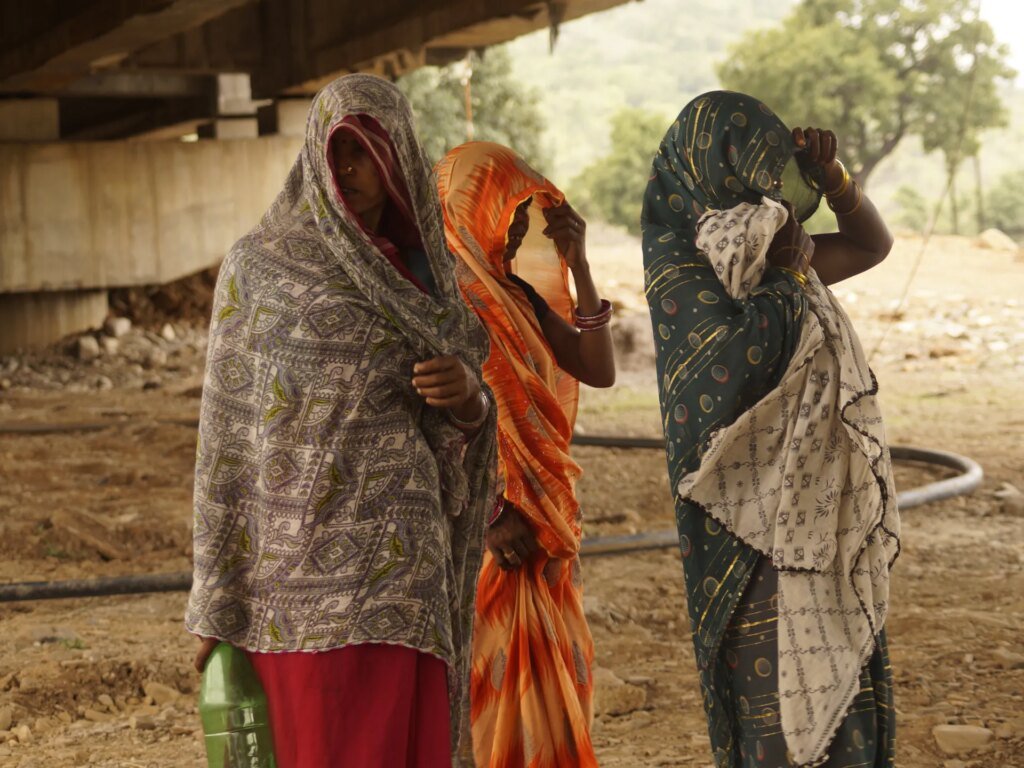
Struggles of Pooja Gond: A Widow’s Fight for Justice
In a small village, Pooja Gond, a 21-year-old widow, welcomes a visitor to her home with a cup of sweet black tea. Despite her soft demeanor, a recent bee sting has left her with noticeable swelling on the right side of her face. Pooja’s subdued voice carries the weight of profound loss and exhausted resilience, as she reflects on the challenges that have reshaped her life.
The Painful Journey
Just a year into her marriage, tragedy struck when her husband, Parshuram, a daily wage laborer, fell ill with severe abdominal swelling. Despite seeking help from a local doctor, his condition deteriorated, leaving the family without a formal diagnosis or any medical explanation for his untimely death. Sadly, their one-year-old son also succumbed, presumably to typhoid fever, although that too went unverified by medical authorities.
Pooja has yet to receive any compensation for her losses. Neither has her sister-in-law—who has attempted to vote but is dismissed as underage—nor has Pooja been granted a widow’s pension, as officials claim she is too young. The meager compensation that their family received resulted in the construction of two small rooms—leaving them with only a fraction of what they truly needed.
A Struggle to Be Heard
After Parshuram’s passing, Pooja sought assistance from local officials to obtain compensation. Unfortunately, she discovered that her name was absent from the necessary list. The Gram Panchayat secretary informed her that updating the list would require a payment of 100,000 Indian rupees (approximately $1,050), a sum she could not afford. Determined to pursue this, Pooja made the arduous journey to the secretary’s office, walking 10 kilometers from her village and even travelling by bus to the district headquarters, costing her 800 Indian rupees ($8) in travel expenses.
However, time and again, officials collected her documents and left her without a resolution. “Bina paise ke koi baat nahi sunta,” she remarks quietly, expressing the harsh truth: without money, no one takes her seriously.
The Loss of Their Home
Without warning, officials demolished one of the two homes occupied by Pooja’s family. Neighbours stood by as Pooja and her family pleaded for the destruction to cease, but their cries went unheard. Confusion reigned as officials informed her mother-in-law that the house was being taken down first, yet no alternative accommodations were provided, leaving them at a loss for where to turn.
The remaining residence is a small mud house featuring whitewashed walls and a roof made of hay and terracotta tiles. Faded tribal art adorns the walls, testament to their cultural heritage, but the wear from time and rain is evident. A wooden door leads to a little courtyard, where a traditional wood-fired oven sits in the kitchen. Pooja’s anxiety looms as she knows this house could be next on the list for demolition; yet, she remains uncertain about where she would go.
A Desire for Stability
If relocation becomes inevitable, her wish is to remain close to the forest, which has been a vital source of sustenance and cultural identity for her family. “It would have been much better if they had given us land in exchange for land,” she explains. “We don’t just want money; we want land.”
Muliya’s Unheard Cries
Pooja’s 18-year-old sister-in-law, Muliya, faces similar barriers despite holding a voter ID and having participated in elections. Government officials claim she is too young to qualify for compensation. Muliya suffers from unhealed sores in her mouth, and she relies on Pooja to advocate for her. If they were to receive compensation, Pooja envisions Muliya using the funds for necessary medical care, which would grant her the chance to feel recognized as an adult by the government.
Every summer, Muliya collects mahua flowers and chironji from the forest to sell. Besides serving as a source of income, mahua is integral to their family’s diet and traditional practices. “The forest gives us everything,” she affirms, underscoring its significance in their lives.
The Systematic Oversight
The situation outlined for Pooja, Muliya, and their family reflects more than just an administrative error, according to Bina Agarwal, a professor of development economics and environment at the University of Manchester. She has noted a contradiction in the legal definition of a family. According to the LARR Act, Article 3(m) defines family in a traditional sense, yet further explanations treat each adult as a separate entity. If the latter were prioritized, it would lead to better outcomes for women.
Agarwal critiques the current application of the law, stating that it consistently overlooks wives, widows, and adult daughters when determining eligibility for compensation. Her recommendation for change is straightforward: “Financial compensation should go directly into the accounts of all adults in the family separately,” she emphasizes. “Duly registering land with equal rights for women would also be instrumental.”
Conclusion
Pooja Gond’s story is a poignant reminder of the systemic issues that affect widows and families in similar situations. Despite her struggles, her voice remains loud and clear—she seeks justice, resilience, and the basic right to land and stability.
- Pooja Gond, a young widow, faces significant challenges following the loss of her husband and child.
- Her attempts to gain compensation from local officials have proven futile, highlighting systemic issues.
- Pooja and her sister-in-law desire stability, preferring land over mere financial compensation.
- Experts argue for reforms to ensure fair compensation and land rights for women within families.