
Taiwanese Opposition Leader Visits China in Search of Peace
Taiwan’s main opposition figure has made a significant trip to China, marking a rare visit aimed at fostering “peace” across the Taiwan Strait. This development comes amidst concerns from the Taiwanese government that Beijing may attempt to impede arms sales from the United States to the democratic island.
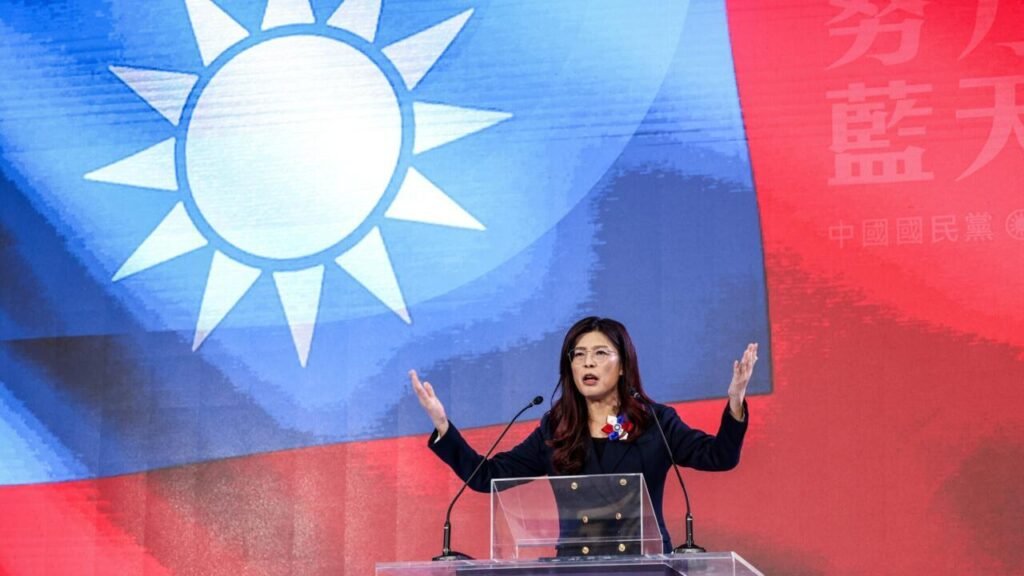
Cheng Li-wun, chairwoman of the Kuomintang (KMT) party, is the first leader of her party to set foot in China in the last decade. Prior to her journey to meet Chinese President Xi Jinping, she emphasized the importance of this dialogue before scheduling a visit to the United States, Taiwan’s primary security ally.
The KMT, which advocates for improved relations with China, aligns with Beijing’s view that Taiwan is part of its territory and has made veiled threats to use military force to assert control over it. This visit, however, has faced criticism from both within the party and among observers, who argue that Cheng’s stance is excessively pro-China.
As Cheng arrived at a Shanghai airport, state news agency Xinhua documented her landing. Footage broadcasted by Taiwanese media showcased her receiving a bouquet of flowers while stepping off a Shanghai Airlines plane, followed by a swift departure in a convoy that bypassed the busy terminal.
Call for Peace Amid Tensions
In the days leading up to her departure, Cheng addressed reporters, asserting that Taiwan “must do everything in our power to prevent war from breaking out.” She reiterated that achieving peace is integral to Taiwan’s wellbeing, saying, “Goodwill must be built up, and mutual trust needs to be expanded, step by step, by both sides.”
Reports from Taiwan’s foremost China policy body warned that Beijing might seek to disrupt Taiwan’s military procurements from the U.S. The KMT, however, rejected these allegations. “This trip is entirely for cross-strait peace and stability, so it has nothing to do with arms procurement or other issues,” Cheng affirmed.
As the KMT leader prepares for her six-day visit, which includes stops in Shanghai, Nanjing, and Beijing, she expressed hopes for a meeting with Xi. Previously, KMT members have regularly traveled to China, but the last time a KMT leader visited was in 2016.
The Background of Rising Tensions
Tensions escalated after China halted high-level communications with Taiwan in 2016, coinciding with Tsai Ing-wen of the Democratic Progressive Party’s presidential victory, in which she dismissed Beijing’s claims over the island. Since then, military pressure from China has intensified, with frequent deployments of jets and naval vessels near Taiwan and regular large-scale military exercises.
Cheng’s visit to China arrives just a month before a scheduled summit in Beijing between U.S. President Donald Trump and Xi. The United States is reportedly exerting pressure on Taiwanese opposition lawmakers to endorse defense initiatives aimed at fortifying Taiwan against a potential Chinese assault.
Cheng has voiced her opposition to the current government’s defense expenditure plan, stating, “Taiwan isn’t an ATM,” while advocating for a KMT proposal allotting NT$380 billion for U.S. weapons, with room for additional acquisitions if needed. Yet, she is contending with growing internal divisions within her party regarding the best approach to counter China’s military activities.
Despite the ambiguity that has often surrounded the U.S. stance on defending Taiwan, it remains the island’s foremost arms supplier, a situation that irks Beijing. Recently, the U.S. approved an $11 billion arms sale to Taiwan, with further agreements on the horizon, though uncertainty looms over whether they will proceed following Xi’s warnings to Trump against such sales.
Cheng maintains her support for a robust defense for Taiwan but insists that the island need not choose between alliances with Beijing and Washington.
- Taiwan’s KMT chairwoman Cheng Li-wun visits China to foster peace.
- Concerns arise about Beijing potentially disrupting U.S. arms sales to Taiwan.
- Tensions have escalated since China’s military actions around Taiwan increased.
- Cheng advocates for a strong defense strategy without choosing sides between the U.S. and China.