
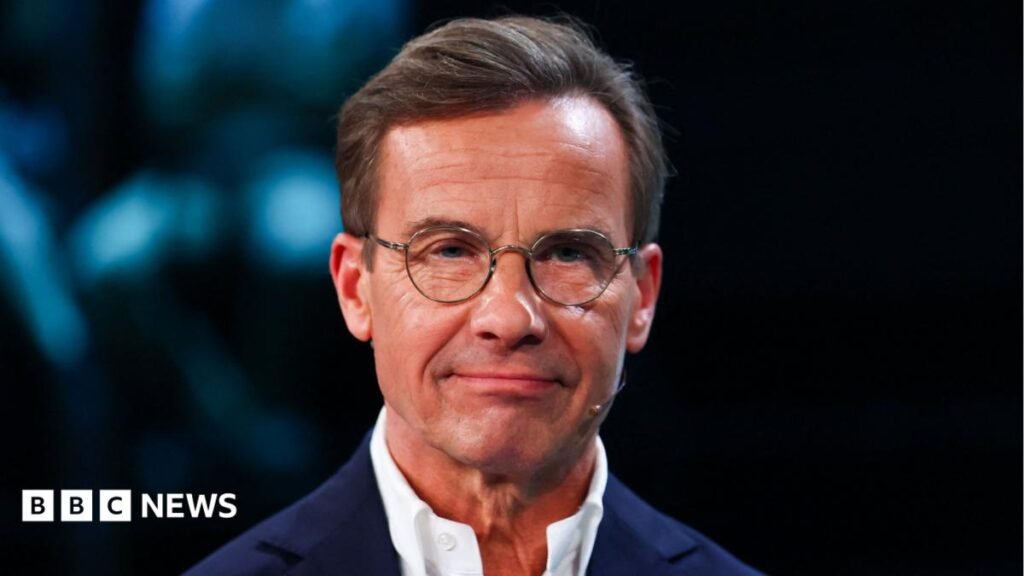
Sweden’s Political Landscape Shifts as Prime Minister Resigns
In a significant political development, Prime Minister Ulf Kristersson of Sweden has stepped down following a narrow defeat in the recent general election. This article delves into the details surrounding his resignation, the election outcomes, and the implications for the future of Sweden’s governance.
The Election Outcome
Ulf Kristersson announced his decision to resign via a post on X, as preliminary results from Sunday’s election revealed a close contest between his right-wing bloc and the opposition led by Magdalena Andersson of the Social Democrats. With just about 50,000 votes distinguishing the two blocs in a nation of approximately 10 million, the significance of this election is palpable.
Seat Distribution
The opposition parties are projected to secure 176 seats in the 349-seat Riksdag, Sweden’s parliament, while Kristersson’s conservative bloc is anticipated to win 173 seats. These figures are based on data released by the Swedish Election Authority, though they will need to be formally certified in the coming days, with final confirmations expected this weekend.
Political Dynamics in Sweden
In Sweden’s political environment, there are two main blocs with four parties each on both the right and left sides, leading to a history of coalition and minority governments. Following a prime minister’s resignation, the Speaker of the Riksdag engages in discussions with all political parties to propose a suitable candidate for the next leadership role, which will be subjected to a vote by the members of parliament.
Next Steps in Government Formation
Kristersson stated, “Now it is the speaker who will lead the next stage of the way to a new government. I am hereby requesting that I be relieved of the office of prime minister to allow that work to start immediately.” In the wake of his resignation, Andersson has initiated discussions with other opposition parties, including The Left Party, The Centre Party, and The Green Party, to explore possibilities for a new government. However, these negotiations may face hurdles due to significant policy differences, particularly regarding tax issues.
The Challenge Ahead
Forming a government in Sweden is often a prolonged process; for instance, after the 2022 election, it took 37 days to establish a government, while in 2018, this process extended to 134 days. Kristersson acknowledged that the opposition might find the circumstances for government formation “complicated,” as varying party platforms presented prior to the election could create challenges.
Conclusion
Prime Minister Ulf Kristersson’s resignation marks a pivotal moment in Sweden’s political arena. As the opposition prepares to navigate the complexities of forming a new government, the outcomes of these discussions will play a crucial role in shaping the nation’s future.
Key Takeaways
- Prime Minister Ulf Kristersson resigned after a narrow defeat in the general election.
- Preliminary results indicate the opposition is set to win 176 seats, compared to 173 for Kristersson’s bloc.
- Coalition and minority governments are common in Sweden’s political landscape.
- The process of forming a new government may encounter challenges due to significant party differences.