
Sweden’s Election: A Tight Race and Future Uncertainty
Sweden’s recent general election has revealed a competitive and uncertain landscape, with both the current prime minister and the leftist opposition leader expressing their readiness to take the reins of government. As vote counting nears completion, it appears that the far-right is experiencing a decline in support.
Election Overview
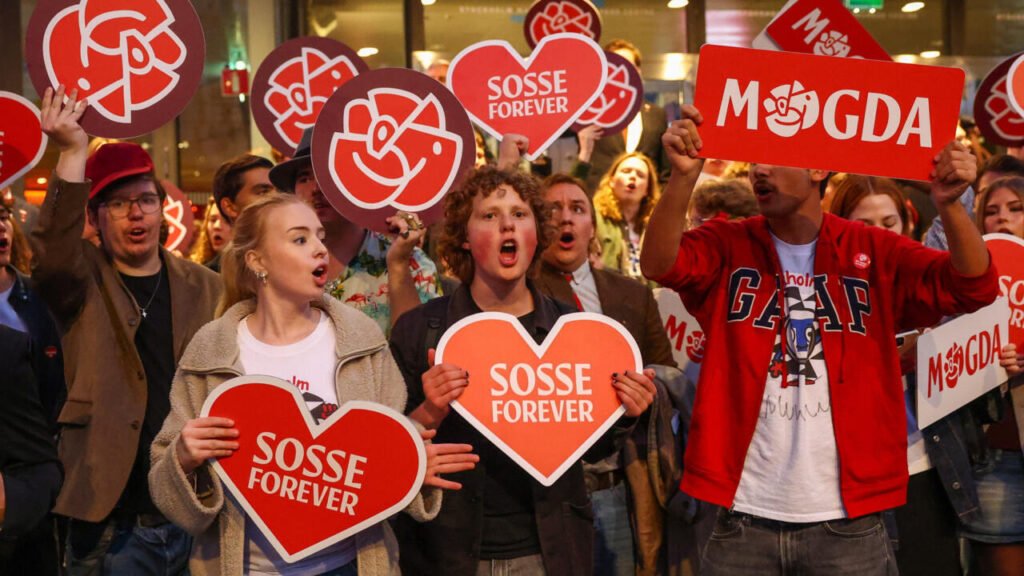
With nearly 90 percent of ballots tallied, a coalition of four opposition parties, led by Social Democratic head Magdalena Andersson, has managed to secure a narrow one-seat lead in the 349-seat parliament. This victory puts them ahead of Prime Minister Ulf Kristersson’s right-leaning alliance, which includes the anti-immigration Sweden Democrats. Andersson, the first female prime minister of Sweden, expressed her optimism: “For now, we are in the lead. And if that is confirmed, Sweden will have a new government.” Despite this potential major shift, her party is projected to achieve its lowest score in over a century, receiving around 28 percent of the votes.
Responses from Leadership
Prime Minister Kristersson, representing the Moderate Party, acknowledged his party’s position with around 19.9 percent of the count thus far, and indicated he would support Andersson in her efforts to form a government with the leftist coalition, despite recognizing their significant ideological differences. “Which government is going to govern Sweden in the coming years is still an open question,” he stated.
In a startling turn, the far-right Sweden Democrats, who entered parliament in 2010, suffered a drop in support for the first time, obtaining only 17.6 percent compared to 20.5 percent in the previous election. Party leader Jimmie Akesson remarked, “We don’t yet have the full election result, but it’s obvious that we’ve lost a few percentage points compared with our result four years ago.”
Counting and Results
Given the close nature of the election, party leaders have indicated that the final results may take several days to ascertain. Election authorities will continue counting ballots that were delayed, and there’s an automatic recount of all votes conducted by regional administrative bodies, a process that typically lasts a week.
Kristersson has been leading a minority coalition that has relied on the Sweden Democrats for support over the last four years, offering them influence over policy decisions in return. He had indicated a willingness to provide key cabinet positions to the far-right party if the coalition secured victory.
Campaign Focus and Promises
Throughout the campaign, discussions centered on healthcare and the rising costs affecting households. Andersson has pledged to implement tax increases on banks and high-income earners, as well as initiatives to decrease waiting times in healthcare and improve educational outcomes.
On the other hand, Kristersson has promised to enhance citizens’ everyday lives, noting that his government’s efforts to combat organized crime and regulate immigration have begun to yield results. “We want to use our new and far better preconditions to improve the lives of ordinary people… to make Sweden great again,” he remarked, echoing a familiar political slogan.
The Mainstream Shift
Akesson has navigated the Sweden Democrats from their neo-Nazi roots to a more mainstream position over the past two decades. He remarked on the increasing acceptance of his party in the political discourse, stating that many more citizens are willing to publicly identify as Sweden Democrats.
Public sentiment reflects a desire for change, as citizens express hopes for a government that fosters inclusivity and addresses the concerns of all demographic groups. “Hopefully a lot of people will realise that we have to change course… so that everyone will feel included in society,” stated one voter.
Conclusion
As Sweden awaits the finalized election results, the implications for the government direction remain significant. The closely contested race emphasizes the evolving political landscape and the importance of addressing pressing issues, from healthcare to crime.