
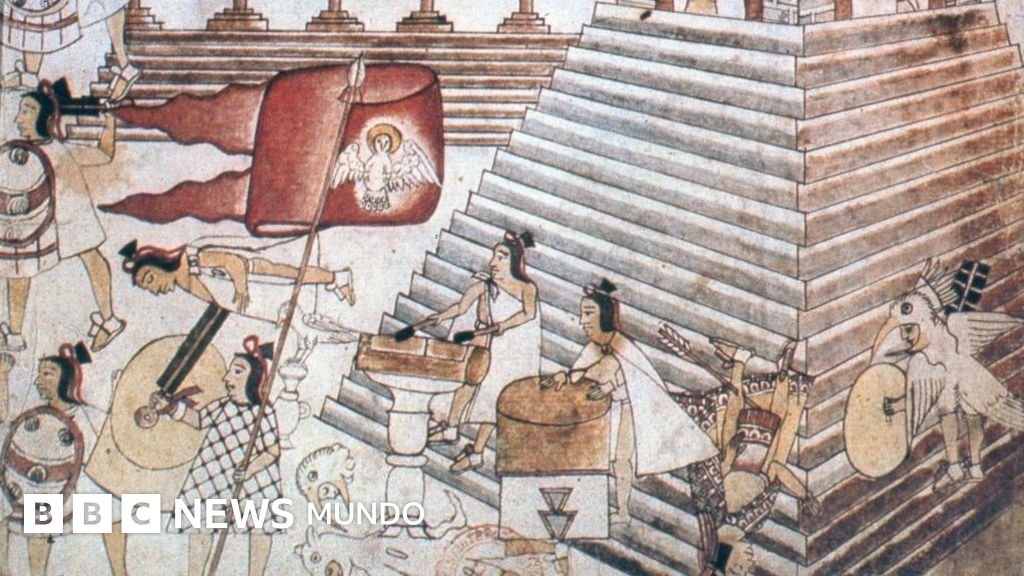
The Return of the Codex Azcatitlan to Mexico
The Codex Azcatitlan has made its long-awaited reunion with Mexico after nearly two centuries abroad, bringing with it a wealth of history from the Mexica, or Aztec, civilization. This remarkable document is now on display at the renowned National Museum of Anthropology in Mexico City, showcasing critical events in Mexica history, including their legendary origins from Aztlán, their journey to establish Tenochtitlan in 1325, and their encounters with Spanish colonizers.
Historical Significance of the Codex Azcatitlan
With its vivid pictographs, the Codex Azcatitlan serves as a visual narrative of significant milestones for the Mexica people. It not only encapsulates their mythical beginnings and pilgrimage but also documents their governance over the centuries and the early years of Spanish colonization. As such, it holds immense value for historians studying pre-Hispanic Mesoamerican cultures.
Having resided in France since the 1840s, the Codex was eventually transferred to the National Library of France in the late 19th century. Its return is the result of discussions between Mexican President Claudia Sheinbaum and French President Emmanuel Macron, who agreed to exchange ancient codices for temporary exhibitions in both nations. According to Claudia Curiel, the Federal Secretary of Culture, “Azcatitlan offers colorful illustrations that chronicle Mexica history up to the Conquest and the early colonial period.”
The Exhibition at the National Museum of Anthropology
The display of the Codex Azcatitlan opened on September 17 and will be available for viewing until December 31 at the National Museum of Anthropology. As part of the exchange, Mexico sent the Codex Boturini, another vital document that narrates the journey to Tenochtitlan but is believed to have been created earlier than Azcatitlan.
Jean-Charles Bédague, director of collections at the National Library of France, addressed the significance of these manuscripts and the international collaboration they inspire. He stated, “The collection of Mexican manuscripts is exceptional, requiring researchers from both countries to delve into various disciplines and confront different perspectives.”
Contents of the Codex Azcatitlan
Civilizations that existed before the Spanish conquest often utilized codices to document their histories through glyphs and pictograms. While only 15 to 17 pre-Hispanic codices are widely acknowledged, around 500 documents from the colonial period exist, blending pre-Hispanic techniques with Latin and Spanish text.
Crafted during colonial times, the Codex Azcatitlan reflects a mix of Spanish and indigenous artistic styles. Unlike traditional amate paper, it was written on European paper and features a curated selection of colors. The document contains 25 folios encompassing around 50 pages, although some panels are missing for unknown reasons.
Spanning 500 years of Nahua history, the codex begins with the Mexica’s legendary departure from Aztlán and their tribulations before arriving at Lake Texcoco, where they received a divine sign—the eagle devouring a serpent on a small island, now emblematic of the Mexican flag. It chronicles their wars, festivities, and the eventual encounter with Spanish forces that led to the fall of Tenochtitlan.
The Revival of History
Created during the late 16th and early 17th centuries, the Codex Azcatitlan aimed to reconstruct pre-Hispanic history during a time when earlier manuscripts were often misunderstood or deemed dangerous by colonial authorities. This led to significant destruction, yet some inquisitive priests recognized the value of preserving the knowledge held by indigenous elders and sought their help in documenting history.
While the Codex Florentino is regarded as the most extensive manuscript, others like the Mendoza, Boturini, and Borbonico are equally significant, covering a variety of subjects such as botany, maps, calendars, genealogy, and economics. Unfortunately, many manuscripts like Azcatitlan ended up in private collections or foreign institutions, with a significant number housed in the National Library of France.
In Mexico, there are approximately 106 original documents and an equal amount of copies kept in a specially designed vault to maintain optimal conditions for preservation. While various appeals for the return of cultural heritage have been made, only temporary loans, like that of the Codex Azcatitlan, have been achieved.
Conclusion
The Codex Azcatitlan’s return not only enriches Mexico’s cultural landscape but also offers invaluable insights into the country’s pre-Hispanic legacy. As opened conversations continue about recognizing and restoring historical artifacts, the exhibition serves as a testament to the importance of preserving and understanding our collective history.
- The Codex Azcatitlan has returned to Mexico after nearly 200 years.
- It highlights major events in Mexica history, including their mythic origins and the establishment of Tenochtitlan.
- The exhibition can be visited at the National Museum of Anthropology until December 31.
- This return follows a cultural exchange agreement between Mexico and France.