
Haze Crisis from Indonesian Fires Triggers Regional Alarm
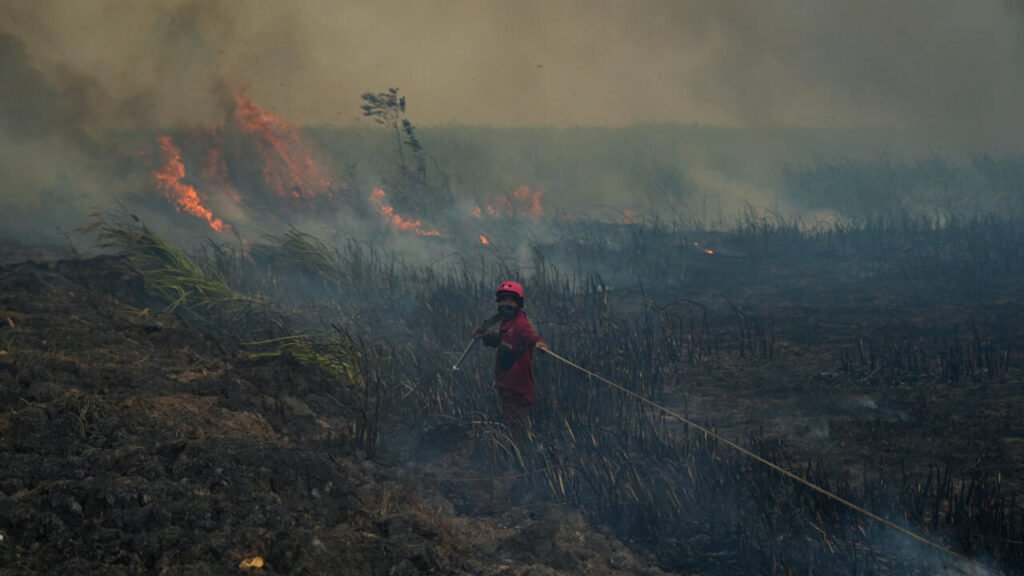
The ongoing fires in Indonesia have unleashed a toxic haze over Southeast Asia, prompting a top-level alert from the region’s meteorological authority. This alarming pollution, which has persisted for several months, has forced school closures, led to a spike in respiratory illnesses, and limited outdoor activities across Indonesia, Malaysia, Singapore, and East Timor.
The haze comprises smoke from extensive forest and peatland fires ravaging Indonesia, particularly on the islands of Borneo and Sumatra. These regions, characterized by dense forests and large areas of peatland, are highly susceptible to fires during the dry season, typically spanning from April to October.
The ongoing situation is exacerbated by extreme “super El Niño” conditions, bringing intense heat and dryness that promote the rapid spread of wildfires. Environmental group Auriga reported that from January to August this year, over 637,000 hectares of land were scorched, a shocking nine times the area of Singapore. Other estimates, like those from deforestation monitor Nusantara Atlas, suggest this figure could be nearly 900,000 hectares.
Regional Concerns Raised
“This situation needs to be addressed immediately,” urged Zul Hafiz, a 39-year-old teacher biking from Shah Alam to the capital of Malaysia. He emphasized the need for the Association of Southeast Asian Nations (ASEAN) to respond decisively to this crisis.
In a notice published on its site, the ASEAN Specialised Meteorological Centre (ASMC) announced the activation of “Alert Level 3” for the Southern ASEAN region, marking the highest level on its four-tiered alert system. This level indicates a “high risk of severe transboundary haze” resulting from more than two consecutive days of moderate to dense smoke.
Earlier this year, the ASMC had already issued two Level 3 alerts. As of last Saturday, Singapore ranked as the second most polluted major city in the world, following Baghdad, with Kuala Lumpur close behind. All locations reported “very hazardous” pollution levels.
Efforts to Combat the Haze
In response to the situation, Indonesia announced it was deploying dry ice at a major airport in South Sumatra to help dissipate the haze. The country’s disaster management agency reported dispersing 2.4 tonnes of dry ice by air, noting the smoke hinders visibility, disrupts flights, and poses serious health risks to residents.
The haze has made life challenging throughout Southeast Asia, prompting many affected to demand immediate action. “It’s frustrating for Malaysia due to the irresponsible actions of our neighbor,” commented Khairul Azhar, a bank officer in Kuala Lumpur. “This haze has disrupted our routine, affecting not just us but many Malaysians,” he added.
In Palangkaraya, the heart of the fires in Indonesia, locals expressed their struggles against the thick haze, which turned their skies into ominous shades of yellow and orange. “The haze has severely affected our health and income,” lamented Marzuki, a 38-year-old mechanic.
“The economy is already tough, and the haze only worsens the situation,” he stated, pointing out that this year’s crisis surpasses even the severe haze episodes of 2015. “I just hope for rain to help put out the fires and clear the smoke, so we can return to normal activities,” he added.
Daily Struggles Continue
Joko, a 51-year-old construction worker, voiced his predicament: “I have no choice but to work or lose my income. The thick smoke affects my breathing and irritates my eyes, but I must carry on.” He underscored the precarious nature of his daily wage job.
In East Timor, air quality remained unhealthy, particularly in the capital Dili, with authorities warning that conditions may worsen. Schools were closed as a precaution.
Singapore announced it would issue warnings to seven Indonesian companies identified as responsible for the fires. Meanwhile, discussions about the haze will take place at upcoming ASEAN meetings, leading up to a summit in Manila next month.
- Fires in Indonesia have caused a significant haze impacting Southeast Asia.
- Authorities have raised the alarm to the highest alert level due to severe health risks.
- Challenges persist for local residents, including economic difficulties and health concerns.
- ASEAN is preparing to address the crisis in upcoming meetings and discussions.