
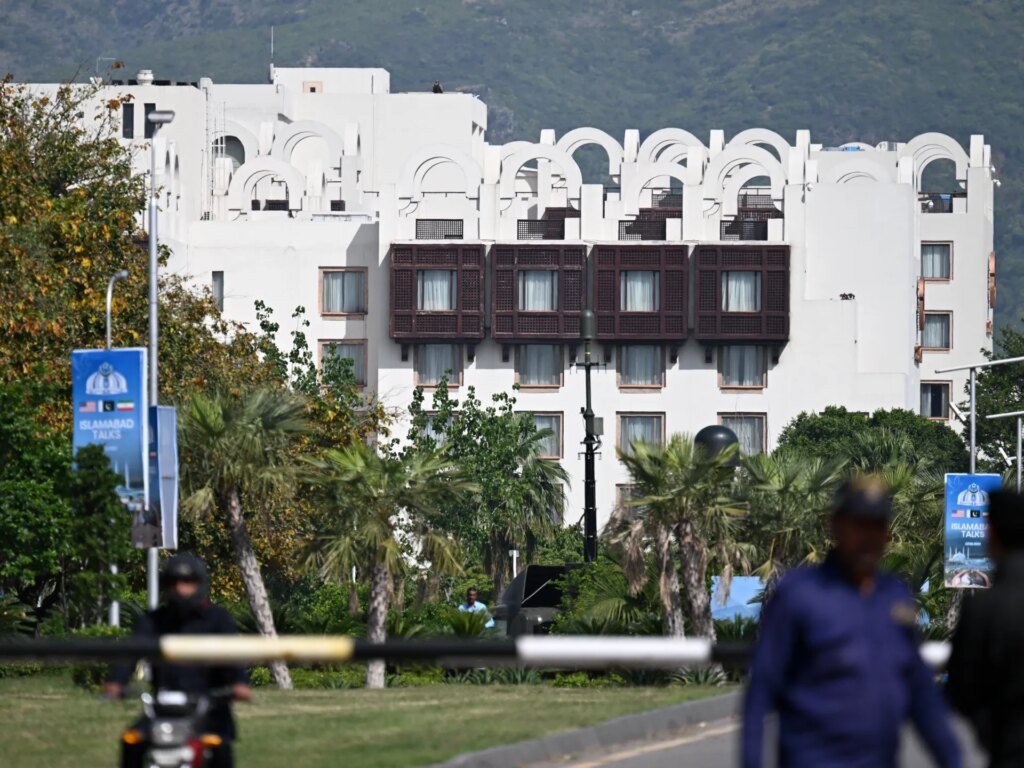
Peacemaking Efforts in Islamabad: A Race Against Time
As U.S. Vice President JD Vance prepares for his journey to Islamabad, Pakistan is in a critical race against time to persuade Tehran to engage in discussions aimed at ending an ongoing conflict that has lasted for eight weeks. While officials involved in the mediation remain cautiously optimistic about the possibility of Iran sending a delegation by midweek, recent actions taken by the U.S. have cast doubt on the success of these peacemaking efforts.
The Current Situation
Despite the behind-the-scenes work by Pakistan and other mediators, Iran publicly maintains its stance against re-entering negotiations with the U.S. Pakistan aims to facilitate discussions before a ceasefire deadline arrives on Wednesday evening U.S. time, which translates to early Thursday morning in the Middle East. In the last three days, at least nine U.S. aircraft have landed in Pakistan, delivering personnel and equipment for the Vance-led negotiating team.
The U.S. Delegation Arrives
Vice President Vance is set to leave the U.S. on Tuesday evening, arriving in Islamabad on Wednesday morning local time. Joining him will be Special Envoy Steve Witkoff and Jared Kushner, President Trump’s son-in-law, who were instrumental in the earlier direct talks with Iran held in Islamabad on April 11.
Iran’s Firm Stance
Iran’s ambassador to Pakistan, Reza Amiri Moghadam, recently tweeted a paraphrase of a well-known quote from Jane Austen, asserting that a large civilization would not engage under threats, calling this a fundamental Islamic and theological principle. Moreover, Iran’s Ministry of Foreign Affairs reiterated that there are no diplomatic talks planned with Washington at this time. Mohammad Bagher Ghalibaf, speaker of Iran’s parliament and chief negotiator, accused Trump of trying to turn negotiations into a demand for surrender.
Increased Tensions at Sea
Recent escalations have further intensified tensions between the two nations. For instance, U.S. naval forces targeted the Iranian vessel Touska in the Gulf of Oman over the weekend for attempting to breach a blockade established against Iran-linked ships. Iran labeled this act a violation of the ceasefire and demanded the release of the ship and its crew. Iran’s Foreign Ministry condemned the actions as “criminal” and has claimed it will protect its national interests with all possible measures.
Potential for Dialogue?
In the midst of rising tensions, some analysts believe the situation might offer opportunities for dialogue. Javad Heiran-Nia, an Iranian affairs researcher, suggested that the release of Touska’s crew might encourage Iran to consider negotiations. Umer Karim from the King Faisal Center echoed this sentiment, noting that Iran may seek an end to the U.S. blockade as a significant sign of goodwill. He stated that Iran has demonstrated a pragmatic approach in prior negotiations, previously entering talks despite initial conditions.
The Role of Domestic Politics
Analysts believe internal dynamics in Iran also play a role in its public stance. The Islamic Revolutionary Guard Corps (IRGC) has pushed for a hardline approach, demanding an end to the U.S. blockade as a condition for negotiations. This duality between military and diplomatic agendas illustrates the complexities of Iran’s position.
U.S. Red Lines
President Trump has set clear demands for Iran, including a halt to uranium enrichment and the surrender of enriched materials. He has publicly warned that the U.S. will not relax its blockade until Iran agrees to negotiate. The key issue remains uranium enrichment, with U.S. negotiators initially proposing a pause of 20 years, which Iran countered with five. Trump has reiterated his desire for a complete ban on enrichment.
The Fragility of Negotiations
Trump’s public comments have complicated diplomatic efforts. His assertions about agreements that had not been finalized intensified tension between parties, as Iranian officials vocally rejected his statements. Nevertheless, some experts believe that these miscommunications are more about posturing than structural barriers to negotiations.
What Lies Ahead
If further discussions occur, they are anticipated to commence on Wednesday. Trump has extended the original deadline for the ceasefire by an additional 24 hours, making it critical to determine whether Iran will send a negotiation team. Recent reports indicate that while no formal diplomatic delegation is confirmed to be traveling to Islamabad, there are still indications that a team may manifest, contingent on security considerations.
Consequences of Failure
Heiran-Nia underscored the severity of the stakes involved, asserting that the failure of these talks could lead back to war, resulting in catastrophic destruction without establishing any sustainable balance.
Conclusion
As diplomatic efforts continue, the interplay of military actions, statements from both sides, and internal political dynamics will play crucial roles in determining the future of U.S.-Iran relations. The world is watching closely to see if peace can be achieved in the face of mounting pressures and evolving conditions.
- U.S. Vice President JD Vance heads to Islamabad in attempts to mediate talks with Iran.
- Iran remains firm in refusing negotiations under threats from the U.S.
- Recent maritime incidents have heightened tensions between the two nations.
- Negotiating timeline extended, but the potential consequences of failure loom large.