
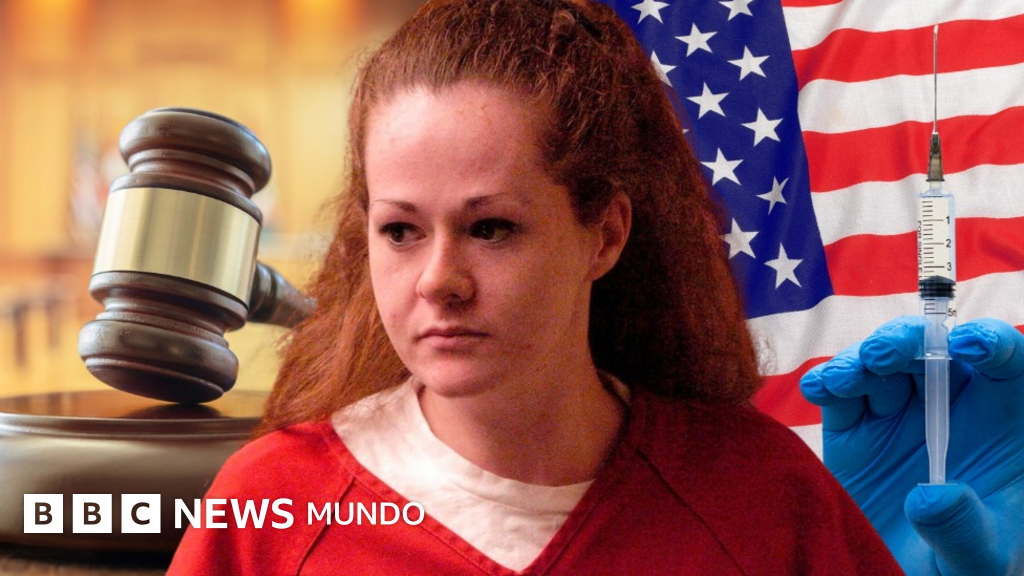
Legal Battle Surrounds Christa Pike’s Execution
Christa Pike, a woman sentenced to death in Tennessee, faced a failed execution attempt this week that has drawn considerable attention. After her scheduled lethal injection did not proceed as planned, Pike, now 50 years old, has been transferred to a hospital where she is receiving life-saving measures following the administration of two doses of pentobarbital. This situation has raised further questions about the events that unfolded during the execution attempt.
Pike was convicted in 1996 for the murder of 19-year-old Colleen Slemmer. The legal contention surrounding her execution led to hour-by-hour discussions on Wednesday. This incident marks Tennessee’s second unsuccessful execution this year; back in May, the state’s attempt to execute Tony Carruthers—convicted of kidnapping and murdering three individuals in 1994—was aborted due to an inability to locate a viable vein for the lethal injection.
Execution Methods in the U.S.
Since the U.S. Supreme Court lifted a moratorium on the death penalty in 1976, there have been a total of 1,683 executions in the country, according to the Death Penalty Information Center (DPIC). Notably, women account for less than 1% of these cases, with just 18 executions recorded. In 2025, there were 47 executions, the highest annual figure since 2009, representing a significant rise from the 25 executions carried out in 2024. However, public support for the death penalty has plummeted to its lowest point in half a century, with a recent Gallup poll indicating that only 52% of respondents favored the practice.
Current Execution Methods
The primary methods of execution in the U.S. have remained consistent over the years:
- Lethal Injection
- Electric Chair
- Firing Squad
- Gas Chamber
- Hanging
Lethal injection continues to be the predominant method, accounting for approximately 89% of executions since 1976. While all states that perform executions utilize this method, many also authorize alternative methods. Notably, the last execution by hanging occurred in Delaware in 1996, and New Hampshire had reserved it as a backup method until abolishing the death penalty in 2019. Despite this, a prisoner remains on death row under laws enacted prior to the repeal.
Pharmaceuticals Used in Executions
Historically, states have employed a three-drug protocol for lethal injections, consisting of:
- An anesthetic or sedative (often sodium thiopental, then midazolam)
- A paralytic agent (vecuronium bromide)
- Potassium chloride to stop the heart
However, as pharmaceutical companies distanced themselves from providing drugs for executions, many states began using pentobarbital in single-drug protocols, which was initially prevalent in the U.S. and also widely utilized in veterinary medicine for euthanasia.
As supplies dwindled, states turned to compounding pharmacies that operate under less stringent regulations. Some jurisdictions even enacted laws to shield suppliers’ identities, making it difficult to ascertain the source and quality of execution drugs. A recent Justice Department memo deemed pentobarbital “the gold standard” for lethal injections, even as states face challenges in procurement.
Recent Shifts in Execution Policies
Moreover, the April memorandum from the Justice Department advocated diversifying execution methods to include firing squads, gas asphyxiation, and electrocution, stating this would add strength to the death penalty. During the Biden administration, a moratorium on most federal executions was implemented, yet President Trump, a long-time proponent of capital punishment, resumed calls for executions upon his return to office in January 2025.
Although the electric chair was once a favored method of execution, it is now infrequently used, with only nine states permitting it and Carolina having adopted it as its default execution method. Since 1976, there have been 163 executions by electric chair, but only 19 have occurred since 2000, the last one in Tennessee in 2020.
Critical Perspectives on Executions
Critics of the death penalty highlight the difficulties in obtaining drugs for lethal injections and troubling execution cases, questioning whether these executions can be conducted humanely. Legal challenges frequently focus on concerns that certain drug protocols may result in unwarranted pain or suffering, violating constitutional bans on cruel and unusual punishment. The lack of transparency regarding drug suppliers exacerbates these concerns and complicates oversight.
Furthermore, the psychological impact on those involved in executions extends beyond the prisoners and victims’ families. In a 2014 interview, former Georgia prison chief Allen Ault recounted the haunting memories of carrying out the death penalty, remarking, “It’s the most premeditated form of murder one can imagine, and it stays with you forever.”
Conclusion
The ongoing legal battles surrounding Christa Pike’s execution underscore the complexities and controversies surrounding the death penalty in the United States. As methods and public attitudes evolve, it remains a contentious and highly debated issue that continues to provoke strong emotions across the nation.
Key Takeaways
- Christa Pike’s recent failed execution raises significant legal and ethical questions about capital punishment.
- Lethal injection remains the most common method of execution in the U.S., but obtaining drugs has become increasingly problematic.
- Public support for the death penalty has declined to its lowest level in decades, amidst a backdrop of legal challenges and ethical concerns.
- Critics argue the psychological impacts of executions affect not just those directly involved but also the wider community.