
Escalating Protests in France: A Deep Dive Into the Recent Unrest
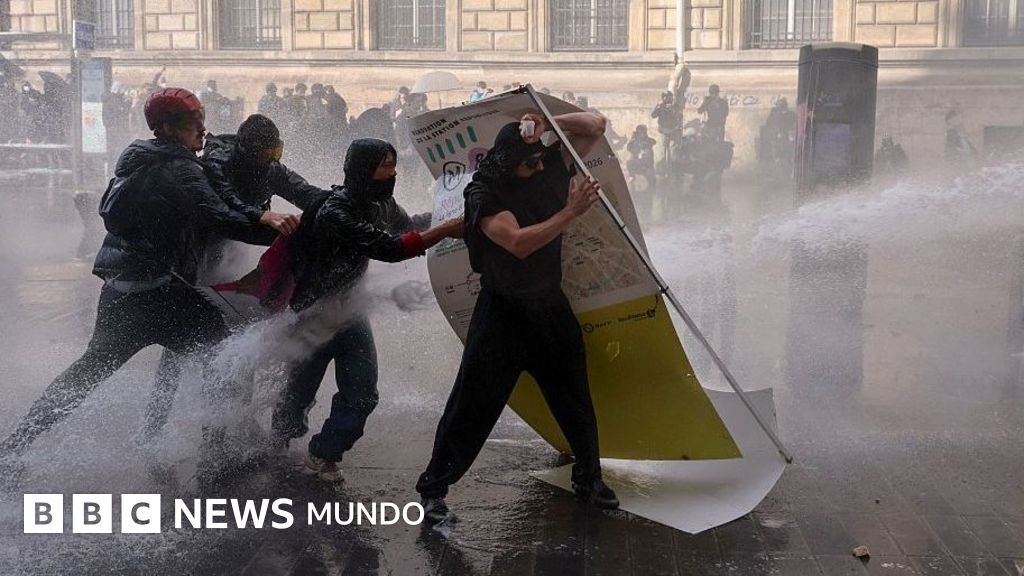
On Saturday, France witnessed significant tension as police clashed with demonstrators, launching tear gas and water cannon against crowds protesting rising prices and the decline of the welfare system designed to ensure basic opportunities and security for its citizens. The largest demonstration took place in Paris, where a diverse array of groups joined forces in response to ongoing student protests that have been escalating over the past weeks.
The Roots of Discontent
The protests initially emerged from high schools in the poorer suburbs of northern Paris, where frustrations over teacher shortages and inadequate facilities rapidly transformed into a nationwide movement against inequality, public underinvestment, and declining educational standards. The crowds included a mix of the *“yellow vests,”* known for their opposition to fuel price hikes, alongside unions and younger activists.
Scenes of Violence
Saturday’s demonstrations were marked by a notable escalation of violence, with over 270 arrests reported across the country, as confirmed by the Interior Ministry. Clashes resulted in damage to a police station in Marseille, with videos showing flames and masked individuals in the streets. In Lyon, protesters set fire to a tourist office, causing extensive damage, including broken windows, while local authorities reported that *“hostile individuals”* were obstructing firefighters from safely extinguishing the flames.
The Contrast of Peace and Unrest
Despite the chaos, BBC correspondent Hugh Schofield noted a stark contrast between the official march proceeding peacefully from Place de la République to Place de Clichy and the smaller, more unruly groups causing disturbances throughout the city. This bifurcation in protest behavior echoed early days of the *“yellow vest”* movement, where small pockets of violence overwhelmed police forces.
Political Reactions
Marine Le Pen, leader of the far-right National Rally, criticized the *“troublemakers”* for *“poisoning”* the demonstrations, claiming their actions distorted the core demands of the protesters, stating that groups fueling violence aimed to plunge the nation into chaos. In contrast, Jean-Luc Mélenchon, leader of the leftist La France Insoumise party, remarked that *“everything is developing calmly”* across the demonstrations nationwide.
Are Current Protests a Sign of Deeper Issues?
The ongoing protests prompt an examination of whether they are merely a continuation of France’s long-standing tradition of street demonstrations, or if they signal something more profound. Many observers note the familiar sequence of events: marches, disturbances, tear gas deployments, arrests, and allegations of police brutality. This cyclical pattern tends to emerge every autumn in response to pressing issues.
Yet, could 2026-2027 mark a significant turning point, akin to historical events such as May 1968, the Paris Commune of 1870, or the social revolutions of 1848 across Europe? Evidence supporting this perspective includes the French centrist government’s seeming inability to act decisively, the decade-long radical experiment with Macronism, widespread disillusionment with traditional politics, the looming debt crisis, inflation-induced impoverishment, and the rise of extreme political factions. Furthermore, the ongoing war in Europe, the Trump phenomenon, and upcoming presidential elections all contribute to a climate of instability.
Conclusion
The recent protests in France highlight ongoing concerns regarding social welfare and public services amidst economic challenges and political unrest. As citizens take to the streets, the resolution of these issues will be crucial in shaping the future of the nation.
- Protests in France are fueled by rising prices and diminishing social services.
- A mix of groups, including *“yellow vests”* and unions, are uniting in their demands.
- Violence marred the demonstrations, with significant arrests and property damage reported.
- The protests may indicate deeper societal unrest and political instability.