
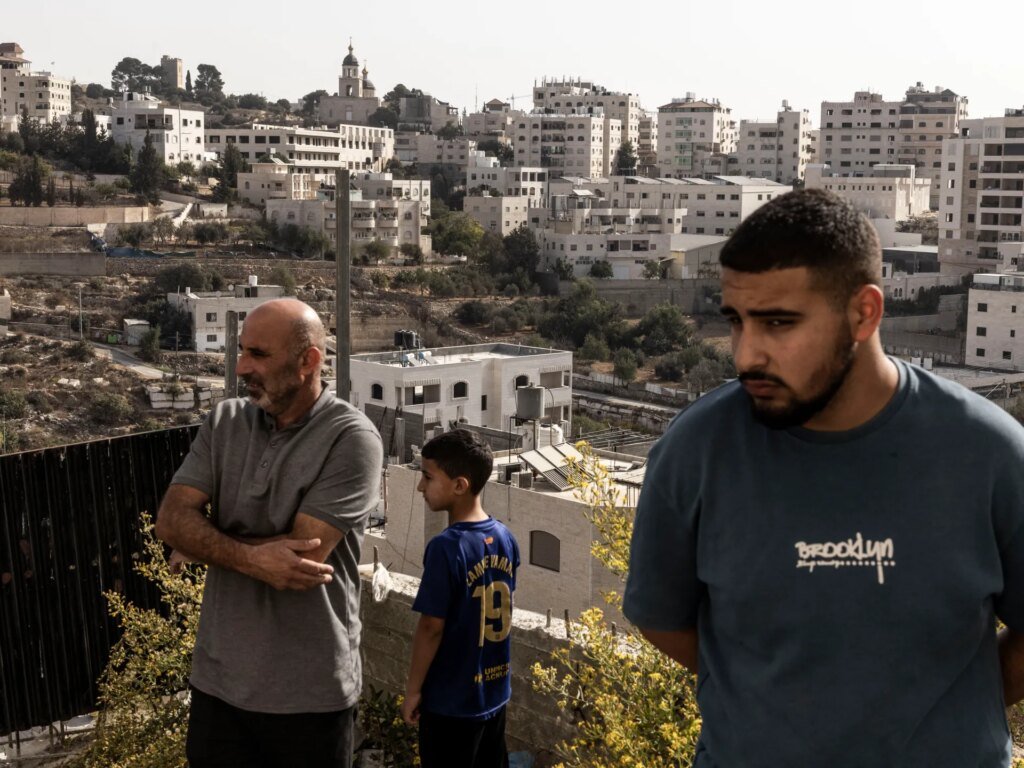
Escalating Displacement in Hebron: Thousands Forced from Homes Amid Military Action
The situation in Hebron, a city in the occupied West Bank, has reached a critical point as recent military operations by the Israeli army have resulted in the displacement of over 3,000 Palestinians. Human rights organizations are voicing serious concerns, labeling this as a systematic attempt to displace the local population permanently. As tensions rise, the humanitarian implications are becoming increasingly dire.
Mass Displacements Under Lockdown
The Israeli military has enforced a lockdown in Hebron, leading to the detention of at least 71 individuals within a span of just four days, according to reports from local organizations such as the Palestinian Prisoner’s Society. The Hebron Governor Khaled Dudin revealed that approximately 488 families, throughout the wider region, have been evacuated, affecting a total of 3,171 residents. Mayor Yousef al-Jabari further indicated that the overwhelming majority—3,043 of those displaced—are from within the city’s boundaries.
Additionally, the military’s ongoing demolition efforts have devastated residential areas, factories, and infrastructure, while aggressive home raids and street assaults escalate the already tense atmosphere. This wave of violence began following the death of two soldiers in a nearby shooting, prompting Israeli Prime Minister Benjamin Netanyahu to describe the operation as one “unseen” since the 1967 war.
Profiles of the Displaced
Among the displaced, many are vulnerable populations such as women, children, and the elderly. Israeli soldiers have reportedly converted several homes of these uprooted families into military installations and interrogation centers. Noman Amr, a contemporary history professor at al-Quds Open University, characterized these military actions as more than temporary evacuations. He highlighted three categories of home evacuations: for demolition, as punitive measures, and for military occupation purposes.
Amr emphasized that this behavior serves to instill fear and psychological trauma within the Palestinian community. Displaced residents have recounted hearing soldiers make chilling remarks, suggesting they would not return home until “Judgement Day.” This strategy appears aimed at establishing a new reality in Hebron, reducing the Arab presence while expanding land for other uses.
Learning from Past Operations
Israeli officials have drawn explicit parallels between the current situation in Hebron and prior military campaigns. Netanyahu and Defence Minister Israel Katz have expressed intentions to replicate the “Jenin camp model” in Hebron, a strategy involving forced evacuations, home inspections, and road blockades. Rights advocates are concerned that this current offensive mirrors tactics used during the infamous “Iron Wall” operation, which led to considerable destruction and loss of life in various refugee camps.
Such operations have not gone without international criticism. Recent reports from human rights organizations have described Israel’s military actions in the occupied territories as potential collective punishment, raising alarms over hints of ethnic cleansing. Eyewitness accounts from displaced individuals indicate that they were told there would no longer be refugee camps and were urged to “all go to Jordan.”
Targeting Infrastructure
Moreover, the systematic destruction of vital infrastructure in Hebron is further compounding the displacement crisis. Amr noted that the targeting of essential resources, such as water wells, transcends material destruction and directly affects the very existence and stability of the Palestinian populace. He remarked on the cooperation between the Israeli army and armed settler groups, which have grown increasingly organized and aggressive.
Furthermore, administrative land grabs have exacerbated the situation. Reports indicate that around 220 barriers have been constructed throughout Hebron, effectively isolating Palestinian communities while maintaining routes for illegal settlements. On the eve of parliamentary elections, the Israeli army announced restrictions on Palestinian workers and planned a full closure of crossing points, an act some critics see as politically motivated.
Mayor al-Jabari accused Netanyahu and his right-wing coalition of exploiting military actions to gain support from settlers. Amr echoed this sentiment, stressing that the ongoing military operation is being used as electoral propaganda, putting Palestinians in a precarious position for the sake of political gain.
Conclusion
The situation in Hebron continues to escalate, with thousands forced from their homes amidst a growing military crackdown. As this crisis unfolds, the implications for the Palestinian community and their future are becoming increasingly severe. International attention on the humanitarian impact of these measures is crucial in advocating for the displaced and holding accountable those responsible for these actions.
- Over 3,000 Palestinians have been displaced in Hebron due to escalating military actions.
- The majority of those affected are vulnerable populations, including women and children.
- There are growing concerns about potential ethnic cleansing and collective punishment in the region.
- Political motivations behind the military crackdown may be influencing actions taken during a critical election period.