
The Ongoing Crisis of Poland’s Constitutional Tribunal
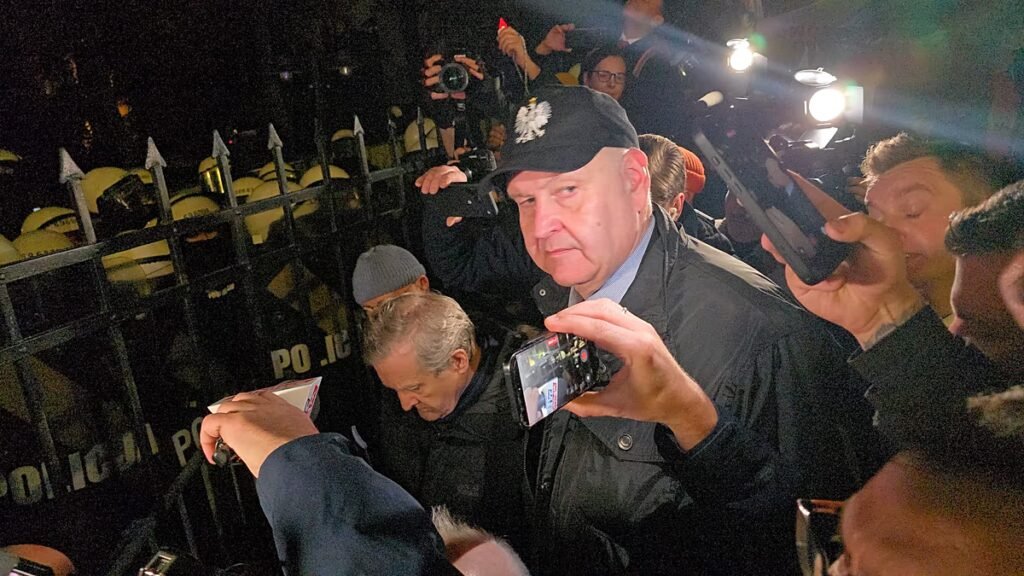
Since taking office in 2023, Donald Tusk’s coalition has been working to undo the judicial reforms set forth by the ruling PiS party. This ongoing conflict intensified in 2026 when President Karol Nawrocki refused to acknowledge the oaths of several newly appointed judges. The situation reached a critical point outside the Constitutional Tribunal’s headquarters, illustrating the deep divide between the two sides over legitimacy. Here’s a breakdown of this complex issue in five key stages.
1. The Beginning of the Crisis: 2015
The turmoil originated in June 2015, when the outgoing PO-PSL coalition modified the electoral law to enable parliament to appoint five judges to the Constitutional Tribunal ahead of the upcoming elections. On October 8, the outgoing Sejm elected Roman Hauser, Andrzej Jakubecki, Krzysztof Ślebzak, Bronisław Sitek, and Andrzej Sokala, but President Andrzej Duda declined to accept their oaths.
After winning the election, PiS declared the previous appointments invalid and, on December 2, elected five new judges, whose oaths Duda accepted. However, the Tribunal ruled the next day that three of the previous judges’ appointments were constitutional, leading to a contentious overlap where Mariusz Muszyński, Henryk Cioch, and Lech Morawski, often referred to as the Tribunal’s ‘stand-in judges,’ were appointed. This muddled situation set the stage for ongoing disputes, as PiS also rejected the legitimacy of the valid appointments made by the prior government.
2. Erosion of Judicial Independence: 2016–2023
In the wake of PiS assuming power, new regulations were implemented that altered how the Tribunal operated, including changes to case handling, required judges, and voting thresholds. In March 2016, the Tribunal ruled that these alterations were unconstitutional, but Prime Minister Beata Szydło’s government chose not to publicize the decision, claiming procedural errors invalidated it.
The situation further deteriorated with Julia Przyłębska’s appointment as Tribunal president in December 2016, allowing the three controversial PiS appointees to participate in Tribunal activities. Critics contended that these changes compromised judicial autonomy and placed the Tribunal under political influence. In contrast, PiS argued they were reforming the justice system to enhance its integrity.
In 2021, European courts intervened, ruling that the composition of the Tribunal, particularly concerning Mariusz Muszyński, did not meet legal standards. Simultaneously, Poland’s Constitutional Tribunal began issuing rulings that contested certain provisions of EU law relating to the judiciary. By 2022-2023, fractures emerged within the Tribunal as several judges questioned Przyłębska’s extended presidency, which led to further uncertainty.
3. Tusk’s Coalition Takes Action: 2024–2025
After Donald Tusk’s coalition won the October 2023 elections, they prioritized restoring the rule of law. By March 2024, the Sejm voted on a resolution questioning the validity of the three disputed PiS appointees and the authority of President Przyłębska. September saw the introduction of two reform bills aimed at improving the judge appointment process and Tribunal operations, but President Duda chose to send these bills to the Constitutional Tribunal for review, stalling the reforms.
In December 2024, Duda appointed Bogdan Święczkowski, a close associate of Zbigniew Ziobro, as the new Tribunal president. Meanwhile, the government restricted the publication of Tribunal judgments in the Journal of Laws, arguing that the current leadership’s legitimacy was problematic. This resulted in heightened tensions, as the government and Tribunal both questioned each other’s authority.
4. Escalation of the Crisis: 2026
The tensions reached a new peak in March 2026 when the Sejm elected six judges to replace those whose terms had expired. President Nawrocki swore in two of the judges but refused to accept the oaths of the remaining four, citing concerns about their appointment process. The government asserted that the Sejm was within its rights to elect judges, but the president insisted on a constitutional basis for his actions.
When the four judges took their oaths before a notary in parliament and submitted the documents to the presidential office, both the president and the Tribunal rejected this method, stating that oaths needed to be administered in the president’s presence. Further complicating matters, the Tribunal ruled that the president was not obligated to accept all appointments, igniting further challenges to its authority.
In May, the European Court of Human Rights mandated that Polish authorities not interfere with the four judges’ right to assume their roles, while the Venice Commission suggested that the president’s role should be ceremonial, meaning a refusal should not bar a judge from taking office.
5. A Critical Standoff: October 2026
The conflict intensified in October 2026 when another judge, Maciej Berek, swore his oath in parliament without presidential invitation. Tribunal president Święczkowski dismissed these oaths as lacking validity and barred the new judges from assuming duties. On October 30, judge Anna Korwin-Piotrowska suspended both Święczkowski and vice-president Bartłomiej Sochański’s responsibilities, a move she justified as necessary to restore the Tribunal’s functionality.
The existing leadership refuted her actions as illegal, further complicating the situation. As tensions escalated, scuffles broke out at the Tribunal headquarters when several judges entered, prompting an emergency meeting with President Nawrocki, who labeled the events an attempted takeover of a constitutional body. Meanwhile, Święczkowski announced plans to regain control, while Korwin-Piotrowska prepared to convene an assembly of judges.
What’s at Stake?
The conflict surrounding Poland’s Constitutional Tribunal is no longer just about the appointments or the institution’s leadership—it raises critical issues about the separation of powers, judicial independence, and the respect for constitutional rulings. The ramifications extend beyond political debates; when judicial decisions are withheld and governmental bodies disagree on legal standings, it creates uncertainty impacting citizens, businesses, taxation, and public services. Over a decade post-crisis onset, the lack of a unified resolution among successive governments continues to foster disputes regarding authority and legal interpretation.
Key Takeaways
- The crisis began in 2015 with disputed judicial appointments.
- Efforts to reform the Tribunal intensified from 2024 onwards under Tusk’s coalition.
- The failure to resolve leadership and legitimacy issues has led to ongoing tensions.
- The conflict highlights critical challenges to judicial independence and the rule of law in Poland.