
The Impact of the New Security Agreement in Greenland
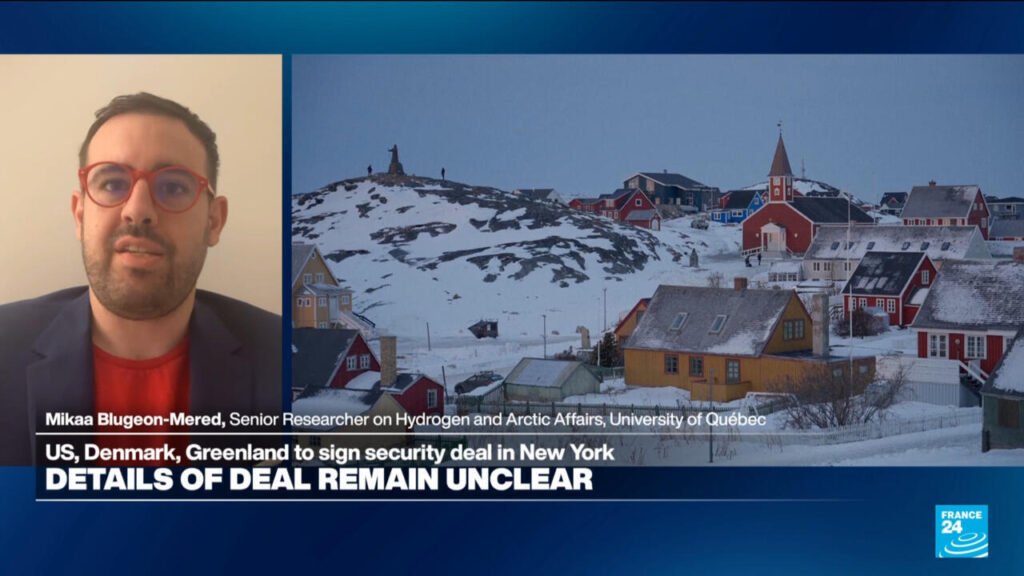
As the United States, Denmark, and Greenland come together to establish a new security agreement regarding Greenland’s safety, questions arise about its actual significance. This article delves into the implications of this deal and its underlying motivations, particularly concerning the concerns over China’s influence in the region.
Understanding the Agreement
This recent agreement primarily focuses on bolstering security measures in Greenland. However, experts suggest that it doesn’t substantially alter the rights of the U.S. in the area. President Donald Trump’s push for this agreement appears rooted in a desire to mitigate any potential shift of Greenland’s allegiance towards China, considering the country’s strategic importance.
Expert Insights
We had the opportunity to speak with Mikaa Blugeon-Mered, a Senior Researcher specializing in Hydrogen and Arctic Affairs at the Canada Research Chair in Clean Hydrogen at the University of Québec Trois Rivières. Blugeon-Mered emphasized that the perceived risks associated with Greenland potentially leaning towards China are often exaggerated, particularly within political discourse.
The Political Context
The framing of this deal can also be seen as a tactical move to reassure Trump’s voter base. By highlighting concerns over China’s influence, it generates a narrative that positions the administration as proactive in safeguarding U.S. interests, even if the actual risk is minimal.
Conclusion
In summary, while the recent security agreement involving the U.S., Denmark, and Greenland might suggest a stronger coalition, its real-world implications may be limited. The motivations are largely political, aiming to address domestic concerns about geopolitical shifts rather than actually enhancing U.S. presence in Greenland.
- New security measures in Greenland have been established.
- The agreement doesn’t significantly expand U.S. rights in the region.
- The focus on China reflects a political strategy to engage Trump’s voter base.
- Expert analysis suggests that perceived risks may be overstated.