
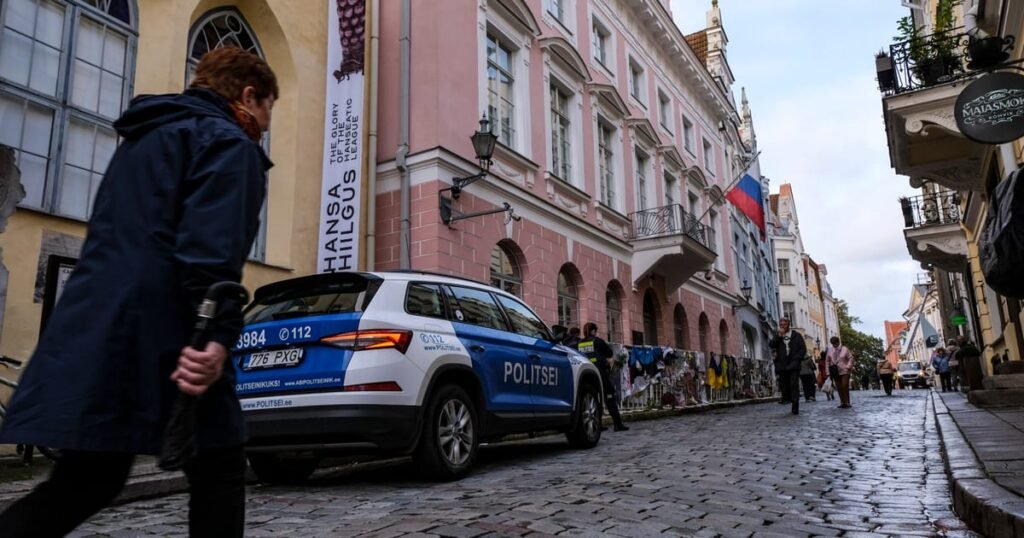
Concerns Over Online Misinformation in Narva
Recent reports have drawn attention to the growing issue of online misinformation targeting Narva, a border city in Estonia predominantly inhabited by Russian speakers. In particular, an alarming campaign advocating for the secession of Narva and the surrounding Ida-Viru county has emerged, prompting responses from local authorities. Prime Minister Kristen Michal has publicly denounced this separatist initiative, labeling it as “an information operation created by Russia to sow discord.”
The Role of Misinformation
According to the report from Estonia’s security agency, KAPO, the impact of such campaigns is significantly magnified when they gain traction in mainstream media. “For the adversary, having such campaigns amplified by mainstream media is considered a success, as it enhances the credibility and reach of hostile messages,” the report notes, highlighting the dangers inherent in the spread of misleading information.
Covert Operations and Civilian Involvement
Estonia’s intelligence services have observed that numerous Russian intelligence operations are being conducted from a distance, often enlisting civilians unsuspectingly. For example, the report reveals that Moscow has recruited pensioners nationwide to document damage done to Soviet war monuments. This collected material is subsequently employed in propaganda efforts aimed at accusing Estonia of intentionally vandalizing these historical sites.
The Current Security Landscape
Despite a surge in the identification of Russian operatives within the country, this does not necessarily indicate an uptick in Kremlin-directed activities. The authors of the report asserted that the heightened number of arrests reflects “the preventive effectiveness of Estonia’s internal security efforts.” They stress that the overarching threat landscape remains unchanged. “Estonia’s primary adversary continues to be Russia, which maintains an imperialist mindset,” the report concludes firmly.
Conclusion
As Estonia grapples with online misinformation, particularly in communities like Narva, the challenge remains significant. The intricate relationship between security, propaganda, and community sentiments highlights the necessity for vigilance and resilience against external attempts to disrupt social harmony.
- Online misinformation campaigns are gaining traction in Narva, Estonia.
- These efforts are seen as tactics by Russian intelligence to cause division.
- Estonia’s internal security has effectively countered many of these operations.
- Russia continues to be viewed as the primary adversary for Estonia.