
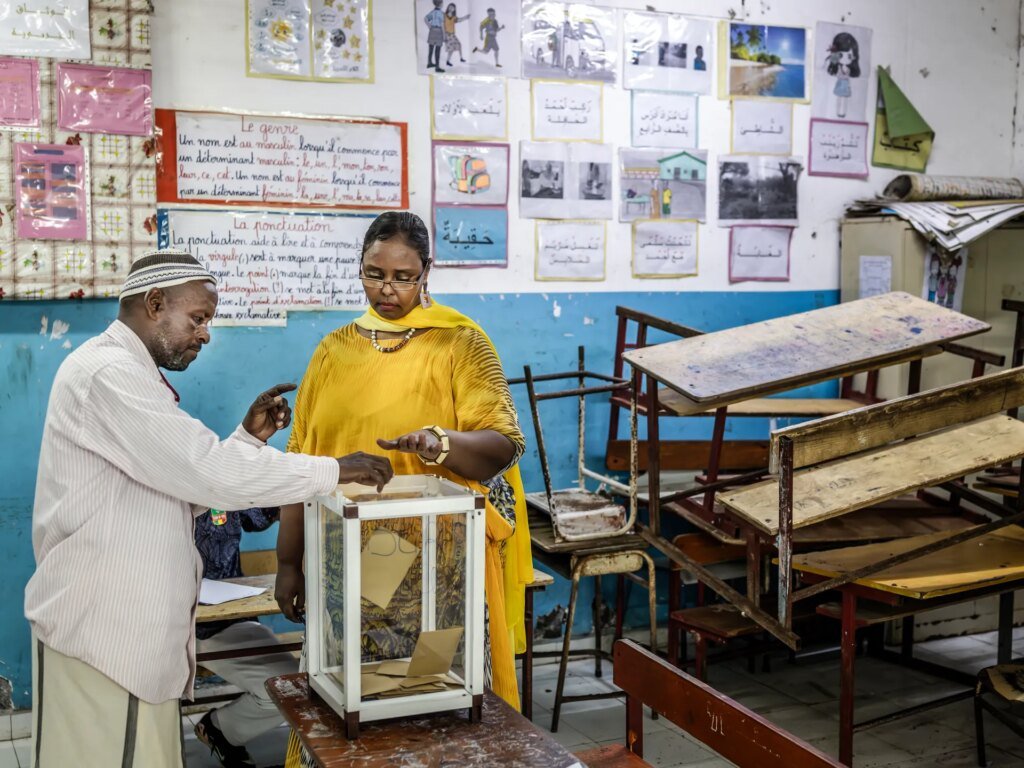
Voting Day in Djibouti: A Look at the Presidential Election
As voters in Djibouti head to the polls today, the spotlight is on incumbent President Ismail Omar Guelleh, who is anticipated to secure a sixth term following the removal of presidential age limits last year. This decision has allowed Guelleh, now 78, to extend his lengthy tenure, encouraging many to speculate about the implications for the nation’s political landscape.
The Election Landscape
With over 256,000 eligible voters, today’s election features Guelleh competing against his primary challenger, Mohamed Farah Samatar, leader of the Unified Democratic Centre (CDU), which currently holds no seats in parliament. Reports suggest that voter turnout was sluggish in the early hours, with delays noted at some polling stations in Djibouti City.
As voters began to arrive at the polling locations, only a handful appeared at city hall, where Guelleh is expected to cast his ballot. The low turnout raises questions about electoral engagement in a country where political freedoms have been heavily scrutinized.
Concerns About Democratic Practices
Human rights organizations have voiced serious concerns regarding governmental practices, alleging repression of political activities and violations of civil liberties. The government, however, has categorically denied these claims. Notably, two major opposition parties have boycotted elections since 2016, further complicating the electoral landscape.
Polling stations are set to close at 6 PM local time (15:00 GMT), with preliminary results anticipated shortly after, as reported by state media. Observers from international organizations, including the African Union (AU) and the Organisation of Islamic Cooperation (OIC), are on the ground to monitor the electoral process.
Guelleh’s Extended Rule and Regional Stability
Ismail Omar Guelleh has held power since 1999, following the presidency of Hassan Gouled Aptidon, Djibouti’s founding leader. Guelleh’s last election in 2021 saw him win with a staggering 98% of the vote, a testament to the unyielding grip he has on power.
Last year’s decision to eliminate age limits for presidential candidates was viewed as a strategic move to strengthen his continued rule. As noted by Mohamed Husein Gaas from the Raad Peace Research Institute, this development echoes concerns of democratic backsliding, emphasizing that regional stability often takes precedence over democratic ideals due to Djibouti’s critical geopolitical significance.
The Importance of Stability
Throughout his campaign, Guelleh has highlighted the importance of stability within a volatile region. “We have preserved peace when others have succumbed to chaos,” he declared recently, underlining his narrative of the administration’s role in maintaining order.
Djibouti plays a pivotal role in international military operations, hosting bases for nations like the United States and France. It also serves as a crucial port hub for landlocked Ethiopia, making it a vital player in global trade routes, especially amid tensions in the surrounding areas.
Since 2023, the port has reportedly accommodated several commercial vessels impacted by attacks in the nearby Yemen conflict, further solidifying its strategic importance.
Conclusion
Djibouti’s elections today reflect ongoing themes of stability versus democratic principles. As Guelleh seeks another term, the world watches closely, recognizing that the outcomes here resonate far beyond its borders.
- Ismail Omar Guelleh seeks a sixth presidential term after age limits were removed.
- Voter turnout has been low, with reports of delays at polling stations.
- Concerns about democratic practices persist amid claims of political repression.
- Djibouti’s strategic geopolitical position remains a significant influence on its stability and elections.