
The Unexpected Wildlife Sanctuaries: Chernobyl and the Korean DMZ
The Amazon rainforest, the Great Barrier Reef, and iconic national parks like Yellowstone and Yosemite often come to mind as wildlife sanctuaries. However, places like the Chernobyl Exclusion Zone and the Demilitarized Zone (DMZ) between North and South Korea have unexpectedly transformed into thriving habitats for wildlife. This article explores how these areas, largely devoid of human life, showcase a remarkable resilience in nature that could offer valuable insights for conservation efforts.
A 70-Year Absence of Humans
Access between North and South Korea became restricted in 1953, leading to the establishment of the DMZ, which stretches 248 kilometers long and 4 kilometers wide across the Korean Peninsula. Human activity is severely limited in this area, which is also riddled with landmines. Despite these challenges, flora and fauna have flourished.
The National Institute of Ecology in South Korea reports that over 6,000 species call the DMZ home, including a staggering 38% of the peninsula’s endangered species. With minimal human interference for more than seven decades, animals like golden eagles, mountain goats, and musk deer have made the area their own. Additionally, the DMZ is home to numerous endemic plant species, which exist nowhere else on the planet.
Seung-ho Lee, president of the DMZ Forum—an organization dedicated to conservation in the area—states, “Nature has been accidentally protected by the armistice. Many animals and bird species have gained greater access to the area as human activity has mostly disappeared.” He emphasizes that several of these species are of global significance, including cranes that inhabit the DMZ but migrate worldwide.
Chernobyl: Nature’s Comeback
The DMZ is not the only unexpected sanctuary for wildlife. The catastrophic nuclear accident at Chernobyl on April 26, 1986, released hazardous radionuclides into the atmosphere across what was then the Soviet Union, now Ukraine. An exclusion zone was created around the site, with much of it remaining uninhabited.

This exclusion zone has expanded to cover approximately 4,000 square kilometers and remains one of the most radioactive locations globally. According to the UK Centre for Ecology and Hydrology, the ecological consequences of the disaster were initially severe. Trees lost their vitality, turning a reddish-brown hue in a region now known as the Red Forest, and many mammals and aquatic life suffered significant damage.
However, the radioactive elements released have decayed quickly. Jim Smith, an environmental sciences professor at the University of Portsmouth in the UK, notes, “Radiation levels dropped rapidly following the accident, and what remains is chronic low-level radiation that makes the area uninhabitable for humans long-term but not for other species.” He continues, “Wildlife is thriving in Chernobyl. I firmly believe the exclusion zone is ecologically more diverse and abundant than it was before the accident.” Studies of fish and aquatic insects reveal that the most contaminated lakes have biodiversity levels comparable to their less contaminated counterparts.

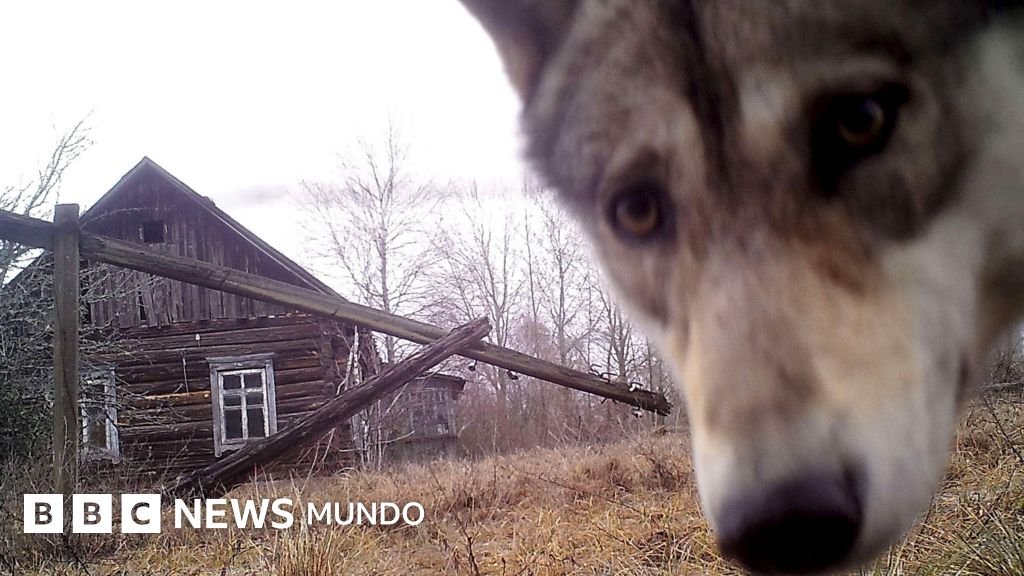
In fact, mammal populations in the exclusion zone seem to be thriving. Smith mentions, “Our analyses couldn’t identify a difference in mammal populations between highly contaminated areas and those with less contamination. The only notable finding was that the wolf population was seven times higher in Chernobyl compared to other natural reserves in the region.”
Embracing Nature
It may seem surprising that wildlife can flourish in a radioactive zone, but it actually makes sense. “It’s a vast area, open for wildlife—without noise, lights, pesticides, herbicides, logging, or agriculture,” notes Germán Orizaola, a zoology professor at the University of Oviedo in Spain. He adds, “Human pressure is far more detrimental to nature than the worst nuclear accident in history.”

From Orizaola’s perspective, the Chernobyl disaster highlights the real damage caused by human occupation of ecosystems. “Chernobyl stands as a powerful example of what can happen through rewilding,” he states. This site illustrates effective conservation strategies. “Often, natural reserves and national parks become tourist attractions with some degree of human exploitation, which undermines conservation efforts,” he explains. “If we genuinely wished to preserve nature, the key would be to minimize our impact on these areas and allow nature to take its course.”
Conclusion
The stories of Chernobyl and the Korean DMZ serve as powerful reminders of nature’s resilience. By removing human interference, these areas have become sanctuaries for various species, showcasing how wildlife can thrive even in adverse conditions. The lessons learned here could be crucial for future conservation strategies, highlighting the importance of minimizing human impact on the natural world.
- The DMZ and Chernobyl have transformed into unexpected wildlife sanctuaries.
- Over 6,000 species inhabit the DMZ, including many endangered species.
- Nature has recovered remarkably in Chernobyl, leading to diverse wildlife populations.
- Reducing human interference can significantly benefit conservation efforts.