
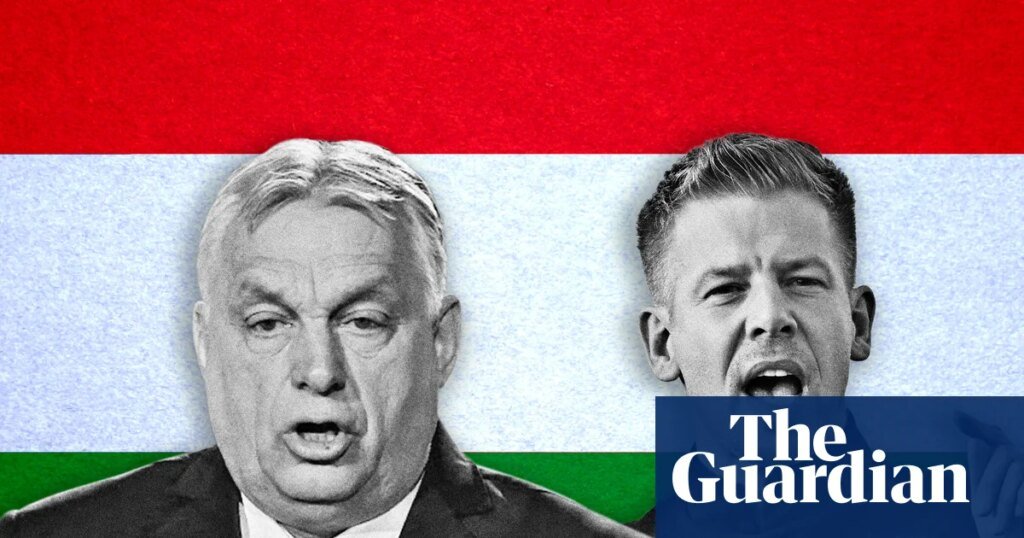
Hungary’s Crucial Election: The Battle for Power
On April 12, Hungarians will cast their votes in a pivotal election that could reshape the country’s future. Viktor Orbán, who has been at the helm for 16 years, faces a potential challenge from Péter Magyar, a former ally turned opponent. This election isn’t just a local matter; its ramifications could echo throughout Europe.
Understanding the Stakes
Viktor Orbán, the longest-serving leader in the European Union, has referred to Hungary as an “illiberal democracy.” Since taking office in 2010, he has positioned himself as a defender of traditional Christian values, promoting resistance against what he perceives as the threats of Western liberalism and multiculturalism. His leadership has systematically undermined Hungary’s rule of law, packing courts with loyal judges and transforming the media landscape into a tool for his far-right Fidesz party.
Orbán has frequently clashed with the EU, leading to the suspension of billions in funding due to disagreements over various policies, including justice reforms, migration, LGBTQ+ rights, and aid to Ukraine. He is also seen as the EU’s most pro-Moscow leader, maintaining close ties with Russia even after its invasion of Ukraine. This relationship has led to recent accusations that Hungary shared sensitive EU information with the Kremlin, prompting outrage from EU officials.
Key Figures and Their Platforms
Orbán, now 62, has garnered endorsements from prominent figures like Donald Trump and Italy’s Giorgia Meloni. He has framed the upcoming election as a stark choice: maintain peace and stability by voting for him or choose chaos by supporting Magyar, whom he labels as an emissary of Brussels and Kyiv.
Meanwhile, Péter Magyar, aged 45, has emerged as a significant challenger after breaking away from Orbán’s circle. Following a scandal involving his ex-wife, who resigned as justice minister, Magyar launched his own party, Tisza (Respect and Freedom). This party secured 30% of the vote in Hungary’s European elections last June, indicating a growing dissent against Orbán. Magyar’s agenda focuses on realigning Hungary with EU principles, reducing reliance on Russian energy, and addressing corruption in the government.
The Election Process and Predictions
Since assuming power, Orbán has altered electoral laws to favor his party, including reducing the number of parliamentary seats and creating uneven constituencies. This has resulted in a system that favors Fidesz, making it easier for them to secure parliamentary representation.
Current polling places Tisza ahead among decided voters, but nearly a quarter remain undecided. Significant demographic factors influence voter behavior: Tisza appears to lead among younger voters, while Fidesz maintains strong support among older citizens. Voter turnout is expected to be high, possibly exceeding 80%.
Possible Outcomes of the Election
Analysts foresee three primary scenarios: a Magar-led majority accepted by Orbán, a Magyar majority contested by Orbán, or a continued Orbán majority. Each scenario poses unique implications for Hungary and the EU.
Should Orbán win, it could lead to heightened conflict with EU institutions and reinforce domestic authoritarian measures. Conversely, if Magyar achieves a narrow victory, challenges to the election results could compel the EU to navigate uncharted waters. However, even a Magyar leadership might not drastically alter Hungary’s approach to contentious issues like immigration.
Conclusion
The upcoming election represents a significant crossroads for Hungary, with potentially far-reaching effects on its political landscape and relationship with the European Union. As voters prepare to make their choice, the outcome could redefine Hungary’s role within Europe and its domestic governance.
Key Takeaways
- The Hungarian election on April 12 may determine the future direction of the country.
- Viktor Orbán faces serious opposition from Péter Magyar, a former ally.
- Polling indicates a competitive landscape, with Tisza gaining ground among younger voters.
- The election’s outcome could significantly alter Hungary’s relationship with the EU and its internal governance.