
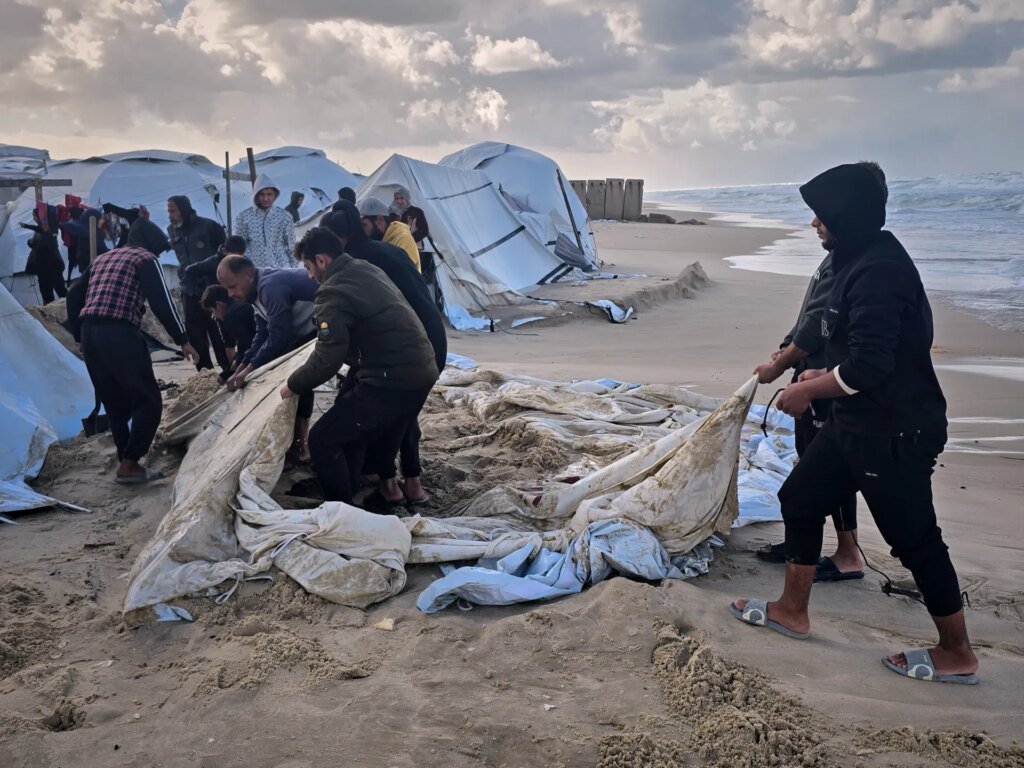
Devastating Winter Rain Floods Displacement Camps in Gaza
This weekend, the Gaza Strip faced a deluge of winter rain, leading to severe flooding in displacement camps where many Palestinians are currently living in precarious conditions. The ongoing humanitarian crisis, worsened by more than two years of conflict, leaves many seeking refuge in worn and inadequate tents as they grapple with the relentless elements.
The Impact of the Flooding
In Khan Younis, the scene was one of despair, with soaked blankets and inundated cooking areas compounding the suffering of the displaced. Children navigated through deep puddles in flip-flops, while adults worked feverishly, using shovels and makeshift tools to bail water from their tents and salvage collapsed shelters from murky mud.
“Puddles formed, and there was a bad smell,” recounted Majdoleen Tarabein, who was forced to leave her home in Rafah. “The tent flew away. We don’t know what to do or where to go.”
Many families spent their days attempting to dry out their sodden belongings. Eman Abu Riziq, also displaced in Khan Younis, remarked, “When we woke up in the morning, we found that the water had entered the tent. These are the mattresses. They are all completely soaked.” Adding to the tragedy, Eman is still mourning the loss of her husband, who died less than two weeks ago.
A Dire Plea for Help
Fatima Abu Omar, struggling to stabilize a sagging shelter, expressed the collective exhaustion felt by many in the area: “Where are the mediators? We don’t want food. We don’t want anything. We are exhausted. We just want mattresses and covers.”
The harsh conditions have led to tragedy, with at least 15 individuals, including three infants, succumbing to hypothermia exacerbated by the relentless rains and plummeting temperatures, according to local authorities.
Challenges in Finding Shelter
Emergency workers have warned against staying in damaged buildings due to potential collapses, but the ongoing destruction caused by relentless bombardments has left the majority of Gaza in ruins, drastically limiting shelter options. Recent figures from the United Nations suggest that about 80 percent of the region’s buildings have sustained damage.
Since the ceasefire between Israel and Hamas, the situation remains dire, with reports indicating that 414 people have lost their lives and 1,142 have been injured. The overall Palestinian death toll has climbed to at least 71,266, according to the Health Ministry.
Aid Efforts Fall Short
Despite international efforts, aid deliveries to Gaza have not met the necessary levels stipulated during the ceasefire. Humanitarian organizations have reported that while 4,200 aid trucks entered Gaza within the last week, the quantities of essential items, including tents, have not been disclosed, leading to concerns that current supplies are insufficient to meet pressing needs.
Recent data indicates that approximately 72,000 tents and 403,000 tarps have been sent to Gaza as aid by the Shelter Cluster, an international coalition led by the Norwegian Refugee Council.
Philippe Lazzarini, the commissioner-general of the UN refugee agency, highlighted the ongoing struggles faced by the displaced: “People in Gaza are surviving in flimsy, waterlogged tents and among ruins. There is nothing inevitable about this. Aid supplies are not being allowed in at the scale required.”
Conclusion
The current situation in Gaza underscores the urgent need for effective humanitarian assistance and shelter solutions amidst the devastating impact of winter rains. As displaced families navigate their struggles, their plight calls for immediate attention from the international community.
- Winter rains have flooded displacement camps in Gaza, leaving many families in dire conditions.
- Authorities report at least 15 deaths from hypothermia due to the extreme weather.
- Although aid deliveries have increased, they remain insufficient to meet the overwhelming needs of the population.
- The ongoing destruction of buildings complicates rescue efforts and safe shelter acquisition.