
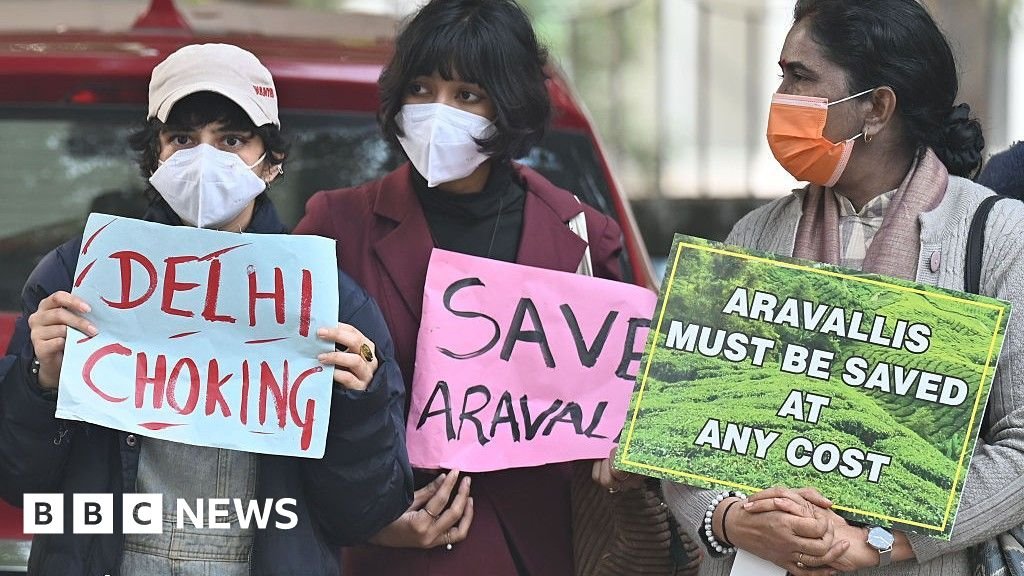
Protests Erupt Over Redefined Aravalli Hills
Protests have ignited across northern India in response to a recent Supreme Court ruling that has redefined the Aravalli hills, one of the world’s oldest geological formations. Spanning the states of Rajasthan, Haryana, Gujarat, and the capital, Delhi, this change has raised significant environmental concerns among activists and residents alike.
Understanding the New Definition
The Supreme Court’s new definition, following recommendations from the federal government, classifies an Aravalli hill as any landform that rises at least 100 meters (328 feet) above the surrounding area. Additionally, two or more hills located within 500 meters of each other—and the land between them—are now regarded as part of the same Aravalli range.
Environmentalists argue that this height-based classification jeopardizes many lower hills that are critical for ecological balance, leaving them vulnerable to the threats of mining and urban construction.
The Public Outcry
Cities such as Gurugram and Udaipur have witnessed peaceful demonstrations led by a mix of residents, farmers, environmental activists, and occasionally lawyers and political figures. Neelam Ahluwalia, a key member of the People for Aravallis group, expressed concern that this new definition undermines the crucial role of the Aravalli range in combating desertification, recharging groundwater, and sustaining livelihoods in Northwest India.
According to experts, the lower, scrub-covered hills are instrumental in these environmental processes. Vikrant Tongad, an environmental activist involved in the movement, emphasizes that mountains and hill systems worldwide are recognized by their ecological functions rather than arbitrary elevation criteria. He stressed, “Any landform that is geologically part of the Aravalli system and plays a crucial ecological role should be acknowledged as part of the range, irrespective of its height.”
The activists are calling for the government to establish a scientific basis for defining Aravalli areas, one that considers geographical, ecological, wildlife connectivity, and climate resilience factors. Tongad also warned that the new ruling could lead to increased mining and construction, heightening the risk of ecological harm.
Criticism from opposition parties has intensified, with leaders highlighting the potential environmental devastation. For instance, Akhilesh Yadav, chief of the Samajwadi Party, stated that the protection of the Aravallis is “inseparable from Delhi’s survival,” while Rajasthan Congress leader Tika Ram Jully described the hills as the “lifeline” of the state, cautioning that without them, the region would likely turn into a desert.
Government Response
The federal government has sought to downplay these worries. A recent statement clarified that the new definition aims to enhance regulatory measures and provide consistency across states. It was asserted that a single, objective definition was necessary for prioritizing mining regulations.
The government has also specified that the new definition encompasses the entire hill system—including slopes, associated landforms, and intervening areas—thereby protecting hill clusters and their interconnections. They further clarified that mining will not be permitted across all landforms below the 100-meter threshold. Instead, areas within the Aravalli hills or ranges will be excluded from any new mining leases, with current leases allowed to continue only if they comply with sustainable mining practices.
According to Environment Minister Bhupender Yadav, only a small fraction (approximately 2%) of the 147,000 square kilometers that comprise the Aravalli range is eligible for mining, and only following comprehensive assessments and official approvals. However, many groups involved in the protests remain resolute about their demonstrations and are considering legal avenues to contest the court’s new definition.
- Protests in northern India arise after Supreme Court redefines Aravalli hills.
- Activists argue the new height-based classification threatens key ecological areas.
- Government insists the change aims to enhance regulatory uniformity.
- Demonstrators vow to continue their efforts to protect the Aravalli region.