
Political Tensions Rise in Bangladesh Following Student Leader’s Assassination
Bangladesh is on edge following the tragic assassination of a student leader linked to last year’s revolt that resulted in the removal of Prime Minister Sheikh Hasina from power. As the country prepares for elections scheduled for February, questions about the stability of the political landscape loom large.
The Current Political Climate
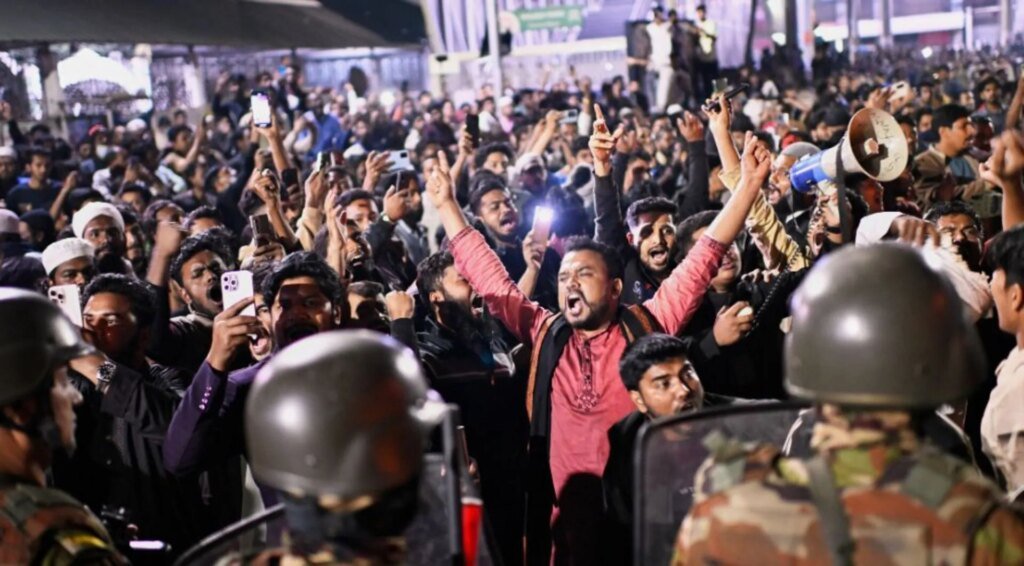
In recent weeks, the atmosphere in Bangladesh has grown increasingly charged. The killing of a prominent student figure, who played a significant role in the protests against the government, has sparked outrage among the population. This incident has the potential to stir unrest as the nation inches closer to the polls.
Political experts are weighing in on the implications of this assassination and its ramifications for the upcoming elections. Will the incident further polarize an already divided electorate?
Expert Insights
To delve deeper into the intricacies of this evolving situation, we speak with a panel of experts:
- Taqbir Huda – Human rights lawyer and Clarendon Scholar at Oxford University
- Asif Shahan – Professor of Development Studies at the University of Dhaka
- Fahmida Khatun – Executive Director at the Centre for Policy Dialogue in Bangladesh
These voices will help illuminate the potential paths forward for Bangladesh’s political framework in the wake of this tragedy.
Looking Ahead
As the situation unfolds, it remains critical to monitor the responses from various political factions and their influence on public sentiment. With elections on the horizon, the coming weeks will be crucial in determining the future direction of Bangladesh’s governance and its people’s aspirations for stability and representation.
Conclusion
Bangladesh finds itself at a pivotal moment, grappling with the aftershocks of political violence while preparing for democratic exercises. The atmosphere is charged with uncertainty, and the government’s response will play a critical role in shaping what happens next.
- The assassination of a student leader has heightened tensions in Bangladesh.
- Upcoming elections scheduled for February raise questions about the political landscape.
- Experts are weighing in on the implications of this violence for the country’s governance.
- The response from political factions will be crucial in the coming weeks.