
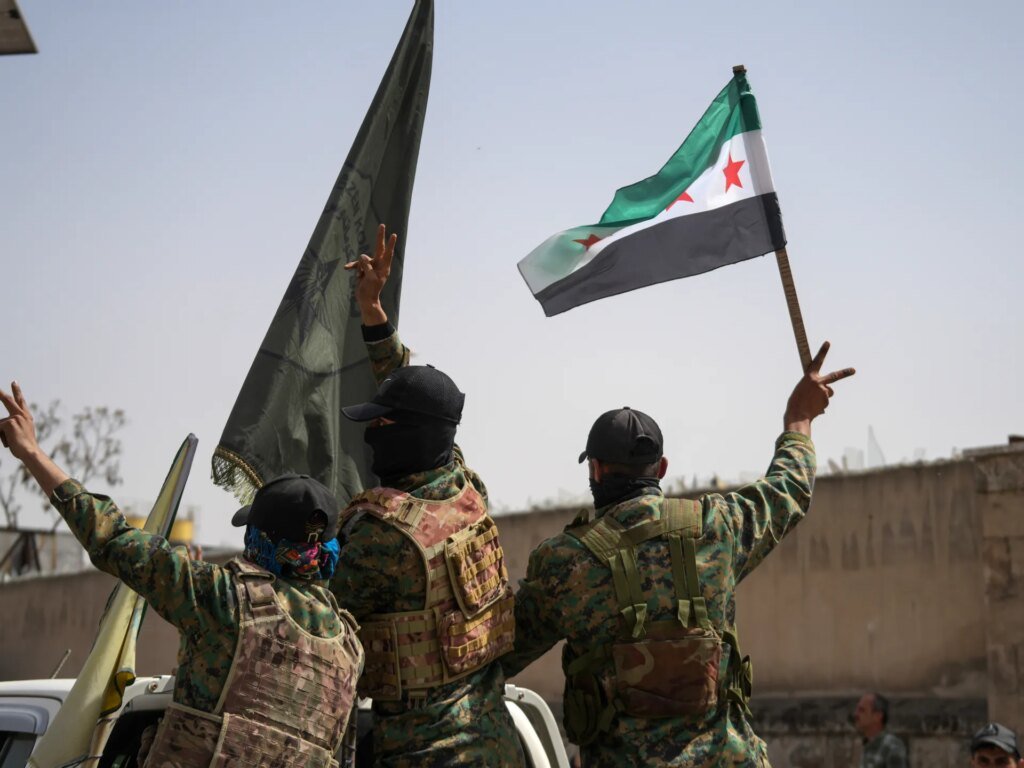
Tensions Rise Between Syrian Forces and SDF Amid Integration Deadline
In the heart of Aleppo, Syria’s second-largest city, recent clashes erupted between the Syrian government forces and the Kurdish-led Syrian Democratic Forces (SDF). This conflict underscores the escalating tensions as both sides grapple with the impending deadline for the SDF’s integration into the Syrian armed forces.
The Unexpected Outbreak of Fighting
The fighting ignited on a Monday afternoon during a visit from Turkish Foreign Minister Hakan Fidan. Fortunately, by the evening, an agreement was reached to cease hostilities. Analysts observe that the SDF, led by military chief Mazloum Abdi, has hit a deadlock with the Syrian government regarding their integration into the national military framework. If a viable solution isn’t found soon, this stalemate could lead to renewed conflicts between both groups.
As Thomas McGee, a Max Weber Fellow at the European University Institute, noted, “The red lines imposed by Kurdish self-administration conflict sharply with positions from Turkey and Damascus, leaving little room for compromise.”
Negotiations: A Historic Agreement
On March 10, a significant agreement was struck between the newly formed Syrian government, headed by Ahmed al-Sharaa, and the SDF. This deal outlines a plan for integrating the SDF into the Syrian armed forces by the end of 2025. Most of the SDF comprises members from the People’s Defense Units (YPG), an organization linked to the Kurdistan Workers’ Party (PKK), which both the United States and the European Union classify as a terrorist group.
While this agreement aimed to prevent a significant confrontation between Damascus and the US-backed SDF, progress has stagnated. “For any advancement in this integration, one side would need to compromise, which hasn’t happened,” McGee added.
Stalemate Over Integration Methods
A key point of contention lies in the SDF’s desire to integrate their battalions with a degree of autonomy, versus the Syrian government’s preference for assimilating individual SDF fighters. Experts indicate that both positions are likely untenable, and reaching a consensus doesn’t appear to be on the horizon. Meanwhile, Turkey has voiced strong support for the Syrian government’s stance, warning of potential unilateral military action if a resolution isn’t achieved.
Fidan expressed to Turkish media, “We hope discussions continue peacefully and through dialogue. The patience of the involved parties is wearing thin.” After years of strife with the PKK, Turkey is cautiously optimistic about maintaining peace and is unlikely to sacrifice its recent agreements through military confrontation.
Kurdish Autonomy and Self-Administration
December 8 marks a pivotal moment in Syrian history, as the over five-decade grip of the Assad regime diminished, enabling millions of Syrians to dream of a brighter future. For those in SDF-controlled regions, the situation is particularly poignant. According to many Kurdish citizens, their rights had long been suppressed under Bashar al-Assad’s rule, relegating them to second-class status.
Throughout the Syrian civil war, the SDF has managed to carve out a certain level of autonomy, albeit sometimes against the wishes of local Arab populations. They are now reluctant to relinquish this newfound power. Robin Yassin-Kassab, a Syrian writer, articulated, “The Kurds feel they have achieved something unprecedented in their ability to self-govern and are unwilling to give that up.”
On a related note, Syrian Foreign Minister Asaad al-Shaibani mentioned that the SDF has “shown no willingness” to engage with the central administration in Damascus. Analysts assert, however, that the Syrian government could have fostered better relations through confidence-building measures.
Lack of Trust and Missed Opportunities
McGee pointed out that the Syrian government has missed chances to demonstrate goodwill. Actions such as recognizing Newroz as a national holiday or addressing the historical Kurdish statelessness could have been vital for building trust. Additionally, residents have noted that essential services previously available under the Assad regime have since disappeared.
Future Prospects and Regional Dynamics
The new Syrian administration has garnered substantial international support, boosting its confidence. Relations with the US have grown warmer recently, highlighted by al-Sharaa’s significant visit to the White House, which received the approval of President Trump. Historically, the US has supported the SDF in its battle against ISIS. However, US officials indicate that while they favor the SDF’s integration, they wish to avoid any escalations that could lead to further instability in the region.
Recent reports suggest that Damascus is open to restructuring the SDF’s roughly 50,000 fighters into multiple divisions, provided they relinquish certain command structures. However, experts caution that a formal agreement remains elusive and further discussions are essential.
Despite these setbacks, the agreement signed in March appears to have effectively minimized direct confrontations. “It’s noteworthy that conflicts have significantly decreased since the ceasefire was established, though other agreement provisions are lagging,” McGee stated.
Conclusion
As the integration deadline looms, both the SDF and Syrian government face significant challenges in reconciling their conflicting interests. The journey ahead is fraught with obstacles, and analysts remain skeptical about the feasibility of timely integration before the deadline.
- Clashes in Aleppo highlight rising tensions between the Syrian government and the SDF.
- The March agreement for SDF’s integration is faltering, with progress at a standstill.
- Both sides hold conflicting views on how integration should be operationalized.
- Regional dynamics, including Turkey’s involvement, add complexity to the situation.