
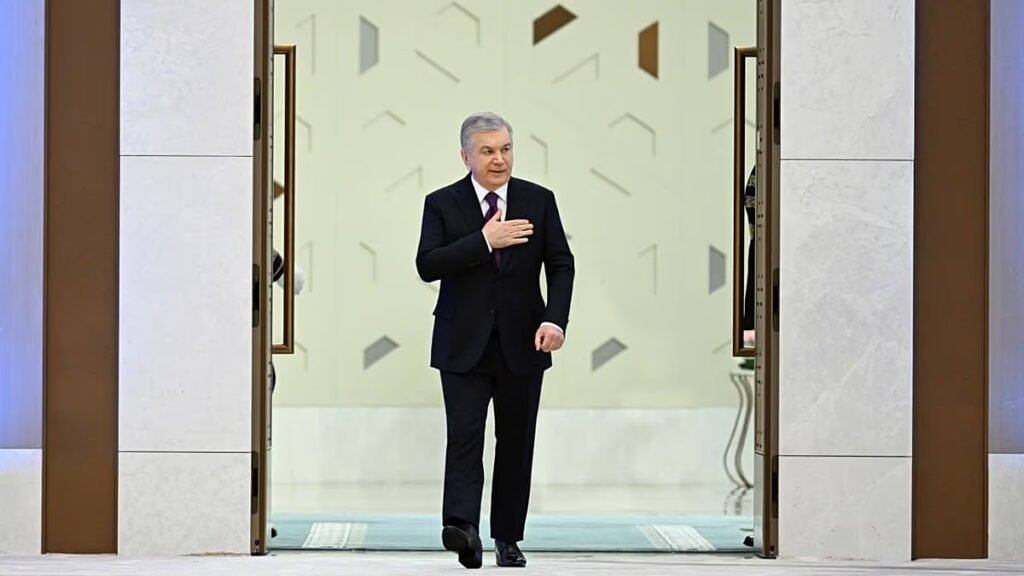
Uzbekistan’s Economic Growth: A Year of Record Performance
Uzbekistan has concluded the year with an outstanding economic performance, achieving a remarkable GDP of €123 billion. In his annual address to parliament, President Shavkat Mirziyoyev highlighted that the positive effects of ongoing reforms are becoming increasingly evident in the daily lives of citizens. Despite facing global economic challenges, disrupted supply chains, and rising commodity prices, the country has demonstrated steady growth.
Significant Achievements in 2025
For the first time ever, Uzbekistan’s GDP surpassed €123.25 billion, exports increased by 23%, and foreign investments neared €37 billion, reflecting nearly one-third of the economy. Additionally, the nation’s gold reserves exceeded €51 billion for the first time, showcasing the strength of its natural resources.
“The results of our reforms are felt in every mahalla (community), every family, and in daily life,” Mirziyoyev stated, crediting job creation, infrastructure improvements, and enhanced access to essential services for this progress.
Boosting International Confidence
As the domestic economy flourishes, international confidence in Uzbekistan has solidified. Leading credit rating agencies upgraded the country’s sovereign credit rating from BB- to BB, which is anticipated to reduce external borrowing costs by as much as €250 million annually. Furthermore, Uzbekistan climbed 71 places on the World Bank’s Technology Readiness Index, placing it among the global top 10.
Improvements in Living Standards
The government reports that economic growth is translating into tangible enhancements in living standards. Electricity production increased to 85 billion kilowatt-hours, catering to a population exceeding 38 million and supporting a burgeoning industrial sector. Major strides were made in irrigation infrastructure, reaching 470,000 households in previously neglected areas, allowing approximately 3 million people to cultivate income-generating plots several times a year.
Advancements in Housing and Employment
Residential construction also saw significant progress, with 135,000 new apartments completed in 2025 alone. Over the past nine years, more than 210 million square meters of both residential and non-residential space have been developed nationwide. Employment rates are on the rise, as unemployment decreased from 5.5% to 4.9%, and approximately 1.5 million individuals were lifted out of poverty this year, lowering the national poverty rate to 5.8%, significantly down from one-third when the reforms began.
Uzbekistan’s Growing Regional Influence
In 2025, Uzbekistan expanded its regional and international standing, hosting prominent global and regional events such as the UNESCO General Conference and the Central Asia-EU Summit. The country signed a trilateral border agreement with Tajikistan and Kyrgyzstan, addressing long-standing regional disputes, while strengthening ties with the EU through an enhanced partnership agreement.
“All of this is taking our international relations to a fundamentally new level,” the President remarked, emphasizing the continued building of cooperative bridges with various nations.
Future Priorities for 2026
Looking ahead, Mirziyoyev outlined six priority areas that will shape Uzbekistan’s policies in 2026, which has been dubbed the Year of Mahalla Development and Social Prosperity. This initiative will center on local governance and the growth of community-level initiatives.
Investment in Local Entrepreneurship
Over €715 million will be dedicated to fortifying entrepreneurial infrastructure within mahallas, paired with €10 billion in financing aimed at supporting small and medium-sized businesses, with a special focus on women and young entrepreneurs. Funding will be directed toward job-creating local projects, highlighting transparency and civic engagement.
Innovation and Technological Development
Plans are also underway to launch Uzbekistan’s first satellite and prepare the nation’s first astronaut, in addition to investing in research centers and technology hubs. Other key priorities include driving job creation, reforming the labor market, enhancing social protection, promoting green development, and advancing reforms in public administration and the justice system.
“All reforms lose their meaning if corruption is tolerated,” Mirziyoyev emphasized, pledging stricter oversight and accountability among officials.
The President also expressed a commitment to achieving upper-middle-income status in the coming years, asserting that success will be measured not just by economic metrics but also by the real-world impact of reforms on community life.
Conclusion
Uzbekistan’s strong economic growth and significant achievements in 2025 mark a pivotal moment in its development journey. With ongoing reforms and strategic priorities set for the coming year, the nation is poised to continue its upward trajectory.
- Uzbekistan’s GDP reached €123 billion, marking a historic high.
- Exports grew by 23%, and foreign investment approached €37 billion.
- The poverty rate decreased significantly to 5.8%.
- Ongoing reforms prioritize local governance and community development.