
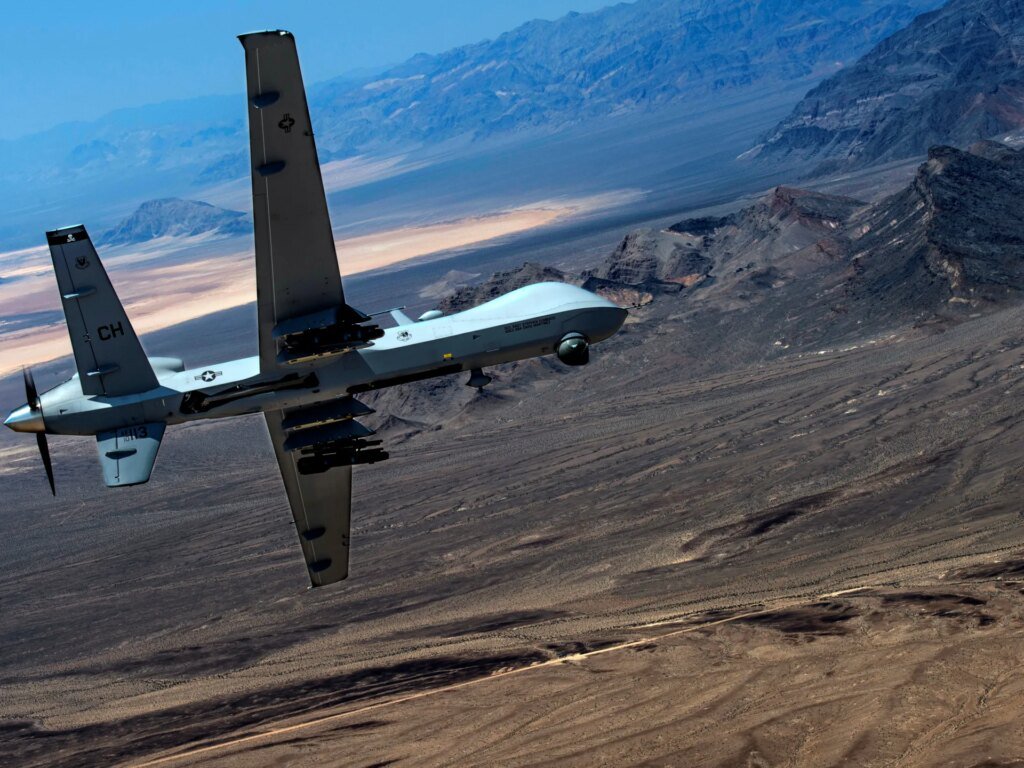
Escalation of US Air Strikes in Somalia
The United States has significantly ramped up its military air campaign in Somalia, conducting a startling 111 strikes against various armed groups since President Trump took office again. This increase, reported by the New America Foundation, has raised concerns over civilian casualties as well. The latest airstrike occurred on December 14, located around 50 kilometers (31 miles) northeast of Kismayo, where the US Africa Command targeted alleged members of the militant group al-Shabaab.
The Beginning of Increased Operations
This surge in airstrikes began in February with the first operation under President Trump’s administration. A few months later, a senior US Navy admiral made headlines by stating that the United States had executed the “largest air strike in the history of the world” from an aircraft carrier, marking a significant shift from the tactics used by the previous administration. Already this year, the number of airstrikes has surpassed the total number conducted during the administrations of George W. Bush, Barack Obama, and Joe Biden, indicating that Trump may even outpace his own first-term record of 219 strikes.
Targeting Extremist Groups
The intensified military efforts are aimed primarily at al-Shabaab, an al-Qaeda affiliate that has been fighting the Somali government since 2007 and controls substantial areas in the south-central regions. Additionally, the operations also target ISIL (ISIS) in Somalia, a smaller faction estimated to have around 1,500 fighters concentrated in the northeastern part of the country.
Casualty Toll
According to the Africa Center for Strategic Studies, the conflict in Somalia has become one of the deadliest in Africa, claiming 7,289 lives over the past year. The U.S. has aligned itself with Somalia’s federal government, providing training to elite forces and conducting airstrikes to bolster local operations. U.S. military personnel have a presence on the ground as well.
Shifts in Military Strategy
The recent surge in airstrikes follows new directives from U.S. Defense Secretary Pete Hegseth that reversed earlier Biden-era limitations requiring White House approvals for strikes outside declared warzones, thereby granting greater autonomy to AFRICOM commanders in executing military actions. David Sterman, a senior policy analyst at the New America Foundation, expressed that there seems to be a clear signal from the White House favoring escalation, allowing more aggressive military actions with reduced oversight.
Driving Factors Behind the Increased Strikes
- More than half of the airstrikes have been in support of a U.S.-backed campaign by Somalia’s Puntland region against ISIL-Somalia, initiated after attacks on military convoys in late 2024.
- The focus has shifted from sporadic targeting of key figures to sustained military operations against members entrenched in caves in northern Somalia.
- The remaining strikes have been aimed at curbing al-Shabaab’s advances against Somali government forces in the south, providing critical support to the beleaguered Somali National Army.
The Nature of Recent Airstrikes
The operation that commenced this campaign on February 1 saw 16 F/A-18 Super Hornets launching from the USS Harry S Truman, delivering 60 tons of munitions onto cave complexes in the Golis Mountains, resulting in 14 reported fatalities according to Africa Command.
Civilian Impact and Growing Concerns
However, this intensified military activity has raised alarms concerning civilian casualties. Investigative reports have indicated that U.S. airstrikes, along with Somali forces, resulted in at least 11 civilian deaths, including seven children, during a November 15 operation in the Lower Jubba region. While Africa Command acknowledged executing strikes to assist Somali troops, inquiries regarding civilian casualties have mostly gone unanswered, as the military has ceased providing assessments in strike announcements.
According to military publications like Stars and Stripes, the current pace of operations is even surpassing U.S. claims concerning counter-narcotics strikes in the Caribbean.
Political Climate and Response
Simultaneously, President Trump has faced backlash for making incendiary remarks about Somali immigrants in Minnesota, coinciding with federal efforts to crack down on undocumented immigrants from Somalia in the state. These comments have generated criticism from various quarters, both in Somalia and within the U.S.
Conclusion
The considerable escalation of U.S. airstrikes in Somalia represents a pivotal shift in military strategy under President Trump, aimed primarily at combating extremist groups like al-Shabaab and ISIL. However, the consequences of these actions, particularly concerning civilian lives, must be addressed with urgency.
- The U.S. has conducted 111 airstrikes in Somalia since the beginning of Trump’s new term.
- This year’s strike count exceeds those from the previous three administrations combined.
- Concerns over civilian casualties are rising, with increasing reports of deaths among non-combatants.
- The U.S. military has shifted to a more aggressive stance, with less oversight on air operations.