
US Imposes Visa Bans on European Activists Over Censorship Claims
The United States has recently enacted visa bans against five European individuals, including a former European Union commissioner. This decision comes in response to accusations that these individuals pressured technology companies to censor and stifle “American viewpoints they oppose.” The development reflects a growing tension between US and EU perspectives on free speech and content moderation.
Details of the Visa Bans
During a statement made on Tuesday, US Secretary of State Marco Rubio labeled the individuals involved “radical activists” who have played a role in “censorship crackdowns” launched by foreign states aimed at restricting “American speakers and American companies.” He expressed that the Trump Administration is taking a firm stand against these perceived acts of extraterritorial censorship.
Key Targets of the Visa Restrictions
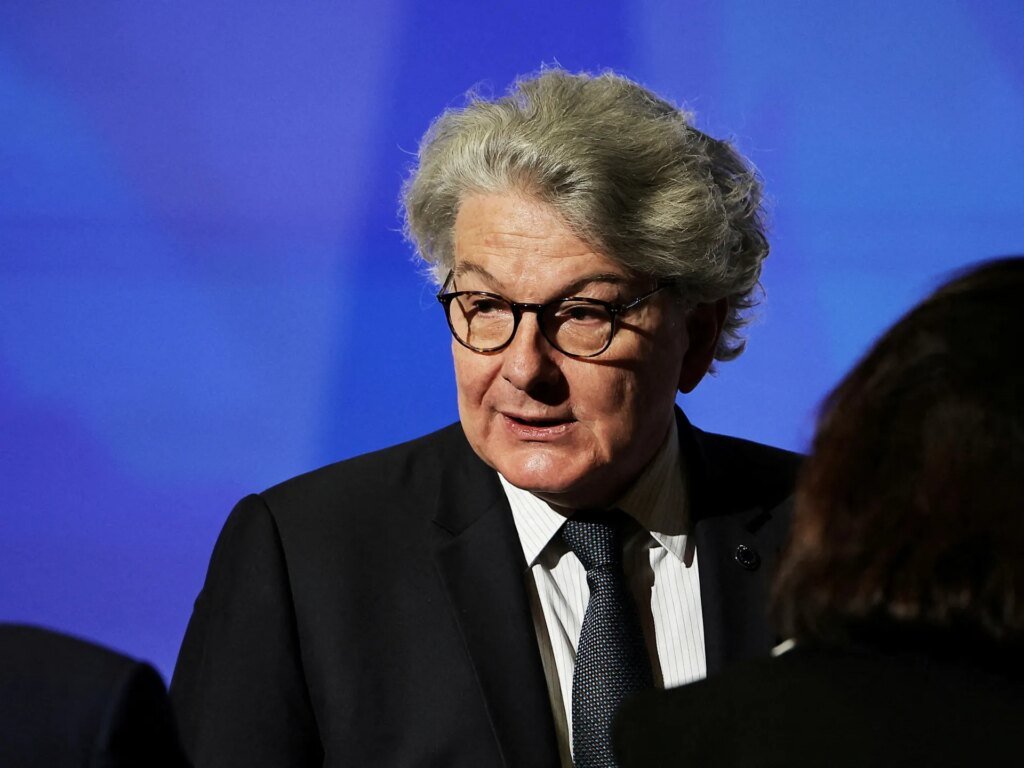
The highest-profile individual affected by this ban is Thierry Breton, who held the position of European Commissioner for the Internal Market from 2019 to 2024. According to Sarah Rogers, the Undersecretary for Public Diplomacy, Breton is known as the “mastermind” behind the EU’s Digital Services Act (DSA). This legislation is designed to tackle issues like hate speech and misinformation on digital platforms.
Rogers further accused Breton of employing the DSA to make threats toward Elon Musk, who owns X and is recognized as a close ally of former President Donald Trump. This occurred ahead of a notable interview Musk had with Trump during the previous presidential campaign.
Responses to the Visa Ban
Breton reacted to the visa restrictions by describing them as a “witch hunt,” drawing parallels to the McCarthy era when Americans were persecuted for alleged communist ties. He sent a message to Americans stating, “Censorship isn’t where you think it is.”
Other Individuals Named
In addition to Breton, the visa bans target:
- Imran Ahmed, CEO of the Centre for Countering Digital Hate
- Josephine Ballon and Anna-Lena von Hodenberg, leaders of HateAid, a German organization
- Clare Melford, head of the Global Disinformation Index (GDI)
International Reactions
French Minister for Europe and Foreign Affairs, Jean-Noel Barrot, strongly condemned the US’s visa restrictions. He emphasized that the EU cannot have its digital space governed by outside influences and defended the DSA as a democratically adopted measure within Europe, which has no extraterritorial implications or impact on the US.
Ballon and von Hodenberg described the bans as attempts to hinder the enforcement of European laws against US corporations operating within Europe. They stated, “We will not be intimidated by a government that uses accusations of censorship to silence those who stand up for human rights and freedom of expression.”
A spokesperson for the GDI also criticized the US government’s actions, calling them “immoral, unlawful, and un-American,” labeling them as an authoritarian attack on free speech.
The Broader Context
This punitive action aligns with the Trump administration’s National Security Strategy, which alleged that European leaders have engaged in actions that infringe upon free speech and suppress dissent regarding immigration policies, further claiming these actions endanger the continent’s cultural identity.
The DSA, in particular, has intensified the friction between the US and the EU, with US conservatives condemning it as a coercive tool for silencing right-wing views, a charge that Brussels vehemently denies. The legislation mandates major platforms to clarify their content moderation processes, ensure transparency for users, and allow researchers to access data for studying issues like the exposure of children to harmful content.
Escalating Tensions
Tensions worsened this month after the EU imposed a fine on Musk’s X for breaching DSA regulations concerning advertising transparency and user verification methods. Recently, Washington indicated that significant European companies, such as Accenture and Siemens, might face similar sanctions in retaliation. Additionally, the US has expressed its concerns regarding the UK’s Online Safety Act, which enforces comparable content moderation standards, and has halted the implementation of a tech cooperation deal with the UK in response.
Conclusion
The US’s decision to impose visa bans on European activists highlights a contentious intersection of digital governance and free speech. As tensions mount, both sides will need to navigate this complex landscape carefully to avoid further escalation in transatlantic relations.
Key Takeaways
- The US has banned visas for five European individuals over alleged censorship pressures on tech firms.
- Thierry Breton is the most notable figure among those affected, labeled as the “mastermind” behind the EU’s Digital Services Act.
- European officials have condemned the bans as an infringement on their regulations, asserting that the DSA is democratically adopted and does not extend to US jurisdictions.
- The incident intensifies ongoing tensions over digital governance and free speech between the US and EU.