
EU Response to US Sanctions: A Clash Over Digital Sovereignty
Recent tensions between the United States and the European Union have sparked a heated debate regarding digital regulation, particularly following the sanctions imposed by the U.S. on the EU’s Digital Services Act (DSA). This article delves into the reactions from EU officials and the implications for freedom of expression and digital governance.
Breton’s Concerns
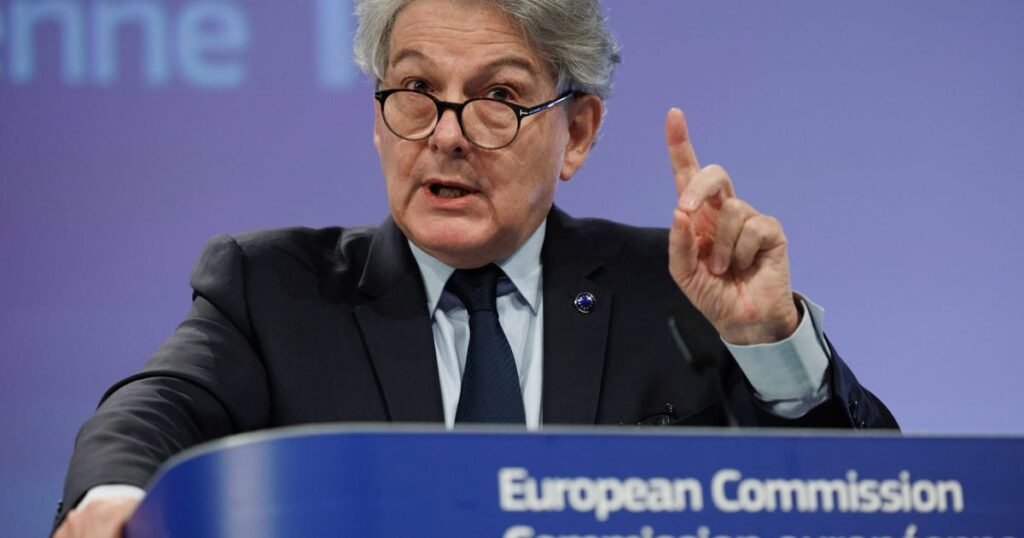
In response to the U.S. sanctions, Thierry Breton, the EU’s Internal Market Commissioner, took to social media to question whether the ghost of former U.S. Senator Joseph McCarthy’s anti-communist “witch hunts” was being revived. He highlighted that the DSA had received broad support in the European Parliament and was unanimously endorsed by all 27 member states of the EU.
“Censorship isn’t where you think it is,” he stated, raising doubts about American efforts to undermine the EU’s battle against the spread of misinformation.
Support from EU Officials
Stéphane Séjourné, the European Commission’s Vice President for Industrial Strategy, expressed his solidarity with Breton, asserting that “no sanction will silence the sovereignty of the European peoples.” Meanwhile, French Foreign Minister Jean-Noël Barrot criticized the visa restrictions and affirmed that the DSA ensures that “what is illegal offline is also illegal online.”
The European Commission’s Stance
The European Commission released a statement denouncing the sanctions, emphasizing that freedom of expression is a “fundamental right” and a “shared core value” with the U.S. within the democratic world. They indicated they had sought “clarifications” from the U.S. and warned that they would act quickly to safeguard their regulatory autonomy against what they deemed unjust measures.
U.S. Opposition to EU Regulations
The Trump administration has openly resisted European initiatives to regulate online platforms. Vice President JD Vance has consistently criticized what he describes as attempts to use digital regulations to stifle free speech. Earlier this month, he stated that the EU should avoid “attacking American companies over garbage.”
Negotiation Strategies
Experts in tech policy argue that actions like the recent sanctions could be seen as a tactic in negotiations, illustrating the White House’s discontent with European regulations while steering clear of triggering another trade war that could endanger the U.S. economy. By leveraging such diplomatic measures, the administration aims to highlight its position without escalating tensions further.
Conclusion
The evolving dynamic between the U.S. and the EU over digital rights and regulation is emblematic of a larger conversation about sovereignty and freedom. As both entities stand firm in their approaches, the outcomes of these tensions will undoubtedly impact the future of digital governance and expression globally.
- U.S. sanctions have reignited debates over digital deregulation versus regulation.
- The EU’s Digital Services Act has majority support among its member states.
- Officials argue that censorship measures threaten digital sovereignty in Europe.
- The current climate highlights ongoing tensions in international digital policy.