
South Korea and Japan’s Defensive Dilemma Amid Rising Tensions in the Middle East
As the United States continues to engage in its escalating conflict with Iran, both South Korea and Japan grapple with complex questions surrounding their defense agreements. The situation becomes even more pressing as U.S. President Donald Trump has called upon these nations, alongside others, to bolster maritime security in the Strait of Hormuz. This critical waterway has effectively been closed since the onset of military actions between the U.S. and Iran, particularly following the alliance’s controversial actions starting March 28.
Pressure from the U.S. Government
Earlier this week, Trump expressed a desire for allied countries, including Japan and South Korea, to contribute naval support in the region. However, he later tempered that stance, claiming on social media that the United States never required NATO, Japan, or Australia’s assistance. Nevertheless, experts believe that the pressure for these countries to participate may still be imminent.
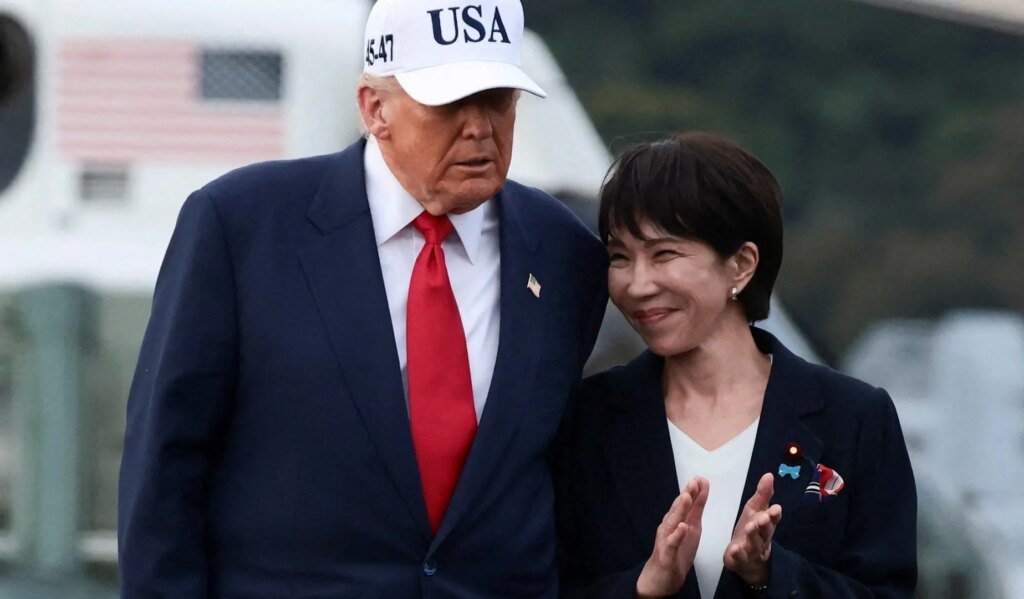
During an upcoming meeting with Japanese Prime Minister Sanae Takaichi at the White House, it’s expected that Trump will again emphasize the necessity of Japanese naval support in the Strait of Hormuz. According to Al Jazeera correspondent Jack Barton, “Japan is significantly reliant on energy imports from the Middle East, making their participation logical.”
Japan’s Unique Challenges
Japan’s Maritime Self-Defense Force stands as one of the most capable navies globally, making it an appealing asset for U.S. interests. However, Japan’s pacifist constitution poses challenges to deploying military forces overseas, outlining strict conditions under which its Self-Defense Force may operate. These conditions include scenarios involving direct attacks or situations considered life-threatening to national survival.
Amid these developments, Takaichi confirmed to Japanese lawmakers that the government is exploring legal avenues to safeguard Japanese vessels and interests, although no deployment plans are currently established. Notably, Japan is largely dependent on oil from the Middle East, with approximately 70% of its oil transiting the Strait of Hormuz. In response to supply concerns, Japan has initiated oil releases from its strategic reserves.
Expert Insights on Japan’s Role
According to Stephen Nagy, a professor at the International Christian University in Tokyo, it’s anticipated that the U.S., as a treaty ally, would seek support from Japan. He elaborated on the complexities, stating, “The key issue is whether Japan will be on the front lines or take on a support role, such as conducting anti-mining operations or maritime surveillance.” He expressed optimism that Japan could legally fulfill these duties without committing to direct combat scenarios.
South Korea’s Balancing Act
South Korea faces similar uncertainties as it considers its own military association with the U.S. while remaining heavily reliant on energy imports from the Middle East. Last week, the South Korean government took significant measures by imposing a price cap on domestic fuel prices for the first time since the 1997 Asian financial crisis. This was done to alleviate consumer burdens exacerbated by rising global fuel costs.
As legislators remain cautious regarding military deployment to the Middle East, In-Bum Chun, a retired lieutenant general from South Korea, noted the ambiguity surrounding the application of the U.S.-Korea Mutual Defense Treaty in this particular situation. Chun underlined that while aiding the U.S. is important, South Korea must also consider its readiness to deter threats from North Korea. There are reports suggesting that the U.S. may even relocate some Terminal High Altitude Area Defense (THAAD) missiles from South Korea to the Middle East, raising concerns among the South Korean public.
Chun emphasized, “South Korea must weigh the continuous threat posed by North Korea against its obligation to assist U.S. interests, particularly since about 70% of our oil imports pass through the Strait of Hormuz.” This dual challenge illustrates the complex landscape both nations must navigate before making any definitive commitments.
Conclusion
As tensions escalate in the Middle East, both Japan and South Korea are confronted with challenging dilemmas regarding their military obligations and energy security. Navigating these complexities will require careful consideration of national interests, legal frameworks, and international alliances.
Key Takeaways
- Japan and South Korea are evaluating their defense roles as U.S. tensions with Iran increase.
- Both nations are heavily dependent on oil from the Middle East, with the Strait of Hormuz as a critical transit point.
- Legal constraints in Japan complicate military deployment, while South Korea grapples with balancing U.S. commitments and North Korean threats.
- Expert opinions suggest potential supportive roles rather than direct engagement in military actions.