
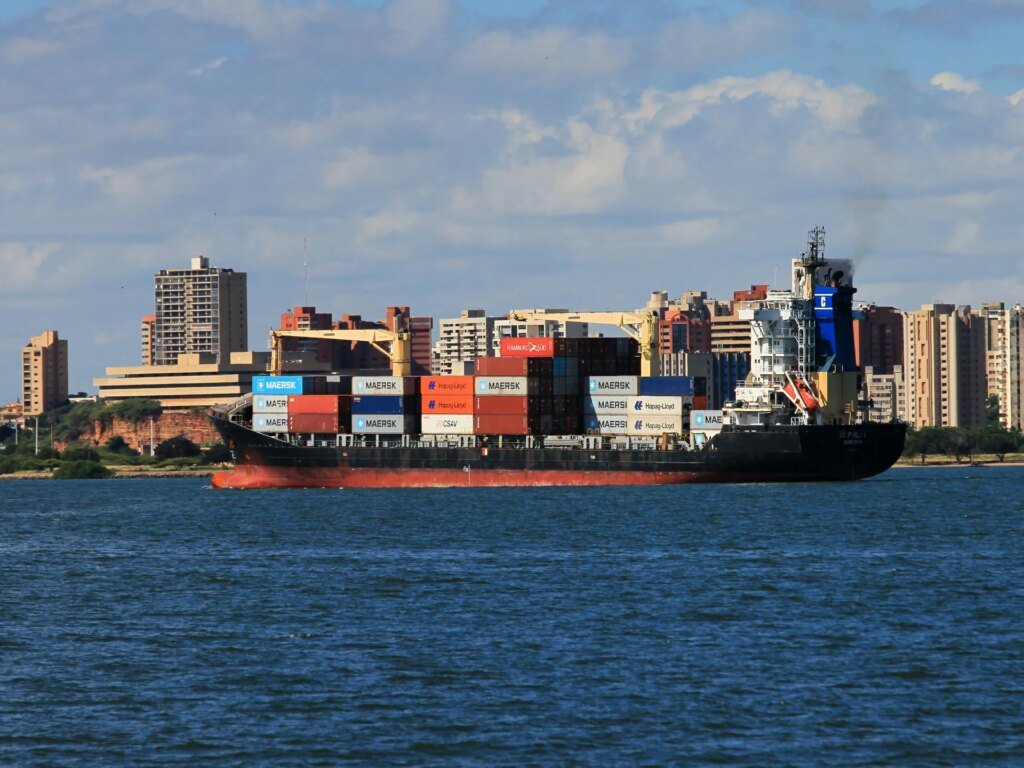
US Seizes Oil Tanker Off Venezuela’s Coast Amid Tensions
The United States has recently intercepted an oil tanker in international waters near Venezuela, marking a significant escalation in the ongoing tensions between the two nations. This incident, which occurred on Saturday, follows President Trump’s announcement of a blockade targeting sanctioned oil tankers moving to and from Venezuela.
Background of the Seizure
This operation is the second seizure of a tanker close to Venezuela within a few weeks. It coincides with a notable increase in US military presence in the region as Trump intensifies pressure on Venezuelan President Nicolas Maduro. Three officials speaking under the condition of anonymity confirmed to Reuters that the US Coast Guard led the operation, although the precise location remains undisclosed.
Details of the Operation
Officials from the Associated Press also corroborated the details of the boarding, describing it as a “consented boarding,” where the vessel stopped voluntarily to allow US forces onboard.
In reporting from Washington, DC, journalist Heide Zhou-Castro from Al Jazeera indicated that no official confirmation had been obtained from US authorities regarding the specifics of the incident, such as the name of the ship, its location, and whether it indeed fell under US sanctions. “We are still waiting for confirmation from the White House and Pentagon on the details,” she noted.
Impact on Venezuelan Oil Exports
Since the seizure of the sanctioned tanker last week, a de facto embargo has effectively led to loaded vessels, containing millions of barrels of oil, remaining within Venezuelan waters to avoid the risk of seizure. Consequently, Venezuelan crude exports have dramatically declined.
While numerous vessels engaged in oil transactions with Venezuela are under sanctions, there are others transporting oil from Iran and Russia that have not been similarly sanctioned. Notably, companies like Chevron are still involved in transporting Venezuelan oil using their authorized ships.
China remains the largest importer of Venezuelan crude, which constitutes about 4% of its imports, with shipments in December projected to exceed an average of 600,000 barrels per day, according to analysts. At present, the oil market remains adequately supplied, with millions of barrels on tankers off China’s coast waiting to be unloaded. However, if the embargo persists, the loss of nearly a million barrels a day could likely lead to a spike in oil prices.
Political Repercussions
Trump’s strategy against Maduro has not only involved increasing military forces in the area but has also included over two dozen military strikes on vessels in the Pacific Ocean and Caribbean Sea, resulting in at least 100 fatalities. The president has hinted at potential land strikes in Venezuela as well.
In reaction to these developments, Maduro has accused the US of attempting to destabilize his government and seize control of Venezuela’s vast oil reserves, which are the largest worldwide. On Saturday, Brazilian President Luiz Inacio Lula da Silva cautioned Trump against initiating an “armed intervention” in Venezuela, labeling it a potential “humanitarian catastrophe.” At a recent Mercosur summit in Brazil, Lula strongly rebuked the US’s actions, calling them a “dangerous precedent for the world,” and emphasized that South America should not be subjected to military influence from outside powers, recalling historical military conflicts in the region.
Conclusion
The seizure of the oil tanker is a clear illustration of the soaring tensions between the United States and Venezuela. As military presence increases and political maneuvering unfolds, the ramifications for oil exports and regional stability remain uncertain.
- The US has intercepted an oil tanker in international waters near Venezuela.
- This marks the second seizure of a tanker in recent weeks amidst heightened military presence in the region.
- The seizure has led to a significant decline in Venezuelan oil exports.
- Brazil’s president cautioned against US military intervention, highlighting potential humanitarian issues.