
Significant Arms Sale to Taiwan Draws China’s Ire
The Trump administration has unveiled a substantial arms package for Taiwan, valued at over $10 billion, which includes advanced medium-range missiles, howitzers, and drones. This announcement has sparked strong objections from China.
The Details of the Arms Package
Late on Wednesday, the U.S. State Department revealed the sale during a nationally televised address by President Donald Trump, who notably did not discuss China’s actions or Taiwan during his speech. Tensions between the U.S. and China have fluctuated throughout Trump’s presidency, primarily revolving around trade issues and China’s assertiveness towards Taiwan, which Beijing aims to unify with the mainland.
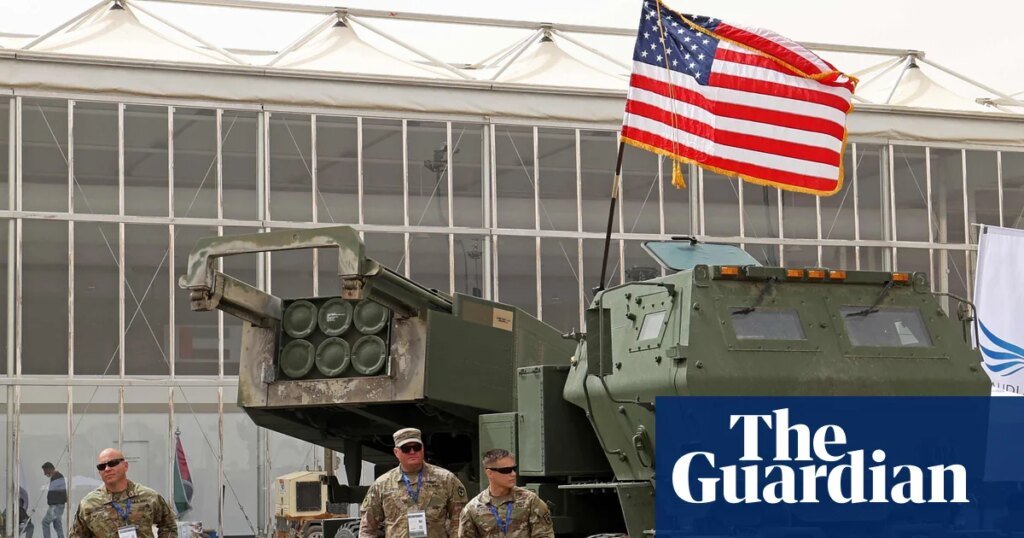
The comprehensive arms package includes eight separate agreements. Among them are 82 High Mobility Artillery Rocket Systems (HIMARS) and 420 Army Tactical Missile Systems (ATACMS) worth over $4 billion. These systems are comparable to the ones previously sent by the U.S. to aid Ukraine in its defense against Russia. Additionally, the package comprises 60 self-propelled howitzers and related equipment valued at more than $4 billion, alongside over $1 billion in drones.
Other components of the sale include military software worth over $1 billion, Javelin and TOW missiles exceeding $700 million, helicopter spare parts valued at $96 million, and refurbishment kits for Harpoon missiles priced at $91 million.
The U.S. Justification and China’s Response
In almost identical statements, the State Department emphasized that these sales align with “U.S. national, economic, and security interests by supporting Taiwan’s ongoing efforts to modernize its military capabilities.” The statements further noted that these transactions would enhance Taiwan’s security while contributing to regional stability, military balance, and economic progress.
China’s Foreign Ministry, however, condemned the sale, asserting that it violates diplomatic agreements between Beijing and Washington and jeopardizes regional stability. Spokesperson Guo Jiakun criticized the Taiwanese government’s push for independence, claiming it jeopardizes the stability of the Taiwan Strait and could lead to military confrontation. “The U.S. support for ‘Taiwan independence’ through arms will only end up backfiring,” Guo asserted.
Legal Framework and Implications
Under U.S. federal law, the government is required to assist Taiwan in its self-defense efforts, a contentious issue given China’s steadfast commitment to reuniting Taiwan with the mainland, by force if necessary. Trump has previously indicated that Taiwan should contribute financially for U.S. protection.
In light of increased Chinese military exercises near the island in 2022, officials in Washington and Taipei have been working to expedite the approval process for arms sales. This change comes after a period of unpredictability in Trump’s stance towards Taiwan.
Reactions from Taiwan and Future Defense Spending
Following the announcement, Taiwan’s Ministry of Defense expressed appreciation towards the U.S., stating that the arms sale is crucial for maintaining “sufficient self-defense capabilities” and enhancing deterrent strength. The ministry emphasized that Taiwan’s defense initiatives are foundational to ensuring regional peace and stability.
Similarly, Taiwan’s Foreign Minister Lin Chia-lung thanked the U.S. for its enduring support, which he views as essential for preventing conflict in the Taiwan Strait.
Amid this backdrop, Taiwan’s government has committed to increasing defense spending to 3.3% of its GDP next year, with ambitions to reach 5% by 2030. This escalated spending follows calls from the U.S. and the Pentagon for Taiwan to invest up to 10% of its GDP in defense, a figure that has met with resistance from Taiwan’s opposition KMT party and segments of its populace.
Additionally, Taiwan’s President Lai Ching-te recently announced a special $40 billion budget over eight years for military purchases, including a cutting-edge air defense system named Taiwan Dome. However, inserting this budget into the legislative agenda has faced challenges, as opposition lawmakers have previously obstructed bills aimed at financing major weapons procurement and cooperative development projects with the United States.
- The Trump administration is set to finalize a $10 billion arms deal with Taiwan, prompting warnings from China.
- The package includes advanced missile systems and drones, aimed at strengthening Taiwan’s defenses.
- China has condemned the move, viewing it as a violation of diplomatic agreements and a threat to regional stability.
- Taiwan pledges to enhance its defense budget in response to increasing military pressure from China.