
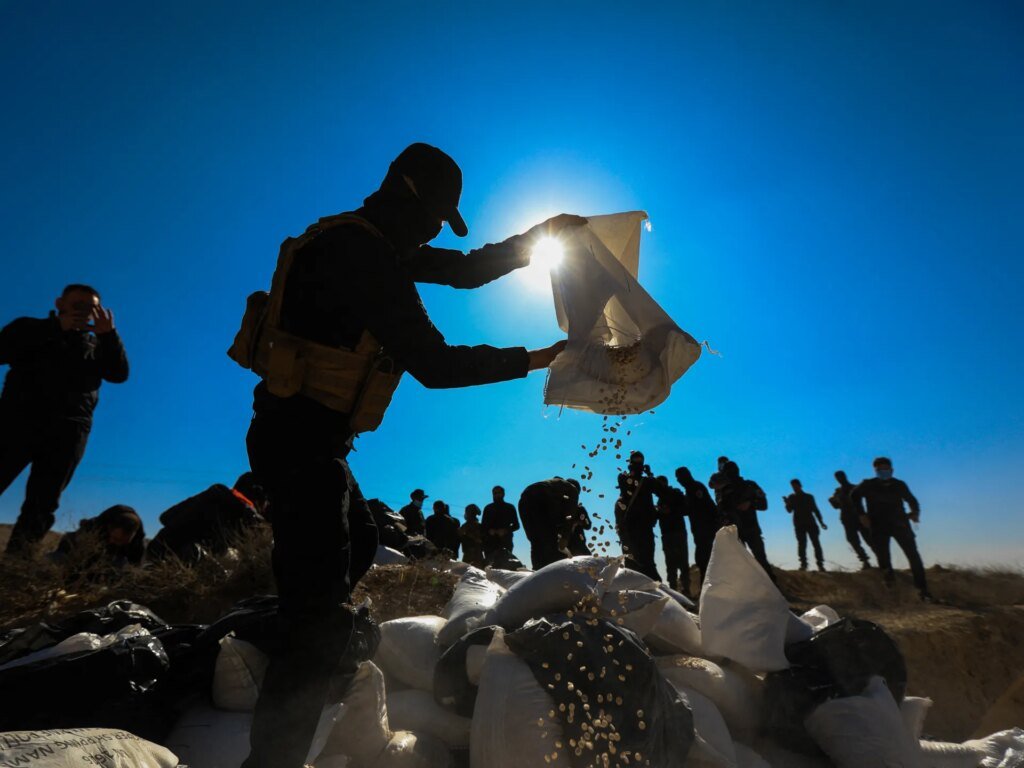
Syria’s Crackdown on the Captagon Industry
A recent United Nations report reveals that Syria’s government has launched a significant effort to combat the Captagon trade, a lucrative industry that flourished under former leader Bashar al-Assad. The report details the dismantling of numerous drug factories and storage sites as the new regime seeks to solidify its legitimacy and improve international relations.
Decay of the Captagon Market
For over a decade, Syria dominated the global Captagon market, producing a highly addictive amphetamine-like pill that generated billions for al-Assad’s administration. Following the previous leader’s removal a year ago, interim President Ahmed al-Sharaa has initiated a crackdown on this industry, as highlighted in a research brief from the UN Office on Drugs and Crime (UNODC).
Factory Closures and Impact
As reported, authorities have closed down 15 large-scale laboratories and 13 storage facilities, significantly disrupting the Captagon trade in the region. This decisive action comes amid concerns from several Gulf nations, particularly Saudi Arabia, where the demand for Captagon is high. The previous drug trade drew the attention of Western powers, leading to corresponding sanctions.
Connections to Previous Regime
For years, the Captagon trade was financially advantageous for various networks and individuals close to the former regime. According to Caroline Rose, an expert on Syrian drug trafficking, the profits enriched those linked to the government, including family members of al-Assad and business elites. Maher al-Assad, Bashar’s brother and former commander of an elite military division, was identified as a major figure in the protection of drug shipments through Latakia, a territory heavily associated with the former regime.
Continuing Challenges
Despite current efforts by the Syrian government to curb drug production, substantial quantities of Captagon originating from the country continue to circulate. The UNODC report indicates that while large-scale operations have been targeted, the likelihood of smaller production sites in Syria and surrounding nations persists, with Gulf countries remaining the primary consumers.
Future Prospects
The UNODC emphasizes that disrupting entrenched drug markets requires both “political will and international cooperation.” Although significant progress has been made, the report warns that the void left by Captagon could lead to a rise in new synthetic drugs, such as methamphetamine. This shift could result in emerging trafficking routes and shift the demand towards alternative substances if the underlying issues are not addressed.
Conclusion
Syria’s aggressive actions against the Captagon industry signal a transformative period for the nation. However, the challenges of drug trafficking and addiction remain daunting. A multi-faceted approach will be essential to address not only the supply but also the demand for these addictive substances.
Key Takeaways
- Syria’s government is actively dismantling drug factories tied to Captagon production.
- Significant closures of laboratories and storage facilities have altered the regional drug landscape.
- Continued demand may lead to a shift towards synthetic drugs like methamphetamine.
- Long-term solutions require addressing both supply and demand in the drug market.