
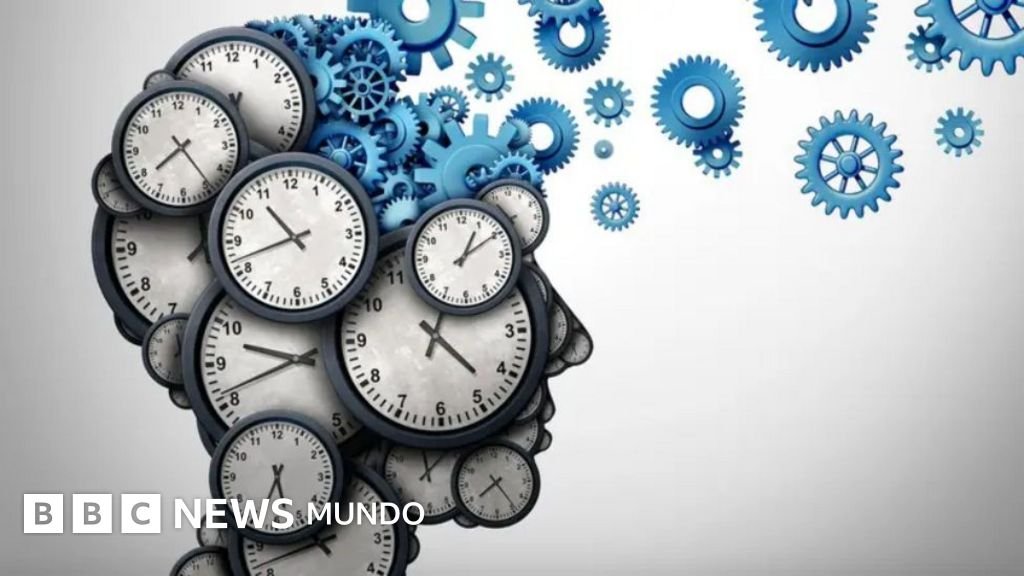
Understanding the Nature of Time
With the transition from 2025 to 2026, we are once again reminded of the relentless passage of time. But have you ever paused to consider what time truly is, beyond the hands of clocks and the dates on calendars? Time, as experienced by us humans, unfolds as a sequence of events: a future that becomes present, and a present that slips into the past. The present feels like the only reality we possess, but it vanishes in an instant. We perceive the past as what has already happened and recedes into forgetfulness, even though some memories linger on. Meanwhile, the future remains a realm of potential, containing countless alternative paths.
What is Time?
But how real is time? Is it a tangible essence, or simply an illusion? Or perhaps a blend of both? The answers drawn from both classical and modern physics may leave you in awe as they challenge some of our most common beliefs about existence.
Different Perspectives on Time
Dr. Chamkaur Ghag, a noted astrophysicist from University College London, states, “Physicists do not agree on a general definition of what time is.” However, there is a consensus around Einstein’s theory of relativity, which posits that space and time are interconnected and mutually influential; phenomena can be experienced differently depending on the observer’s state of motion.
The Relativity of Time
In our universe, time is relative. Ghag explains that it dilates as an object moves more rapidly compared to others. Therefore, as something nears the speed of light, the ticking of a clock slows down. Furthermore, time flows more slowly in strong gravitational fields. A compelling example of this is depicted in Christopher Nolan’s film Interstellar, where a character experiences just over an hour on a planet near a black hole, only to find that 23 years have passed for those on the ship.
Confirmed Concepts of Time
Experimental validations of time dilation have been achieved through the use of precise atomic clocks and modern particle accelerators. Additionally, the detection of gravitational waves arising from distortions in spacetime has further cemented Einstein’s theories.
A Forward Momentum
Another principle that physicists generally agree on is that time moves forward and not backward. Nonetheless, a controversial theory known as classical gravitational post-quantum theory introduces an element of randomness into our understanding of time. According to Jonathan Oppenheim from the Quantum Science and Technology Institute at UCL, this theory suggests that time can fluctuate erratically in certain regions of the universe, much like the ebb and flow of a stream.
The Psychological Aspect
Is there more to the concept of time than its relativity infused with a touch of randomness? In his bestselling book, A Brief History of Time, renowned physicist Stephen Hawking talks about the existence of “psychological time.” Dr. Ghag elaborates that this refers to how our brains interpret the flow of time.
The Brain’s Interpretation
“For reasons that neuroscience has yet to clarify, a part of our psyche perceives existence in terms of past, present, and future,” he explains. “We are confined to a limited cognitive framework that attempts to grasp something as complex as time.” This opens the door to the question of how the categories of past, present, and future function in the universe.
Existence of the Past
One of the most perplexing ideas is that, theoretically, our past continues to exist somewhere in the universe. Dr. Ghag clarifies, “Since space and time are intertwined and interactive, every event in our lives occurs in a different spacetime, even if it seems to happen in the same location.” It’s as if our existence is a series of snapshots.
Continuity of Self
Imagine what you are doing right now: reading this article, perhaps on your phone. Your ‘current self’ no longer occupies the same spacetime as you did just a second ago. The ‘self’ you left behind still exists in another realm, even if it is out of sight. If we had precise coordinates for our past events and it were possible to travel to those points—an unlikely prospect—we could potentially encounter our former selves.
Present and Future
The present, as described by current physics, refers to the ensemble of events that appear to occur simultaneously at a given moment from our human perspective. However, since time can stretch and flow at different rates for various observers, it’s plausible that the present might be better conceived as a “duration” rather than a mere second.
The Future: A Work in Progress?
As a new year begins, the question arises: Should we list our goals for the upcoming year if our future relies on our choices? Or is it predetermined, which could negate free will while making predictions easier? This is where physicists often find themselves puzzled.
Dr. Ghag states, “Some believe we can influence the future by choosing different paths.” Yet, he poses an interesting thought: what if free will were also subject to relativity? Theoretically, if one could predict all possible outcomes of thoughts and events, they might foresee the future. This creates a paradox since the knowledge of future events would inevitably alter them. “The truth is that physics still lacks a clear explanation of what the future is,” admits Ghag.
Conclusion
In the end, the human hope for change continues to be fueled by the belief that the tomorrow we envision can still be shaped, even as we welcome the new year.
Key Takeaways
- Time is a complex interplay of past, present, and future that remains largely mysterious.
- Einstein’s theory of relativity shows that time is not fixed but varies based on speed and gravity.
- Psycho-psychological aspects of time highlight how our minds perceive time’s flow.
- The future remains a blend of possibilities and choices, subject to the laws of physics.