
Concerns Rise Over European Troop Deployment to Ukraine
The ongoing conflict in Ukraine continues to spark tension as Russia has labeled the proposal of European troops in the region as “dangerous.” This development has dampened hopes for a swift resolution to the nearly four-year war. Recently, European leaders and U.S. officials announced plans that would entail a multinational monitoring force led by the U.S. for Ukraine, set to deploy following the cessation of hostilities. However, Moscow remains steadfast, asserting that the presence of NATO forces would not be tolerated, raising the specter of intensified conflict.
Russia’s Firm Stance
Maria Zakharova, spokesperson for the Russian foreign ministry, reiterated Moscow’s warning that any NATO troops in Ukraine would be viewed as legitimate military targets by Russian forces. She characterized the proposed military deployment as “dangerous” and “destructive,” further accusing Ukraine’s supporters of establishing an “axis of war.”
The Path to Ceasefire
German Chancellor Friedrich Merz expressed skepticism about the immediate prospects for a ceasefire, condemning Russia’s position. He emphasized the necessity of a ceasefire being established first, followed by long-term security guarantees for Ukraine negotiated with Russia. “We’re likely still quite far from any progress in this regard,” he stated during a press briefing.
Warnings of Potential Attacks
The U.S. embassy in Kyiv has cautioned residents about the possibility of a significant air assault occurring within the next few days. President Volodymyr Zelenskyy backed these claims in a recent address, advising citizens to stay vigilant for air raid alerts and to seek shelter if necessary.
The Need for a Reinforced Multinational Force
According to former U.S. Army General Ben Hodges, a robust Anglo-French stabilization force would require thousands of troops to effectively deter Russia from breaching a potential post-war ceasefire. He stressed the importance of this force being adequately prepared for potential provocations orchestrated by the Kremlin.
Recent Attacks and Casualties
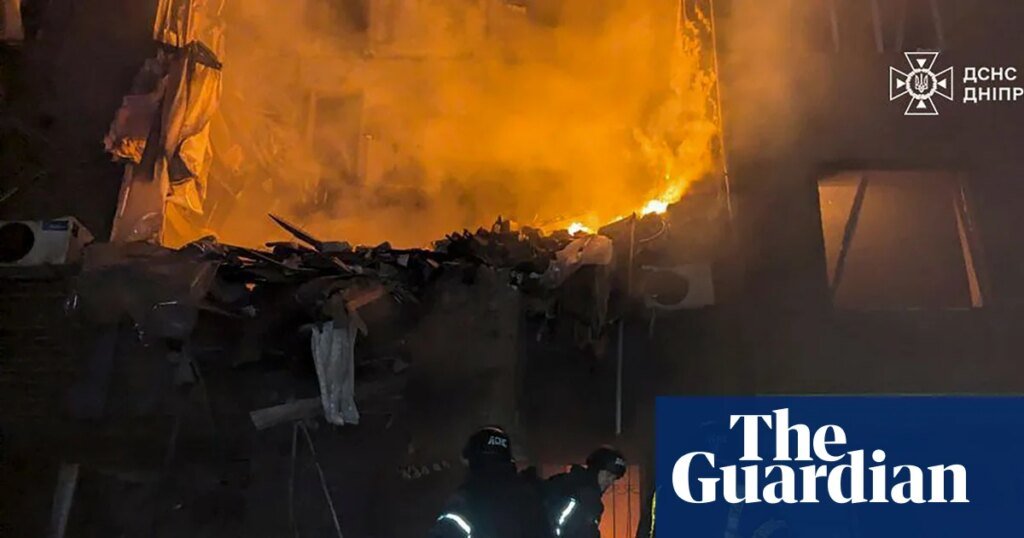
Early Friday morning, Russian drones targeted areas in Kyiv, resulting in fires across several neighborhoods and injuring at least four individuals. The drone strikes began just before midnight and affected both an apartment complex and a shopping center, as reported by Tymur Tkachenko, head of Kyiv’s military administration.
Disruptions and Power Restoration Efforts
Ukrainian officials have been working diligently to restore power after Russian drone attacks plunged two southeastern regions into a near-total blackout. The strike impacted nearly 500,000 households in Dnipropetrovsk, one of the country’s largest regions. Furthermore, Deputy Prime Minister Oleksiy Kuleba indicated that more than 1.7 million households across Ukraine were experiencing water supply issues due to the attacks.
Continued Strikes in Dnipropetrovsk
Zelenskyy reported further missile strikes in his hometown of Kryvyi Rih, injuring at least 26 individuals, including six children. The strikes damaged numerous apartment buildings and affected water delivery services from municipal pumping stations.
Gas Revenue and European Accountability
European nations have faced criticism for inadvertently supporting Vladimir Putin’s war effort, with reports indicating that the Kremlin generated €7.2 billion (approximately $9.7 billion) from exporting liquefied natural gas (LNG) to the EU last year. While Brussels has committed to banning Russian LNG imports by 2027, analysis shows that significant amounts continue to flow into European ports from Russia’s facilities.
Political Reactions in the UK
In British politics, Nigel Farage faced backlash for his comments that seemed to echo Kremlin narratives, as he stated he would oppose any UK military deployment in Ukraine. Following Britain and France’s announcement about readiness to send troops post-peace deal, Farage’s stance raised concerns regarding his commitment to national security.
Keir Starmer, the leader of the opposition, assured that any potential deployment of British troops would be preceded by a parliamentary debate and vote, ensuring transparency and accountability in military matters.
Conclusion
The situation in Ukraine remains precarious as international discussions about troop deployments intensify while Russia maintains a firm opposition to NATO involvement. The threat of further escalations looms, and the humanitarian implications grow increasingly dire.
Key Takeaways
- Russia condemns plans for European troop deployment in Ukraine as potentially dangerous.
- Negotiating a ceasefire with Russia remains a significant challenge.
- Recent drone attacks have caused significant disruptions and casualties in Ukraine.
- European countries are under scrutiny for their ongoing energy imports from Russia amidst the conflict.