
Visa Denials for Social Media Activists Spark Controversy
In a recent development, two British advocates for social media reform have been among five individuals denied entry into the United States. The State Department has accused these campaigners of attempting to “coerce” American tech platforms into limiting free speech online. This article explores the implications of this decision, the individuals involved, and the responses from international leaders.
Key Players in the Visa Denial
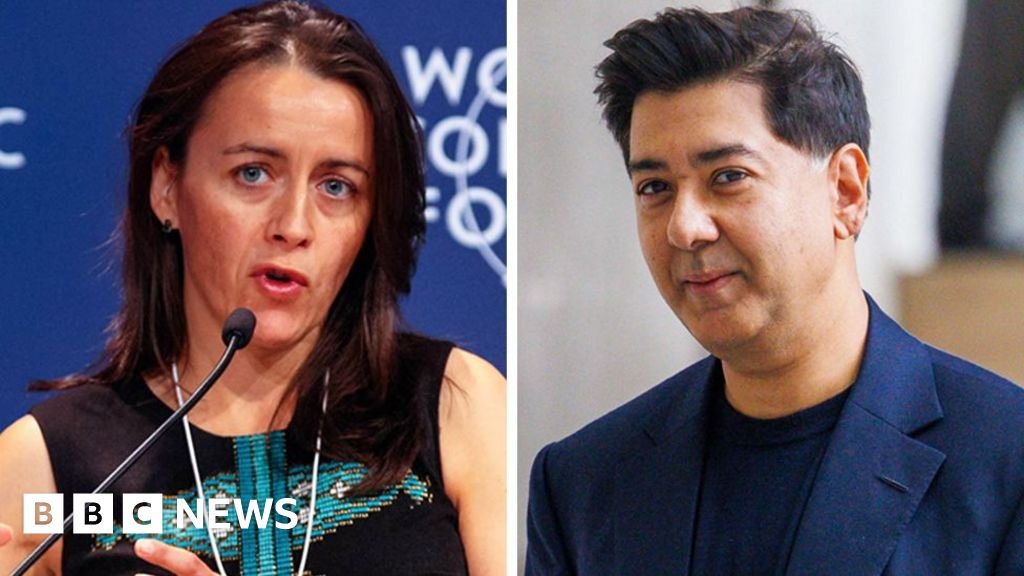
The two prominent figures are Imran Ahmed, former adviser to the Labour Party and current head of the Centre for Countering Digital Hate (CCDH), and Clare Melford, CEO of the Global Disinformation Index (GDI). They have both been labeled as “radical activists” by the Trump administration and are now prohibited from entering the US.
Joining them on the list are a former French EU commissioner and two senior members of a Germany-based anti-online hate organization. The French President, Emmanuel Macron, characterized the visa denials as “intimidation,” while the UK government reaffirmed its commitment to upholding free speech.
Responses from National Leaders
In a statement, a UK government spokesperson acknowledged that while nations can set their own visa rules, they support efforts to keep the internet free from harmful content. The US government justified the visa bans as a measure against individuals and organizations campaigning for restrictions on American tech companies.
US Secretary of State Marco Rubio expressed concern over what he described as a “global censorship-industrial complex,” with President Trump emphasizing that his America First policy rejects any infringement on American sovereignty. “Extraterritorial overreach by foreign censors targeting American speech is no exception,” he stated.
Background on Imran Ahmed and Clare Melford
Imran Ahmed has connections to significant figures within the Labour Party. He previously served as an aide to Labour minister Hilary Benn, and Morgan McSweeney, chief of staff to Sir Keir Starmer, was a director of the CCDH. The US government has described Ahmed as a “collaborator” due to the CCDH’s alleged past involvement with the Biden administration.
Clare Melford founded the GDI in 2018, a non-profit organization focused on tracking disinformation. US Undersecretary of State Sarah B Rogers accused the GDI of utilizing taxpayer money to promote censorship against American discourse. A spokesperson for the GDI asserted that the visa sanctions are a severe assault on free speech and government censorship.
“The Trump Administration is once again wielding the federal government to intimidate and silence dissenting voices. Their actions today are immoral and un-American,” the spokesperson declared.
The Broader Implications
Also affected by the visa bans was Thierry Breton, the former top technology regulator at the European Commission, who remarked that a “witch hunt” was happening. The State Department labeled him the “mastermind” of the EU’s Digital Services Act (DSA), which enforces content regulation on social media platforms. This has created tension with US conservatives who view it as an attempt to stifle right-wing perspectives, though Brussels has denied these claims.
Breton has had public disagreements with Elon Musk, the owner of X, about compliance with EU regulations. Recently, the European Commission imposed a fine of €120 million (£105 million) on X for misleading advertising practices regarding its blue tick verification system, claiming it was not adequately verifying users.
In response to the visa ban, Breton took to X to express, “To our American friends: Censorship isn’t where you think it is.” European leaders have voiced their disapproval, with Macron labeling the actions as an affront to European digital sovereignty. He emphasized that the EU’s digital regulations were established through a democratic process and maintained that the European Commission is seeking further clarifications from the US on this matter.
Additional Visa Bans and Their Implications
Besides Ahmed and Melford, Anna-Lena von Hodenberg and Josephine Ballon from Germany’s HateAid organization also face visa restrictions. The State Department claims that these individuals played a role in enforcing the DSA.
In a statement, the two CEOs condemned the visa bans as an act of repression by a government that is increasingly undermining the rule of law and silencing its critics. They asserted, “We will not be intimidated by a government that uses accusations of censorship to stifle those who advocate for human rights and freedom of expression.”
Conclusion
The recent visa denials of several social media advocates raise significant questions about freedom of expression, government influence, and the tension between national sovereignty and international campaigning against online hate. As this situation unfolds, the reactions from various leaders emphasize the importance of open dialogue in addressing these complex issues.
- Two British activists were denied US visas over accusations of coercing tech firms.
- The UK government reaffirmed its commitment to free speech amidst the controversy.
- The US claims the bans are necessary to protect against foreign censorship.
- International leaders, including Macron, condemned the measures as intimidation.