
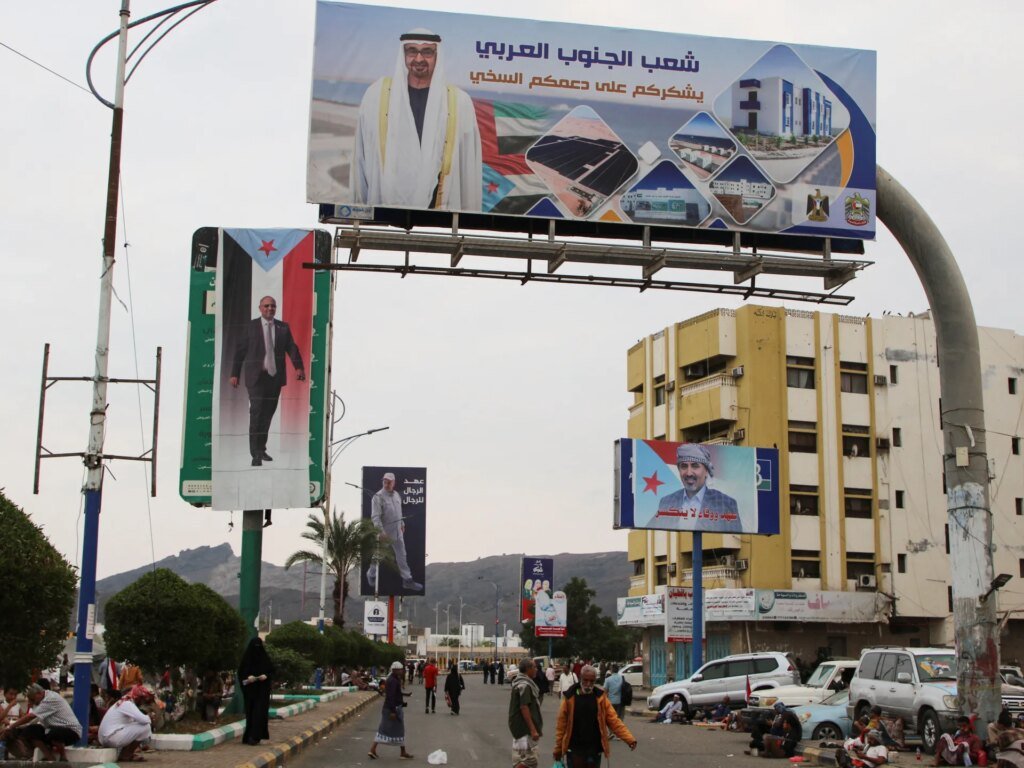
The UAE’s Withdrawal from Yemen: A New Chapter in Gulf Relations
The recent announcement from the United Arab Emirates (UAE) regarding its military withdrawal from Yemen marks a significant shift in the region’s political landscape. This development follows accusations from Saudi Arabia that the UAE was supporting separatists in Yemen, culminating in military actions against shipments allegedly linked to the Emirati forces.
Context of the Withdrawal
On Tuesday, the UAE declared an end to its “counterterrorism” operations in Yemen, responding to demands from Yemen’s internationally recognized government for UAE forces to leave within 24 hours—a request that was backed by Saudi Arabia. Hours prior to this announcement, coalition forces led by Saudi Arabia targeted the port of Mukalla, aiming at what Riyadh labeled as an Emirati-linked weapons shipment intended for the Southern Transition Council (STC) in Yemen.
The Southern Transition Council’s Actions
The STC, initially a supporter of Yemen’s legitimate government during its fight against the Houthi rebels, has taken a more aggressive stance recently. This month, they launched an offensive against Saudi-backed government forces, pushing for independence in southern Yemen. Their advances have led to substantial control over areas such as Hadramout and Mahara provinces, defying warnings from Riyadh.
Allegations of Support
Saudi Arabia has accused the UAE of backing the STC, a claim that Abu Dhabi has denied. In light of these tensions, the UAE’s Ministry of Defence announced a comprehensive review of its mission in Yemen, ultimately deciding to cease all counterterrorism personnel operations in the country. The statement emphasized that this decision was made “of its own volition” to ensure the safety of its personnel amidst the escalating situation.
Deepening Divisions
The coalition’s airstrike on Mukalla highlighted the growing rift between Saudi Arabia and the UAE—former allies against the Houthi rebels. The UAE first deployed forces to Yemen in 2015 as part of the coalition but has significantly reduced its military presence since 2019, retaining only a limited number of troops in southern areas controlled by the Yemeni government.
No-Fly Zone and Increased Tensions
Following the strike, Rashad al-Alimi, the leader of Yemen’s Saudi-backed presidential council, dissolved a defense agreement with the UAE and ordered Emirati forces to exit within 24 hours. In a public address, Alimi asserted that the UAE had influenced the STC to instigate upheaval against the Yemeni government through military actions.
Saudi Reactions
Riyadh expressed its dissatisfaction over what it viewed as the UAE’s pressure on the STC, considering it a direct threat to Saudi national security. The Saudi government declared that any perceived threat would be treated as a “red line,” vowing to take necessary actions to counter such threats. Furthermore, Saudi Arabia urged the UAE to comply with Alimi’s request to withdraw and cease any military or financial assistance to factions within Yemen.
The STC’s Position
Despite escalating tensions, the STC has firmly rejected any notions of retreating from their newly gained territories. Spokesperson Anwar al-Tamimi communicated their resolve, asserting that the group’s position was defensive, and any aggression towards them would be met with resistance.
Conclusion
The UAE’s pull-out from Yemen signifies a turning point in Gulf relations, marked by rising tensions and shifting allegiances. As the situation unfolds, the implications for both Yemen and regional dynamics in the Gulf remain to be seen.
- The UAE has announced the withdrawal of its forces from Yemen amid escalating tensions with Saudi Arabia.
- The STC has taken considerable control in southern Yemen, challenging the Saudi-backed government.
- Saudi Arabia has expressed strong disapproval of the UAE’s actions and their implications for national security.
- The STC remains defiant, ruling out any withdrawal from the territories they now control.