
Trump Issues Ultimatum to Hamas Over Disarmament
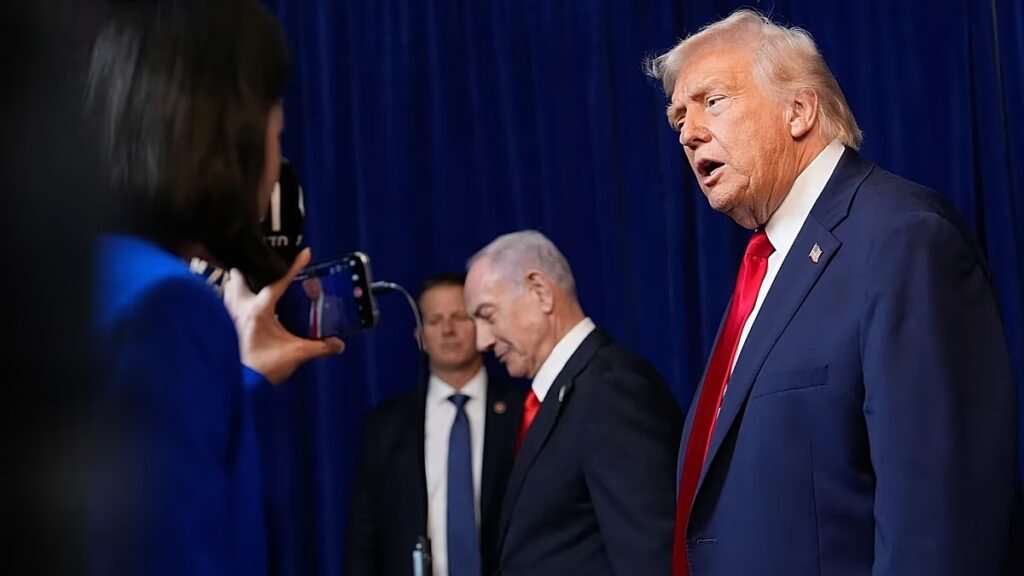
In a recent press conference held in Florida, U.S. President Donald Trump made a stark warning to Hamas, stating they have a “very short period” to disarm completely. He emphasized that failure to comply would lead to severe consequences. This discussion occurred following his meeting with Israeli Prime Minister Benjamin Netanyahu.
Disarming Hamas: A Looming Deadline
Trump declared, “If they don’t disarm—as they agreed to do—then there’ll be hell to pay for them. And we don’t want that. But they have to disarm within a fairly short period of time.” This statement sets a clear expectation for Hamas as the situation unfolds.
Discussion Points with Netanyahu
During the presser, which marked their sixth meeting this year, Trump indicated they would cover “five major subjects.” Among these topics is the anticipated second phase of the Gaza ceasefire slated to begin in January. The initial phase, effective from October 10, halted the fighting that erupted earlier in 2023, allowing for a gradual military pullback by Israel and exchanging Israeli hostages for Palestinian prisoners.
The Second Phase: Key Components
The second phase, as delineated in Trump’s 20-point peace plan, involves a full Israeli withdrawal from Gaza, the disbanding of Hamas, and the formation of a Palestinian committee to temporarily administer Gaza. Trump expressed optimism that reconstruction efforts for Gaza would commence “pretty soon,” but details regarding timelines and responsibility for the rebuilding efforts remained vague.
Amid two years of intense conflict, Gaza has suffered extensive destruction, with estimates indicating that over 80% of its infrastructure has been damaged or demolished.
Israel’s Actions in the West Bank
When asked about the situation in the occupied West Bank and the impact of settler violence on peace efforts, Trump acknowledged that while he and Netanyahu have differing views concerning the West Bank, he believes they will ultimately reach a resolution. He noted, “Netanyahu will do the right thing.”
In a prior statement in September, Trump had asserted that annexation of the West Bank would not be permitted. However, just a month later, Israeli lawmakers advanced a preliminary vote on possible annexation, a move met with significant concern from Palestinians and the international community, as it could jeopardize any remaining prospects for a two-state solution.
Complexity of the Second Phase
The follow-up phase of the ceasefire is intricate, focusing on reconstructing a demilitarized Gaza under the oversight of an international body chaired by Trump, referred to as the Board of Peace. A Palestinian “technocratic, apolitical” committee will be established to manage Gaza’s daily affairs, functioning under the Board’s supervision. Additionally, the plan aspires to normalize relations between Israel and Arab nations while potentially paving the way for Palestinian independence.
Logistical and Humanitarian Challenges
However, numerous logistical and humanitarian hurdles remain. Vital issues include rebuilding war-torn Gaza, ensuring Hamas disarms, and creating a security entity known as the International Stabilisation Force. The Board of Peace is set to direct Gaza’s rebuilding efforts, operating under a renewable UN mandate for two years.
Ongoing Discussions and Challenges
The recent meeting between Trump and Netanyahu follows talks in Florida between U.S. envoy Steve Witkoff and Jared Kushner with officials from Egypt, Qatar, and Turkey—nations involved in mediating the ceasefire. Yet, two primary obstacles continue to hinder the transition to the second phase:
- Israeli officials have been meticulously reviewing and vetting members of the Palestinian technocratic committee from a mediator-supplied list, while Israeli military operations persist.
- The envisaged stabilisation force, intended to be multinational, remains unformed.
A Western diplomat highlighted a significant divide between the U.S.-Israeli interpretation of the stabilisation force’s role and those held by other regional powers and European governments. While the U.S. and Israel seek a dominant security role for the force, potential troop-contributing nations express concerns that such a mandate could lead to an “occupation force.”
In light of ongoing tensions, Hamas has indicated a willingness to discuss “freezing or storing” its weaponry, maintaining it reserves the right to resistance as long as the Israeli occupation persists. One U.S. official suggested a potential plan including financial incentives for disarmament, reminiscent of a previously proposed “buyback” program by Witkoff.
Conclusion
The ongoing discourse around disarmament, reconstruction, and peace negotiations highlights complex geopolitical dynamics. As Trump and Netanyahu navigate these challenges, the international community remains closely engaged in seeking pathways to peace.
Key Takeaways
- Trump warns Hamas of dire consequences if they fail to disarm promptly.
- The second phase of the Gaza ceasefire plan includes significant reconstruction efforts.
- Differences remain between Trump and Netanyahu regarding the West Bank, but consensus is anticipated.
- Challenges persist in establishing a stabilisation force and ensuring effective governance in Gaza.