
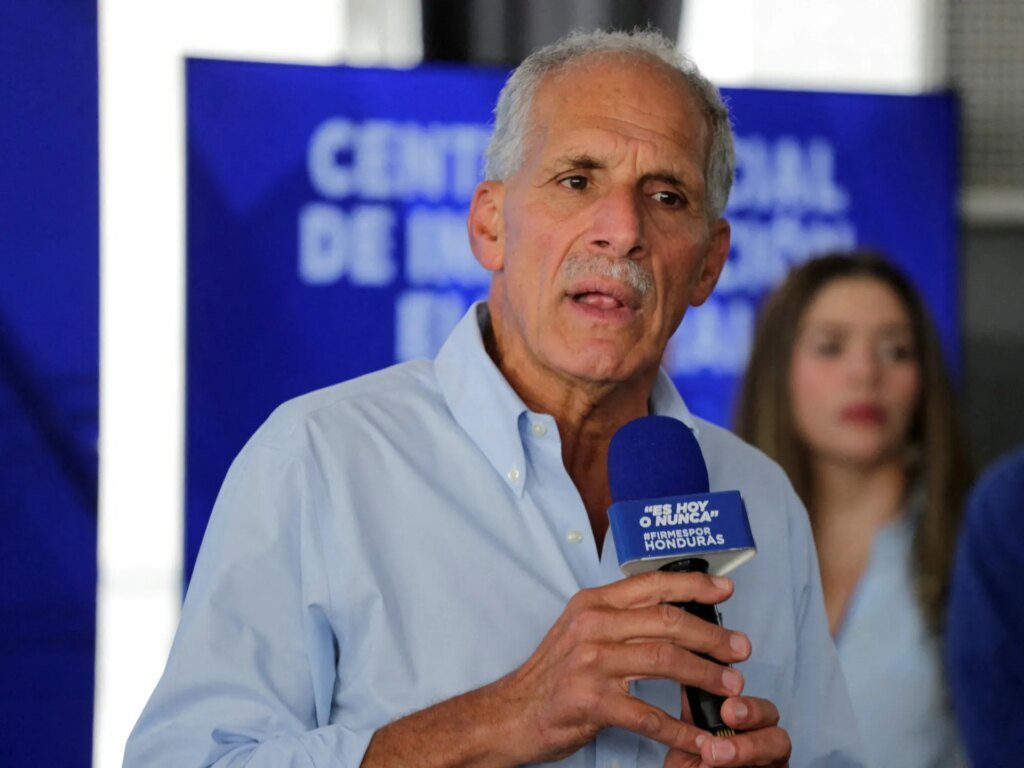
Honduras Elects Nasry Asfura as New President Amid Political Tension
In a closely watched election, conservative candidate Nasry Asfura, who has garnered backing from former U.S. President Donald Trump, has emerged victorious in the recent presidential elections in Honduras. The electoral council’s announcement on Wednesday, over three weeks post-election, is expected to stir considerable challenges within the country.
Election Results and Political Reactions
The National Electoral Council (CNE) reported that Asfura secured 40.3% of the votes, narrowly defeating Salvador Nasralla, the candidate from the center-right Liberal Party, who received 39.5%. Asfura expressed gratitude in a brief social media statement, declaring, “Honduras: I am prepared to govern. I will not fail you.”
The backing from Trump was significant, as he publicly criticized Nasralla and left-wing candidate Rixi Moncada, who collectively accounted for less than 20% of the voter turnout. Following the election results, U.S. Secretary of State Marco Rubio congratulated Asfura, indicating a willingness to collaborate with his administration. He emphasized that “the people of Honduras have spoken: Nasry Asfura is Honduras’ next president,” and urged all parties to respect the final election results.
Controversial Legacy and Global Alliances
In a notable twist, earlier this month, Trump pardoned former Honduran President Juan Orlando Hernandez, a member of Asfura’s National Party, who was serving a lengthy sentence in the U.S. for drug trafficking. Asfura, previously the mayor of Tegucigalpa, has Palestinian roots but maintains a staunch pro-Israel stance through his party.
Under Hernandez’s leadership, Honduras became the fourth country globally to relocate its embassy in Israel to Jerusalem, a move controversial under international law. Asfura has further aligned himself with Trump and other right-leaning leaders across Latin America, including Argentina’s Javier Milei, who lauded the electoral results as a triumph against “narcosocialism,” despite the drug trafficking ties of Hernandez.
The Shift in Latin American Politics
Asfura’s election adds to a growing trend of right-wing leadership in Latin America. Over the past year, similar political shifts have taken place in Chile and Bolivia, which both elected ultraconservative leaders, while El Salvador’s rightist president, Nayib Bukele, won re-election comfortably last year. This shift indicates a potential reversal of the “Pink Tide” that saw a rise of left-leaning governments in the region during the early 2020s.
The emergence of these right-wing administrations aligns with intensified U.S. efforts against left-wing leadership, particularly in Venezuela, where Trump has implemented a strict oil blockade and increased military presence.
Conclusion
As Honduras prepares to welcome its new president, the political landscape remains tense, with Asfura’s leadership set to have significant implications for the nation and the broader Latin American region. The ramifications of the recent election could challenge long-standing political dynamics and influence U.S. relations with these countries.
- Nasry Asfura won the Honduras presidential election with 40.3% of the vote.
- Trump has expressed strong support, while urging respect for the election outcomes.
- Asfura’s victory reflects the growing prevalence of right-wing leadership in Latin America.
- The event signals a potential shift back from leftist governance seen in recent years.