
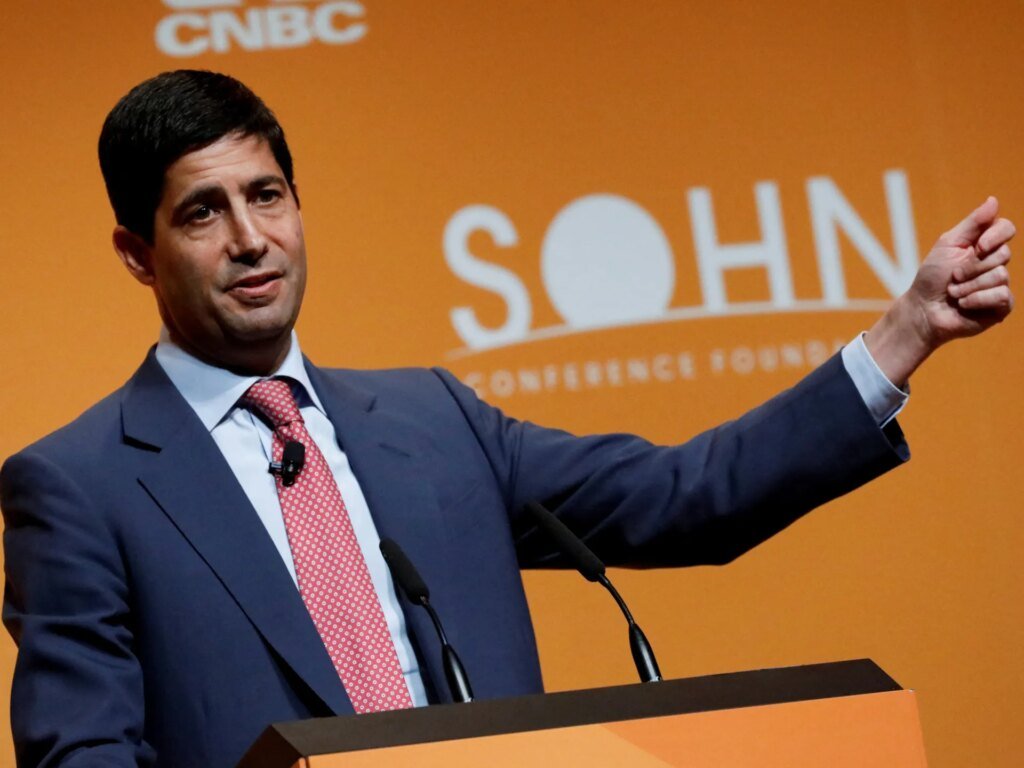
Trump Nominates Kevin Warsh as New Federal Reserve Chair
In a significant political move, former President Donald Trump has put forward the name of Kevin Warsh, a former Federal Reserve Governor, as his choice to lead the US central bank. This nomination comes as current Federal Reserve Chair Jerome Powell’s term is set to expire in May. The announcement, made on Friday, concludes a months-long search that attracted plenty of public interest, emphasizing the importance of this position in the global economy.
Background to the Nomination
Trump’s search for a new Federal Reserve Chair has been marked by extensive media coverage and a campaign of public pressure directed at Powell. Although Powell was appointed by Trump during his first term, the president has openly criticized him for not lowering interest rates quickly enough to meet his agenda.
On his Truth Social platform, Trump expressed confidence in Warsh, stating, “I have known Kevin for a long time and have no doubt that he will go down as one of the GREAT Fed Chairmen, maybe the best. On top of everything else, he is ‘central casting,’ and he will never let you down.” Trump’s remarks suggest that Warsh’s nomination could be seen as a compromise. At 55, Warsh is a familiar figure in Trump’s circles and has recently advocated for lower interest rates, though his approach may be less aggressive than some other potential candidates.
Challenges Ahead for Warsh
Despite Trump’s support, Warsh’s nomination is likely to face a tough confirmation hearing in the Senate. Lawmakers may scrutinize the nomination more closely due to Trump’s previous comments about Powell and the recent criminal investigation launched by the Department of Justice concerning Powell’s actions.
Critics, including Powell himself, assert that Trump’s efforts pose a threat to the Federal Reserve’s independence, pushing the institution to align its monetary policies with Trump’s preferences.
The Role of the Federal Reserve
The Federal Reserve is often viewed as a stabilizing force in global financial systems, primarily due to its perceived independence from political influences. Its responsibilities include controlling inflation, promoting maximum employment, and acting as the primary banking regulator for the United States. Decisions made by the Fed regarding interest rates can affect various aspects of the economy, including mortgage rates, car loans, and credit card expenses.
Political Reactions to the Nomination
Senator Elizabeth Warren, who leads the Banking Committee for the Democrats, criticized Trump’s nomination, calling it another tactic to gain control over the Federal Reserve. She pointed out the ongoing investigation into Powell and noted Trump’s efforts to displace Fed Governor Lisa Cook, which is currently undergoing legal challenges in the Supreme Court. Warren stated, “No Republican claiming to care about Fed independence should agree to move forward with this nomination until Trump drops his witch-hunt.”
On the Republican side, Senator Thom Tillis declared he would not support any nominee until the DOJ’s inquiry into Powell concludes, highlighting the need to keep the Federal Reserve free from political meddling or intimidation.
Conversely, some Republicans have expressed support for Warsh’s nomination. Senator Bill Hagerty remarked, “No one is better suited to steer the Fed and refocus our central bank on its core statutory mandate.”
Who is Kevin Warsh?
Kevin Warsh currently serves as a fellow at the Hoover Institution and lectures at the Stanford Graduate School of Business. He held a position on the Federal Reserve’s board from 2006 until 2011, making history as the youngest Governor at the age of 35. Before his tenure at the Fed, he worked as an economic aide in George W. Bush’s administration and was an investment banker for Morgan Stanley. Warsh comes from a notable family, with his father-in-law, Ronald Lauder, being an heir to the Estee Lauder fortune and a close ally of Trump.
Traditionally advocating for higher interest rates to combat inflation, Warsh has recently shifted to arguing for lower rates. He has been critical of the current Federal Reserve leadership, calling for a “regime change” and taking issue with Powell’s focus on topics like climate change, which Warsh believes falls outside the scope of the Fed’s responsibilities.
Reporting from Washington, DC, noted that Warsh’s experience could be a reassuring factor for the markets. “The consensus suggests that, in the short term, this nominee will align with the president’s expectations,” an analyst commented. “However, what he might achieve in the long run could parallel Powell’s current approach: maintaining independence and making decisions based on economic data rather than political pressures.”
Conclusion
Trump’s nomination of Kevin Warsh to lead the Federal Reserve has sparked reactions from both sides of the political spectrum. While the potential appointment signifies a shift in leadership, it also raises concerns about the future independence of the Federal Reserve amidst calls for political accountability. The coming weeks will be crucial as Warsh faces Senate confirmation, impacting not just the central bank, but also the broader economy.
Key Takeaways
- Trump nominated Kevin Warsh to replace Jerome Powell as Federal Reserve Chair.
- The Senate confirmation process is expected to be contentious amid political scrutiny.
- Warsh’s historical support for higher interest rates has evolved toward advocating for lower rates.
- The Federal Reserve’s independence is at the forefront of the discussion surrounding this nomination.