
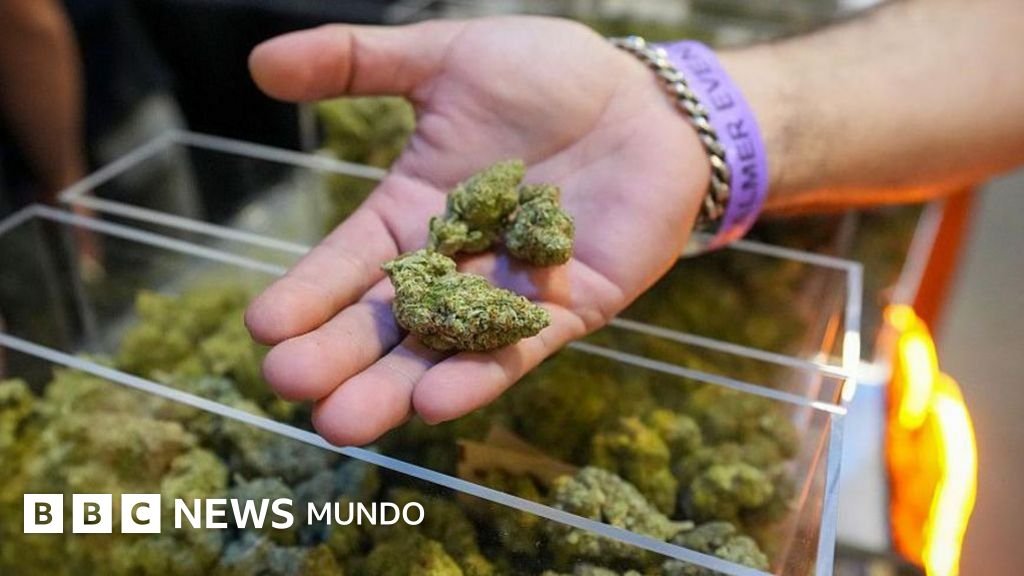
New Executive Order Expands Access to Cannabis
In a landmark move for U.S. drug policy, President Donald Trump has signed an executive order aimed at enhancing access to cannabis. This significant shift will allow for increased research into its potential benefits, even though cannabis remains federally illegal. The new regulations mark a crucial development in the evolving landscape of cannabis legislation.
A Major Change in Classification
The executive order directs the U.S. Attorney General to reclassify cannabis from a Schedule I substance to a Schedule III drug, placing it alongside medications like Tylenol with codeine. This reclassification signifies a departure from the long-standing stance that cannabis has no accepted medical use. Although it will continue to be illegal federally, the new classification will enable broader research on its uses.
Opposition from some Republican lawmakers has emerged, who argue that this decision could normalize cannabis consumption. According to the U.S. Drug Enforcement Administration, Schedule III substances have “moderate to low potential for physical and psychological dependence,” a marked difference from Schedule I drugs.
Access to CBD for Medicaid Beneficiaries
In addition to the reclassification, the order also mandates collaboration between White House officials and Congress to facilitate access to cannabidiol (CBD) for certain individuals. Under this plan, some Medicaid recipients will be able to obtain CBD at no cost, provided they have a doctor’s recommendation.
Health authorities have also been tasked with developing methods to assess the genuine health effects of CBD. A senior government official referred to the order as a “common sense measure” aimed at enhancing our understanding of cannabis and CBD.
Trends and Legislative Landscape
In recent years, many states have legalized cannabis for medical purposes, and nearly half have allowed its recreational use. Despite this, cannabis has been classified as a Schedule I drug since 1971, indicating no accepted medical use and high abuse potential. Previous proposals under the Biden administration to change this classification faced bureaucratic and legal challenges.
The President’s Stance
Trump has long vocalized his desire for a reform in cannabis policies. He stated on social media last year that it’s time to end the “endless arrests and imprisonments of adults for small amounts of marijuana for personal use.” He advocates for smart regulations that would grant adults access to safe and tested products.
Opposition from Lawmakers
Despite the push for reform, Trump’s order has faced backlash from certain Republican senators. A collective of 22 GOP senators expressed in an open letter that marijuana consumption could hinder America’s industrial resurgence. They raised ongoing concerns regarding the health impacts of cannabis, noting studies that suggest potential impairments to judgment and concentration.
In a separate communication, nine Republican representatives argued that there is insufficient scientific evidence to support reclassifying cannabis, likening its potential for abuse to that of heroin while asserting it lacks proven medical value.
Public Opinion on Cannabis
Public sentiment appears to lean towards legalizing cannabis. A Gallup poll released in November indicated that 64% of Americans believe marijuana should be legalized. However, support has dipped slightly from previous years, notably among Republican respondents.
Conclusion
The executive order to reclassify cannabis and expand access to CBD presents a significant shift in U.S. drug policy. While opposition persists, the initiative reflects growing public support for reforming cannabis legislation and increasing research into its benefits.
Key Takeaways
- The executive order aims to reclassify cannabis to Schedule III, enhancing its accessibility and research opportunities.
- Medicaid beneficiaries may access CBD at no cost with a doctor’s recommendation under the new regulations.
- Despite ongoing concerns, public support for cannabis legalization remains strong, with 64% in favor according to recent polls.
- There is notable opposition among some lawmakers, emphasizing health risks and potential negative societal impacts.