
Trump Halts Federal Troop Deployment in Major Cities Amid Legal Challenges
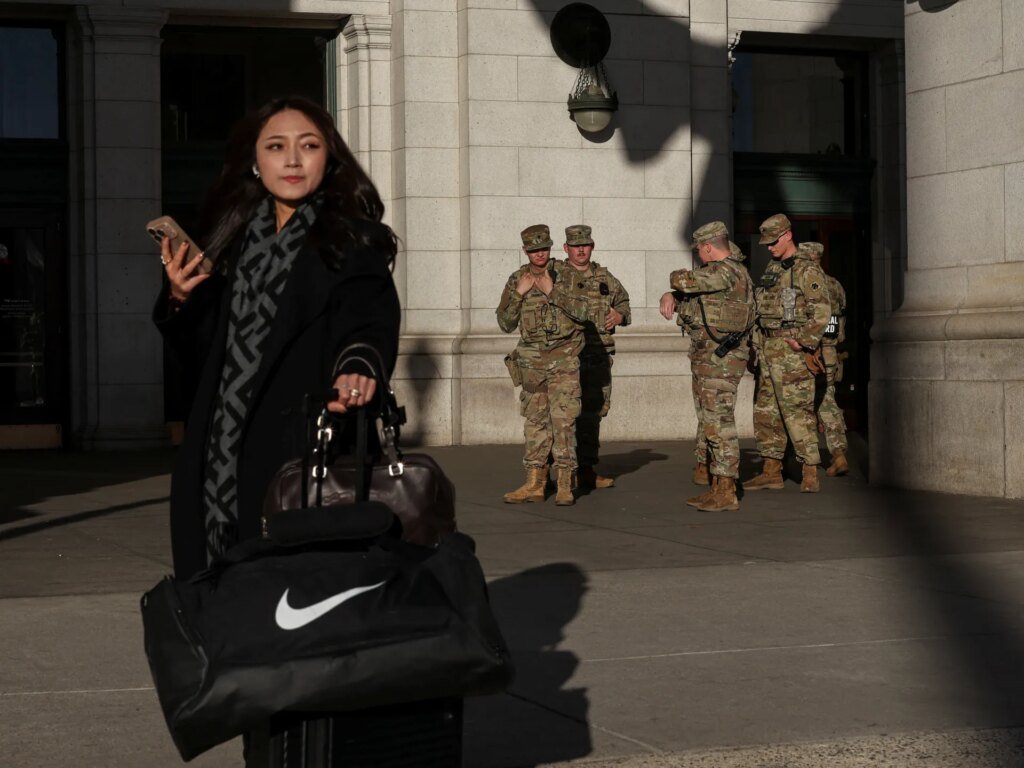
In a significant shift of strategy, President Trump has announced that he will be halting the deployment of federal troops to various Democratic-led cities. This decision follows a series of legal troubles concerning the presence of National Guard members in cities such as Chicago, Los Angeles, and Portland.
The Announcement
On Wednesday, Trump took to Truth Social to share his decision to withdraw the National Guard from these cities, despite previously indicating their presence had helped reduce crime. He stated, “We are removing the National Guard from Chicago, Los Angeles and Portland, despite the fact that CRIME has been greatly reduced by having these great Patriots in those cities, and ONLY by that fact.”
However, it’s important to note that while the National Guard has been stationed in these cities, they have not been permitted to directly engage in law enforcement activities, as such actions are prohibited under U.S. law. Additionally, Trump had not invoked the Insurrection Act of 1807, which allows troop deployment under specific circumstances, including situations where law enforcement cannot act effectively due to unrest.
Current Troop Deployment Status
At the time of the announcement, approximately 300 National Guard members remained active under federal authority in both Los Angeles and Chicago, with an additional 200 troops positioned in Portland. Initially deployed to address protests related to immigration enforcement, Trump has frequently asserted that major cities are facing serious crime and immigration issues.
Critics have accused him of engaging in political theatrics aimed at his opponents. Interestingly, Trump’s announcement did not mention the ongoing National Guard presence in Washington, D.C., or in New Orleans, Louisiana, where troop deployment was requested by the state’s Republican governor.
Legal Setbacks
This decision arises against a backdrop of legal challenges. Recently, the Supreme Court upheld a lower court’s ruling that prevents Trump from deploying the National Guard to Chicago. Generally, National Guard troops are deployed at the request of state governors. While a president can deploy them without state permission, this can only occur if no other federal agents are able to enforce the law effectively.
The Supreme Court majority ruled that Trump had not met the necessary conditions for such deployment, which was a substantial setback for his administration. Earlier in the day, lawyers from the Department of Justice in California withdrew their request to maintain federal control of the troops while appealing a ruling that mandated their return to state control.
In response, California Governor Gavin Newsom criticized Trump and noted that this withdrawal marks an end to what he sees as an illegal intimidation tactic. Newsom expressed hope for a more permanent resolution regarding the status of the troops.
Future Considerations
Despite his current announcement, Trump stated, “We will come back, perhaps in a much different and stronger form, when crime begins to soar again – Only a question of time!” This suggests that he may reconsider troop deployment if he perceives a rise in crime.
Conclusion
As Trump steps back from deploying federal troops in urban areas, the ongoing legal battles and the political implications will continue to shape the conversation around law enforcement and federal intervention in local issues. Whether or not these moves are effective remains a contentious topic.
- Trump has halted the deployment of federal troops in major cities amid legal challenges.
- The National Guard’s role has been restricted, preventing direct law enforcement actions.
- The Supreme Court has ruled that Trump has not justified the need for troop deployment.
- Trump has indicated a willingness to redeploy troops if crime rates increase.