
U.S.-Iran Negotiations: Tensions and Diplomacy
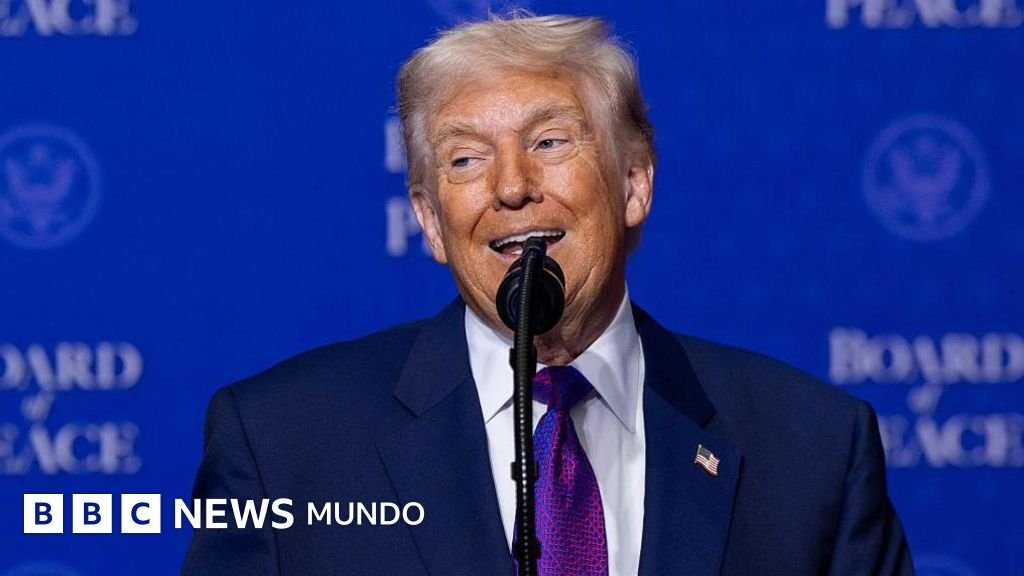
In recent discussions regarding U.S.-Iran relations, President Donald Trump remarked that the world will soon know whether the United States will reach an agreement with Iran or resort to military action. At the inaugural meeting of his Peace Board in Washington D.C., Trump mentioned that there is still “some work to do” in negotiating with the Islamic Republic over its nuclear program, hinting that “we might have to take one step further.”
Military Buildup and Ongoing Talks
In the past few days, the United States has bolstered its military presence in the Middle East. Reports indicate progress in conversations between U.S. and Iranian negotiators taking place in Switzerland. However, both Democratic and some Republican lawmakers have voiced their opposition to any potential military action against Iran without congressional approval.
During his statements, Trump highlighted the productive meetings that special envoys Steve Witkoff and Jared Kushner—a senior advisor and Trump’s son-in-law—held with Iranian representatives. “Over the years, it has become clear that reaching a significant agreement with Iran is not easy,” Trump stated. “Otherwise, unpleasant things tend to happen.”
Reinforcements and Congressional Debate
Initially, when Trump announced the formation of the Peace Board, it was believed to be focused on ending the over two-year conflict between Israel and Hamas in Gaza and managing reconstruction efforts. Yet, its mission has recently appeared to extend beyond this singular conflict, raising questions about whether the board, led by Trump and comprised of around twenty nations, aims to sideline the United Nations.
Last June, U.S. missiles and aircraft targeted three Iranian nuclear facilities, and reports indicate that new military options are being discussed within the White House. The U.S. military has increased its footprint in the region recently, including the deployment of the USS Abraham Lincoln aircraft carrier. However, it has come to light that the British government did not grant permission for the U.S. to use military bases in the UK to support potential attacks against Iran.
In past military operations in the Middle East, the U.S. has utilized the RAF Fairford base in Gloucestershire and the British Overseas Territory of Diego Garcia in the Indian Ocean.
Heightened Tensions and Military Strategy
Recent satellite images have shown that Iran has fortified its military installations, and the country’s Supreme Leader, Ayatollah Ali Khamenei, has issued social media threats against U.S. forces. “The U.S. President continuously mentions that a warship is heading towards Iran. Clearly, a warship is a piece of dangerous military equipment,” one of Khamenei’s posts reads. “However, more dangerous than that warship is the weapon that could send that warship to the bottom of the sea.”
Several U.S. Congress members, including California Democrat Ro Khanna and Kentucky Republican Thomas Massie, are pushing back against any military action against Iran. They plan to force a vote next week, invoking the War Powers Act of 1973, which limits the president’s ability to engage the U.S. in armed conflict without congressional approval. “A war with Iran would be catastrophic,” Khanna stated on social media. “Iran is a complex society of 90 million people, with significant air defenses and military capabilities.” He also pointed out that thousands of U.S. troops in the region could be at risk of retaliation.
Challenges in Legislative Action
The chances of this initiative succeeding in both chambers of Congress seem slim. Earlier this year, Republican senators blocked a similar resolution regarding war powers that would have required Trump’s administration to seek congressional approval before launching new military operations in Venezuela amid the crisis involving Nicolás Maduro.
Conclusion
The ongoing tension between the U.S. and Iran has sparked serious discussions about military readiness and diplomatic solutions. As developments unfold, the outcome remains uncertain, but the stakes are undeniably high.
- President Trump states a decision on U.S.-Iran negotiations will come within 10 to 15 days.
- The U.S. has enhanced its military presence in the Middle East amid talks with Iranian negotiators.
- Congressional opposition to military action against Iran is growing, with lawmakers citing the War Powers Act.
- The Peace Board’s objectives extend beyond the Israel-Hamas conflict, potentially sidelining the UN.