
Escalating Tensions in the Middle East Following Israel-Iran Missile Exchange
The situation in the Middle East has intensified following a missile exchange between Israel and Iran, with nuclear facilities becoming central targets. On Saturday morning, Iran’s Atomic Energy Organization reported that the Natanz nuclear facility was subjected to an attack, triggering a series of responses and raising alarms about regional security.
Details of the Attack on Natanz
The Iranian Atomic Energy Organization (IAEO) stated that immediate technical assessments were conducted to check for radioactive contamination. Fortunately, results indicated that there was no leakage of radioactive materials from the facility, ensuring the safety of nearby residents. The IAEO denounced the missile strike as a breach of the Non-Proliferation Treaty (NPT) and other nuclear safety regulations.
International Response
In light of Iran’s allegations, the International Atomic Energy Agency (IAEA) called for military restraint to prevent any potential nuclear mishaps. The agency reported no increases in radiation levels beyond the site and confirmed that they are reviewing the incident further.
Iran’s Counteraction
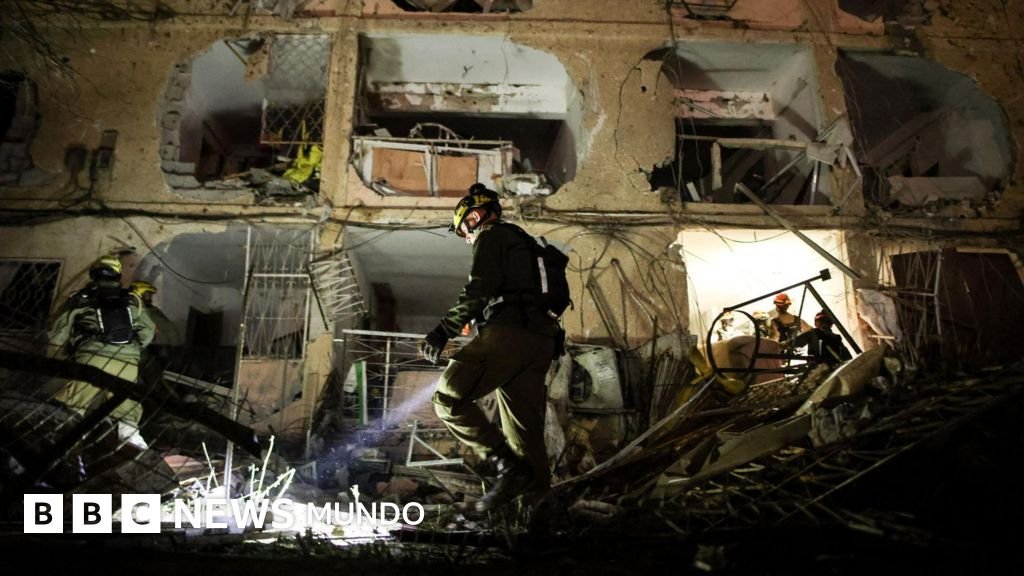
In retaliation, Iran launched a missile aimed at Dimona, located in southern Israel. This strike reportedly hit just 13 kilometers from a site believed to house undeclared nuclear weaponry. Israeli officials are now investigating how an Iranian missile was able to bypass their air defense systems, resulting in nearly fifty injuries from the attack.
Political Statements
U.S. President Donald Trump took to social media to proclaim that he had effectively “erased Iran from the map,” asserting that the operations had successfully achieved their military objectives against Iran. He argued that Iran’s leadership had been devastated, stating, “Their army and air force are dead, they have no defense at all.”
However, Trump also cautioned Iran, providing them a 48-hour ultimatum to fully reopen the Strait of Hormuz without threats, or the U.S. would respond by “flattening” Iranian power plants. Tehran warned it would retaliate against U.S. energy infrastructure in the region if any of its facilities were struck.
Background of Previous Attacks
The IAEO previously acknowledged another attack on Natanz from earlier events, confirming no radioactive material was released during an earlier strike on March 1. Following those incidents, Trump claimed that these assaults had “totally destroyed” the Iranian nuclear program, marking a substantial escalation in the ongoing conflict.
Military Strategies
The recent attacks utilized what are described as “bunker-busting bombs,” with Trump characterizing the operation as a “spectacular military success” that led to complete destruction of the targeted installations. Conversely, Iran has consistently maintained that its nuclear aspirations are peaceful and denies any intentions to develop nuclear weapons.
Nuclear Enrichment Concerns
Data from March 2025 indicated that Iran had amassed around 275 kg of uranium enriched to 60% purity, significantly higher than needed for civilian energy production and nearing the 90% threshold required for military use. Discussions had been ongoing regarding Iran’s nuclear program just days before the current conflict erupted on February 28.
Missile Launches Towards Diego Garcia
Reports also revealed that Iranian missiles had been targeted at the Diego Garcia military base, located in the Indian Ocean. While no missiles reached the base, this action further underscores the growing connectedness of military operations in the region. The UK Ministry of Defence pointed out that Iranian attacks pose substantial threats to British and allied interests.
Conclusion
As military actions continue between Iran and Israel, the broader implications for regional stability remain uncertain. The stakes are high, and with nuclear installations at the center of confrontation, the international community watches closely for further developments.
- Iran’s Natanz nuclear facility was attacked, with no reported radioactive leaks.
- In retaliation, Iran struck Dimona, injuring multiple individuals.
- President Trump issued an ultimatum to Iran regarding the Strait of Hormuz.
- Ongoing concerns persist regarding Iran’s uranium enrichment levels.