
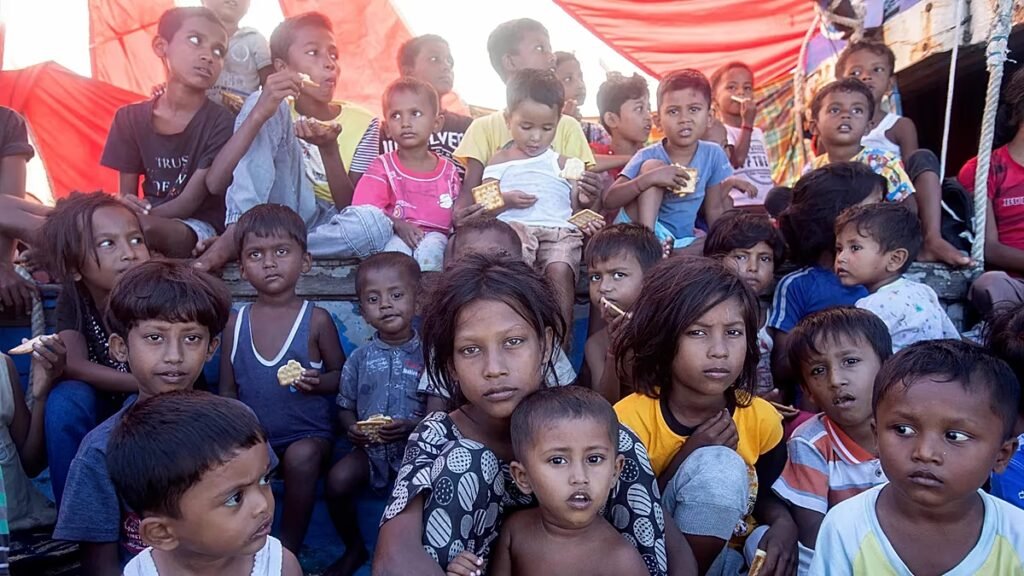
The Impact of Aid Cuts on Rohingya Children
Life for the 600,000 Rohingya children residing in overcrowded refugee camps in Bangladesh has always been precarious. However, the recent decision by the US administration to dismantle the US Agency for International Development (USAID) has exacerbated their already dire situation. Reports from the Associated Press highlight the testimonies of 37 children, their families, teachers, community leaders, and aid workers, painting a grim picture of life in the camps.
Escalating Violations Against Children
According to UNICEF, the United Nations’ children’s agency, incidents of violence against children in these camps have surged sharply this year. Between January and mid-November, cases of abduction and kidnapping skyrocketed to 560—a staggering increase from previous years. Additionally, there has been an alarming eightfold rise in reports of armed groups recruiting and utilizing children for various roles within the camps, affecting 817 young lives.
Many of these armed groups are engaged in conflict with a powerful ethnic militia just across the border in Myanmar. UNICEF cautions that the actual numbers may be even higher, as many cases go unreported. The agency suffered a 27% cut in funding due to the USAID reductions, leading to the closure of nearly 2,800 schools.
“The armed groups, with their roots in Myanmar, are operating in the camps, using the camps as a fertile ground for recruiting young people,” says Patrick Halton, a child protection manager for UNICEF.
Consequences of School Closures
As schools shut down, the occurrences of child marriage and child labor have also risen significantly. Verified cases of child marriage rose by 21%, and documented instances of child labor increased by 17% in the past year. Halton emphasizes that these figures are likely substantial undercounts.
“With the funding cuts, we had to downscale a lot in terms of education,” Halton explains. “This lack of structured activities has left children vulnerable to negative influences.” Unfortunately, the aid cuts, which were described as fiscally prudent by former President Trump, have had catastrophic effects for the most vulnerable populations globally.
The Reality in the Camps
In Myanmar, aid cuts have tragically led to children starving to death, contrary to claims made by high-ranking officials that no lives have been lost as a result of the dissolution of USAID. A study published in a medical journal suggested that these funding cuts could lead to over 14 million deaths, including more than 4.5 million children under five, by 2030.
In Bangladesh, the US, historically a primary source of aid for the Rohingya community, reduced its funding by nearly half compared to the previous year. The overall Rohingya emergency response is only 50% funded for 2025, and aid agencies project even harsher circumstances in the coming year.
Mixed Messages from the State Department
In a statement to the AP, the State Department noted that since the beginning of Trump’s tenure, more than $168 million has been provided to the Rohingya community. However, discrepancies remain between this claim and data from the UN’s financial tracking service, which indicates a lower figure of $156 million for 2025.
The State Department attributed this gap to outdated information but claimed it has promoted collective funding efforts, resulting in 11 countries increasing their contributions by over 10% year-on-year.
The Human Cost
The closure of schools has had a domino effect. Showkutara, executive director of the Rohingya Women Association for Education and Development, reports a troubling rise in child marriages, kidnappings, and rampant trafficking. “After the school closures, they had no space to play. They are now forced into dangerous neighborhoods,” she says, highlighting the increased risks faced by children.
Despite UNICEF’s efforts to allocate some remaining funds to reopen most early learning centers, many schools operated by other aid organizations remain closed, jeopardizing thousands of children’s education. Aid workers worry about even steeper funding cuts in the next year, leaving many futures uncertain.
The Loss of Hope
Despite insufficient educational facilities, the pain of funding cuts reaches far beyond academic loss. Skills development initiatives that previously kept thousands of children engaged have been halted, and essential healthcare services have faced reductions. In camps rife with disease, the consequences are evident on the children’s frail bodies.
Health and Nutrition Woes
Blocked from seeking employment outside the camps, the Rohingya rely entirely on humanitarian aid to survive. However, the UN’s World Food Programme announced that it only has sufficient funds to provide food until March, triggering panic among families. With no viable options for resettlement, many have risked perilous boat journeys, leading to tragic outcomes, with a significant number of Rohingya disappearing or dying at sea.
Ending Dreams
Seventeen-year-old Noor Kaida’s dreams of becoming a doctor were shattered when she was forced into marriage after her school closed. She tragically lost two young relatives to traffickers who had lured them with false promises of a brighter future. “If the school wasn’t closed, they wouldn’t have had to take these risks,” she lamented, reflecting on how funding cuts and school closures have devastated countless young lives.
Conclusion
The situation for Rohingya children in Bangladesh is increasingly distressing. With the dismantling of essential aid programs, not only has their access to education been severely impacted, but they are also more vulnerable to exploitation. Immediate action is required to address these devastating conditions and restore hope for a better future.
- The Rohingya children’s lives have become more perilous due to aid cuts.
- Reports of child abduction and armed recruitment have spiked dramatically.
- School closures have led to increased child marriage and labor.
- The humanitarian response for Rohingya remains critically underfunded.