
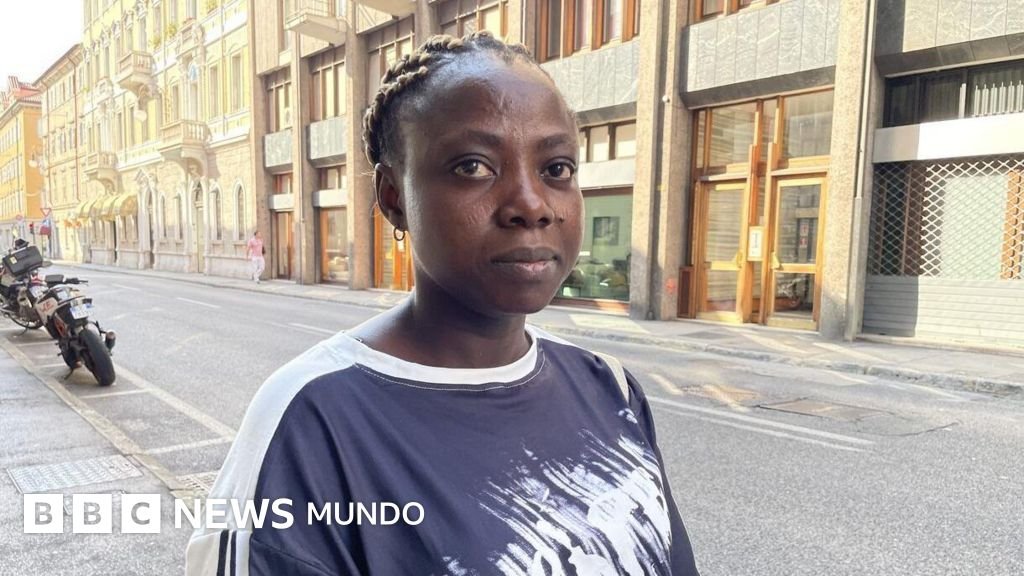
The Journey of Women Migrants: Esther’s Story
In recent years, the number of women migrating to Europe has risen significantly, often driven by dire circumstances and a quest for a better life. This article delves into the harrowing journey of Esther, a woman from Nigeria who fled her home seeking safety and opportunity, only to encounter unimaginable hardships along the way.
Esther’s Escape from Nigeria
Esther left Lagos, Nigeria, in 2016, her dreams fueled by the promise of a fresh start in the UK. After escaping a violent foster home, she felt she had no reason to stay in Nigeria. However, her journey was fraught with danger and trauma, far beyond what she had anticipated. As she crossed the desert en route to Libya, she was forced into prostitution and spent years seeking asylum across multiple countries.
Rising Numbers of Female Migrants
While many migrants are men—accounting for about 70% according to European asylum data—women like Esther are increasingly making their way to European shores. Irini Contogiannis from the International Rescue Committee in Italy notes, “We’re seeing a rise in the number of women traveling alone, both via the Mediterranean and the Balkan routes.”
The Dangers of Migration
Recent reports indicate a staggering 250% annual increase in the number of single adult women arriving in Italy via the Balkan route, alongside a 52% rise in family units. These routes are notoriously perilous, with the International Organization for Migration (IOM) recording 3,419 migrant deaths or disappearances across Europe last year alone.
Additional Threats for Women
For women, the risks are compounded by the threat of violence and sexual exploitation. Esther recalls being betrayed by a woman who promised her a better life: “She locked me in a room and brought a man who raped me. I was still a virgin,” she tells her story. According to Ugochi Daniels of the IOM, the experiences of these women are often distinct and more precarious, even under the protection of groups. “Women traveling in groups also lack safety, making them vulnerable to abuse by traffickers or fellow migrants.”
Awareness of Risks
Many women understand the risks they face but choose to embark on their journeys anyway, often taking precautions such as carrying condoms or getting contraceptive implants in case of sexual assault. Hermine Gbedo from the Stella Polare anti-trafficking network emphasizes that while all migrants pay a smuggler, women are sometimes pressured to provide sexual services as part of that payment.
The Journey to Safety
After four months of exploitation in Libya, Esther managed to escape, crossing the Mediterranean on a rubber boat. She was rescued by the Italian coast guard and taken to Lampedusa. However, her asylum journey was far from over. Esther applied for asylum three times before finally receiving refugee status, as initial claims made by those from “safe” countries like Nigeria would often be denied.
The Complexity of Asylum Applications
Italy’s classification of Nigeria as unsafe has shifted due to increased scrutiny of migration since the peak influx in 2015 and 2016. Voices advocating for stricter asylum regulations are growing louder, with officials declaring, “We can ensure safety for women truly in danger, but not for all.” Some argue for prioritizing women and girls at immediate risk in conflict zones, noting that currently, such measures are inconsistently applied.
Violence Against Women
Many women fleeing violence in their home countries face grim realities. Nina, a 28-year-old from Kosovo, shares her story of sexual abuse and the dire conditions women face in her country. “People think everything is fine in Kosovo, but it’s not. The situation is terrible for women,” she asserts. Reports highlight that over half of the women in Kosovo have experienced psychological, physical, or sexual violence since age 15.
Legal Rights and Challenges
Women facing gender-based violence have the right to asylum under the Istanbul Convention. However, its provisions aren’t consistently enforced, often leaving many applicants in precarious situations. Marianne Nguena Kana from the European Network against Female Genital Mutilation points out that the lack of adequate training for asylum officials can lead to victim-blaming and misunderstanding of the risks women face.
Revictimization During Asylum Processes
Unfortunately, many women’s asylum requests are denied on flawed assumptions. “We’ve heard judges say, ‘You’ve already been mutilated, so it’s not dangerous for you to go back,'” Nguena Kana emphasizes. Carenza Arnold from Women for Refugee Women notes that the stigma surrounding sexual violence makes it difficult for women to share their experiences with immigration officials. “Often, women aren’t comfortable revealing their experiences of sexual violence to someone they’ve just met,” she explains.
Esther’s Long Path to Refugee Status
Esther’s quest for asylum spanned nearly a decade. Following her initial application in Italy in 2016, she moved to France and then Germany, where her claims were denied. Under the EU Dublin regulations, asylum seekers must apply in the first EU country they enter. Finally granted refugee status in Italy in 2019, Esther now reflects on her arduous journey, questioning if the suffering she endured was worth the life she has now, stating, “I don’t even know why I came to this place.”
Conclusion
The experiences of women like Esther highlight the complexities and dangers associated with migration. Their stories underscore the urgent need for discussions around women’s rights, safety, and the challenges they face during their journeys for a better life.
- The number of women migrating to Europe is on the rise, with growing awareness of their unique challenges.
- Violence and exploitation are significant risks for women during their migration journeys.
- Legal protections for women facing gender-based violence in their home countries are often inconsistently applied.
- Esther’s story illustrates the harsh realities and uncertainties faced by women seeking refuge and a new beginning.